EDOTOKUGAWA KARUTA
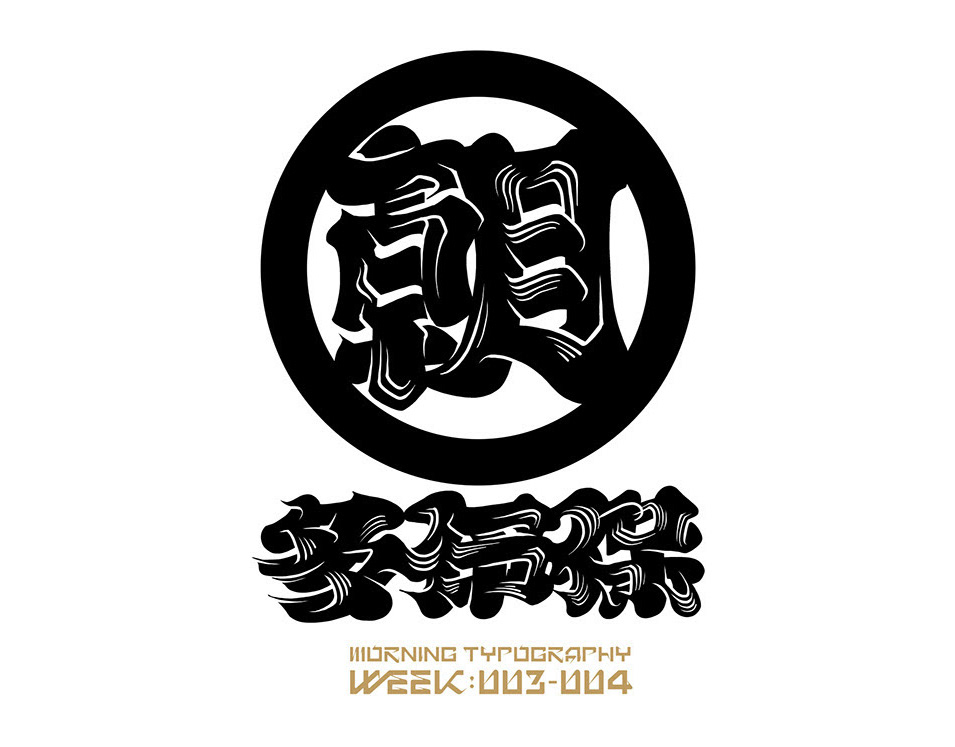
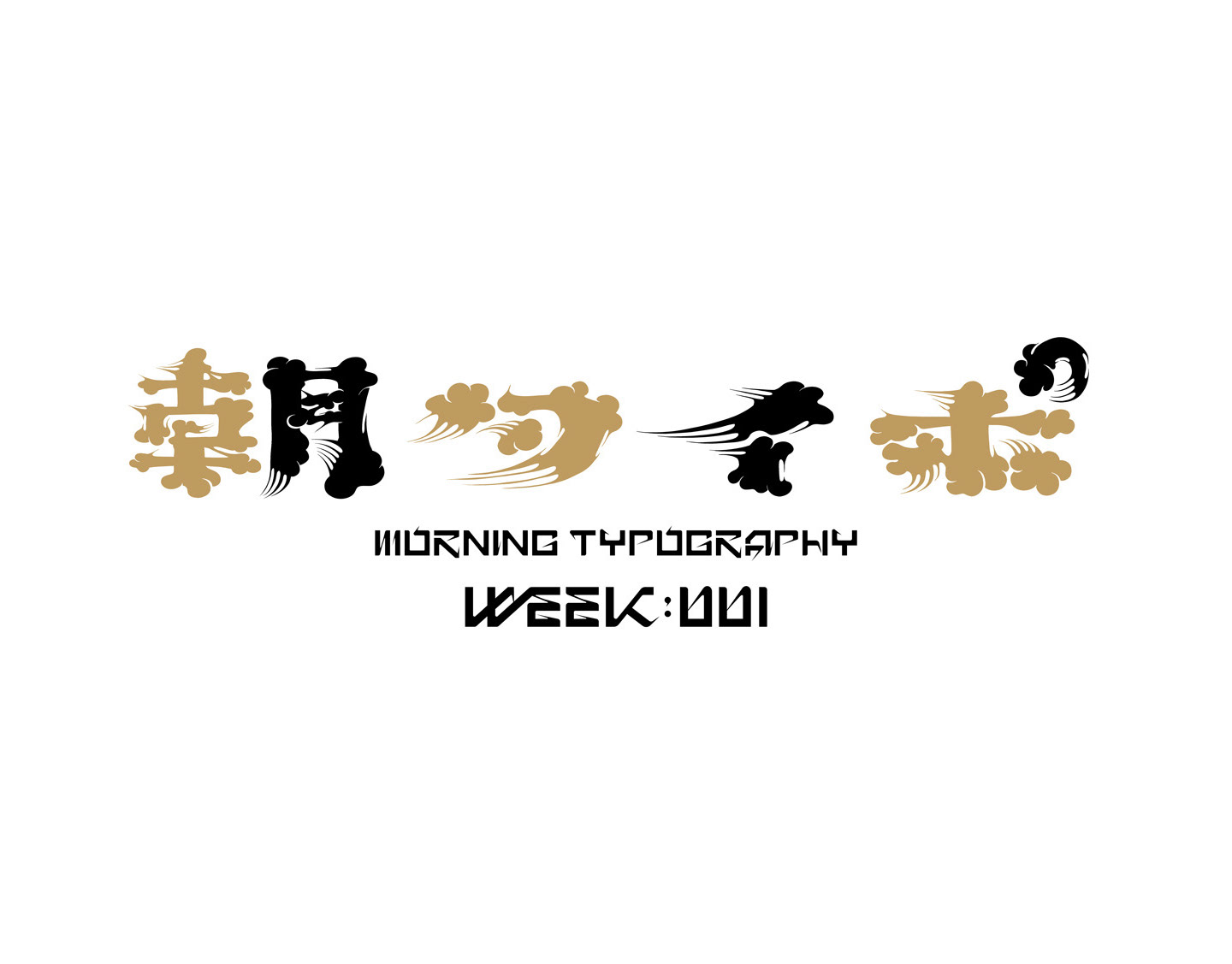
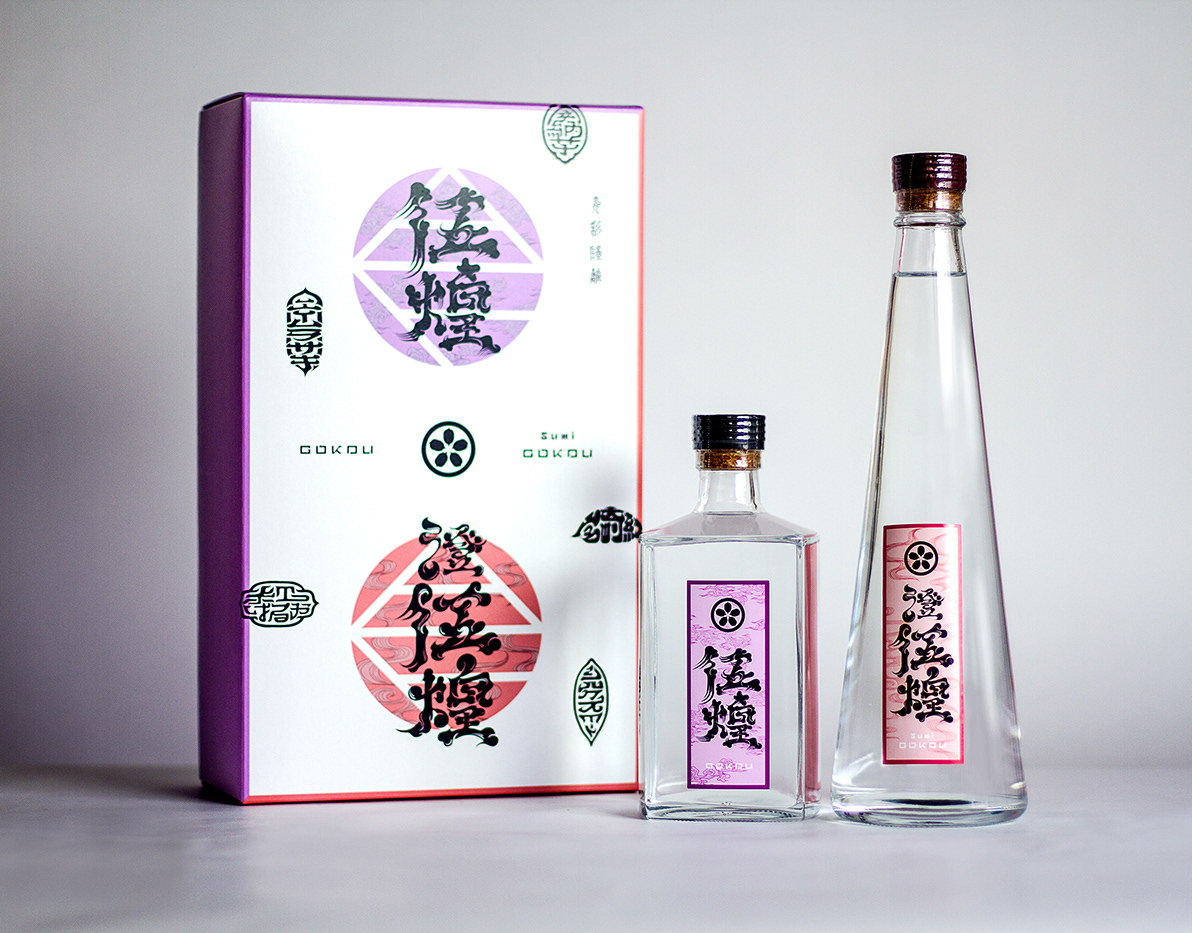
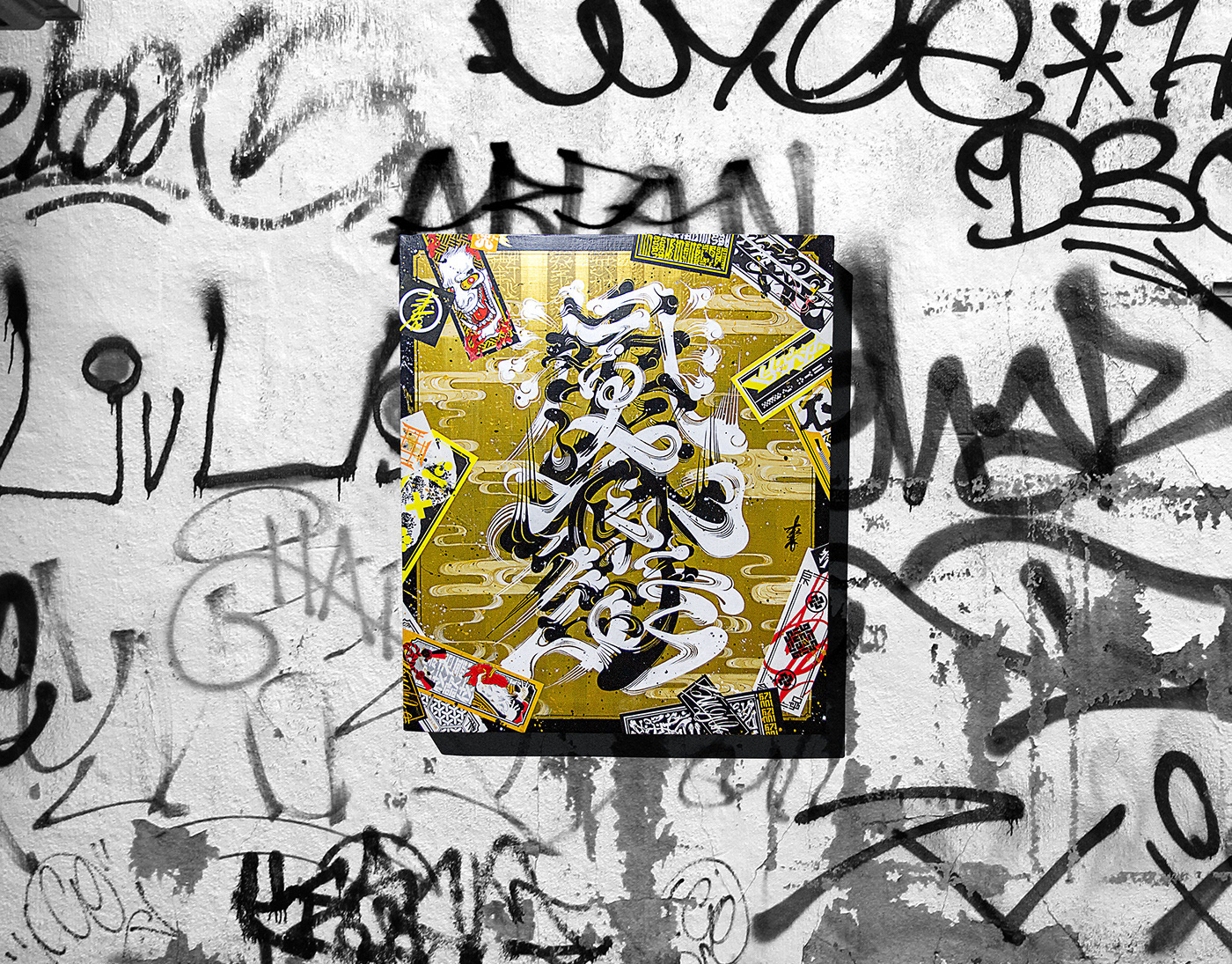
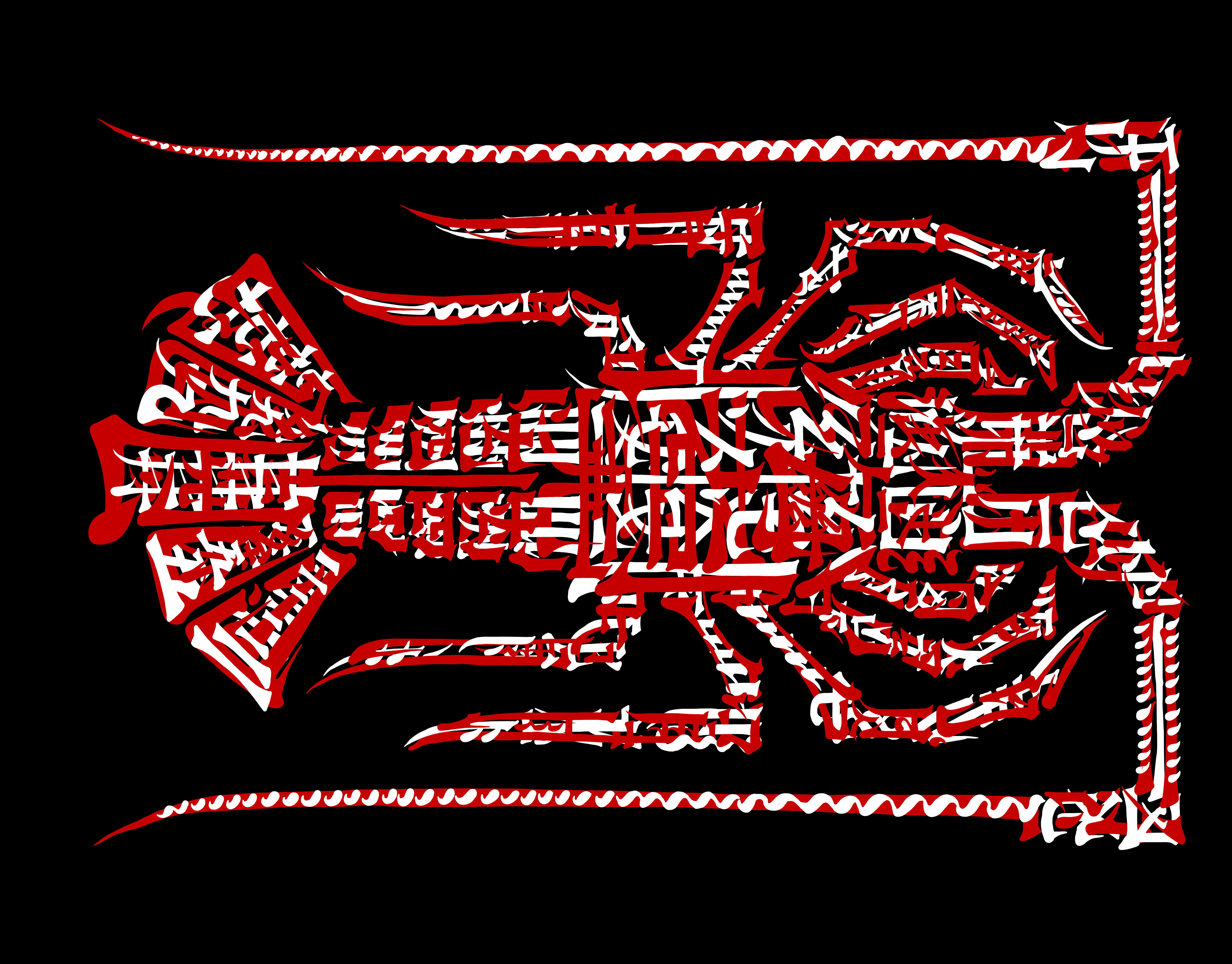
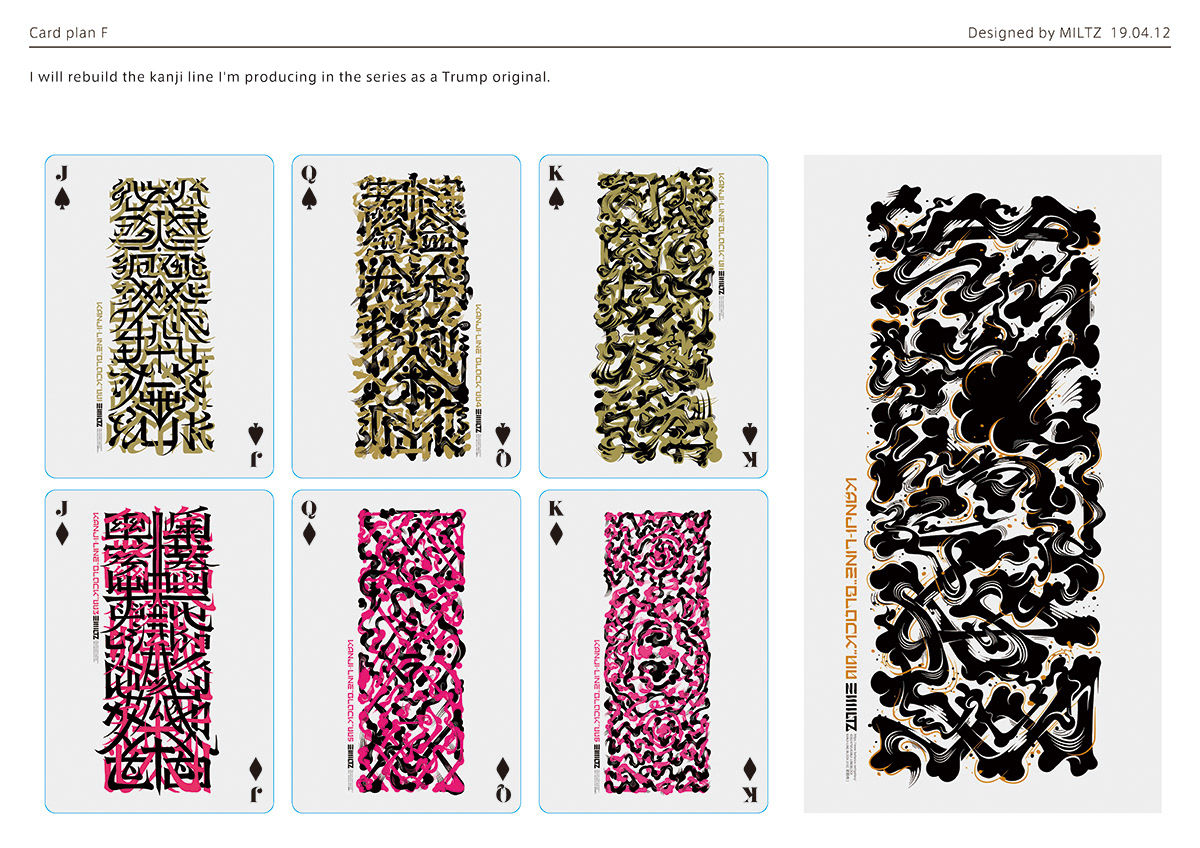
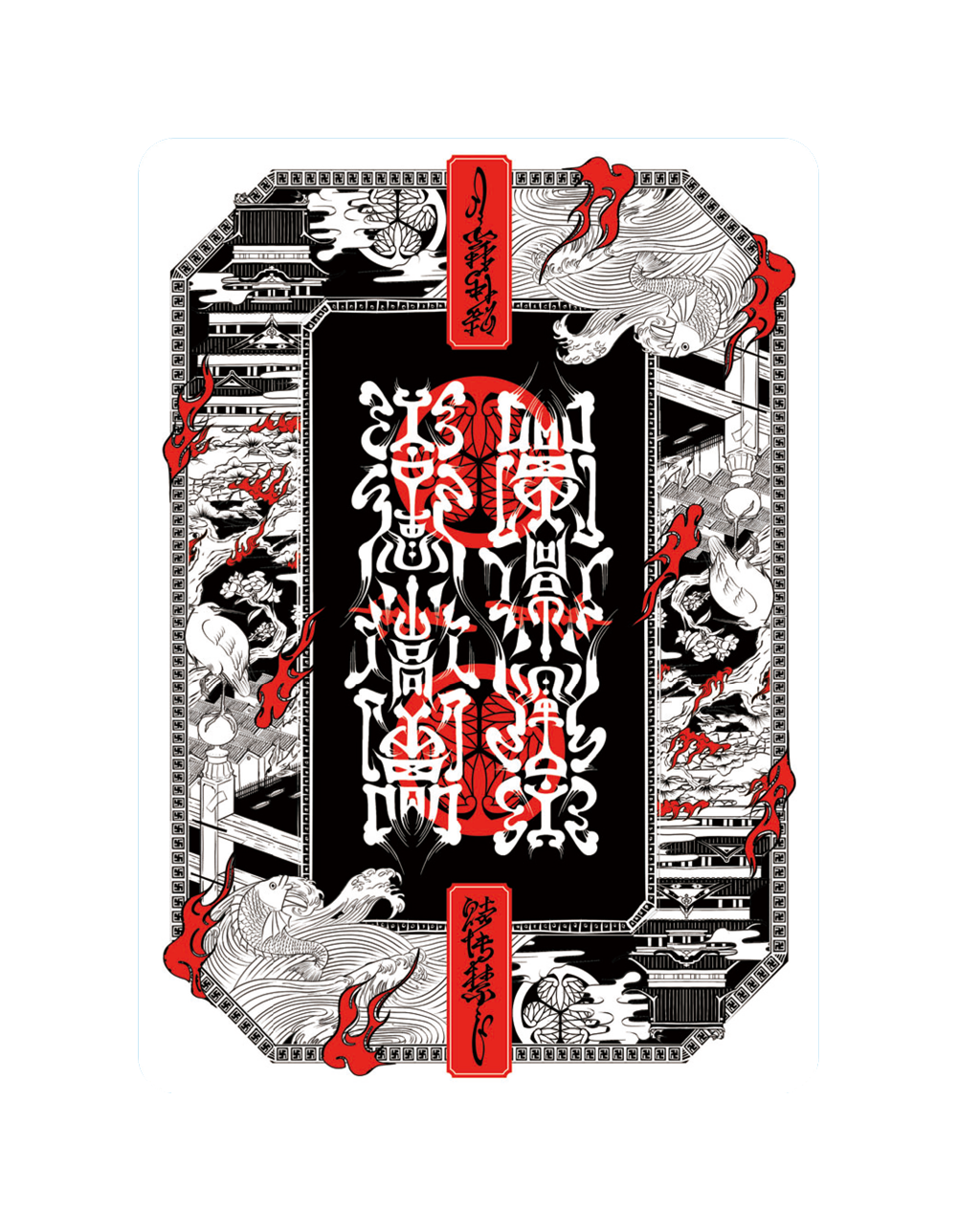
The aesthetic mainstay of Edo Karuta is the Edomoji — traditional Japanese typographic styles born and widely embraced during the Edo period. Used primarily for advertising and branding across the many trades that flourished in this prosperous era before modern Japan, Edomoji remains very much alive today. Walk past any Japanese restaurant and you are likely to spot banners bearing these distinctive letterforms. Traditional Japanese brands continue to incorporate Edomoji into their visual identity to this day. In Edo Karuta, these typographical elements are layered and interlocked to create visually compelling motifs. This style is most clearly expressed in the card backs.
「江戸かるた」のデザインの核を担うのが、江戸文字だ。江戸時代に生まれ、広く親しまれたこの書体は、当時隆盛を誇った様々な商いの看板や宣伝に用いられ、活気ある町の風景を彩ってきた。近代化以前の豊かな時代に根付いたその文化は、現代にも脈々と受け継がれている。和食店の前を通れば、江戸文字が躍るのぼりや看板を今も目にすることができる。「江戸かるた」では、こうした文字要素を幾重にも重ね合わせることで、視覚的に力強いモチーフを生み出している。
The Edo period of Japan became the thematic foundation of Edo Karuta — though perhaps it would be more accurate to say it chose us rather than the other way around. The Edo period can be considered the golden age of pre-industrial Japan. The peace established by the Tokugawa Shogunate through the unification of the country enabled unprecedented economic growth alongside a flourishing of the arts and cultural life. Yet this same era was defined by an isolationist outlook and the entrenchment of rigid social hierarchies — conditions that some historians point to as a factor in slowing Japan's path toward industrialization. The period ultimately came to an end with the arrival of foreign powers that the Tokugawa regime could not resist, triggering a rapid drive toward modernization.
江戸時代は「江戸かるた」のテーマの根幹として選ばれた——いや、むしろ自然と引き寄せられたと言う方が正確かもしれない。江戸時代は、近代化以前の日本における黄金時代とも呼べる時代だ。徳川幕府による国家統一がもたらした平和は、かつてない経済成長を実現すると同時に、芸術や文化の豊かな開花を促した。しかしその一方で、この時代は鎖国という閉鎖的な姿勢と、厳格な身分制度の固定化によっても特徴づけられており、それが近代化の歩みを緩めた一因だったと指摘する歴史家もいる。そしてその終焉は、幕府が抗いきれなかった外圧によってもたらされ、日本は急速な近代化へと突き動かされていった。
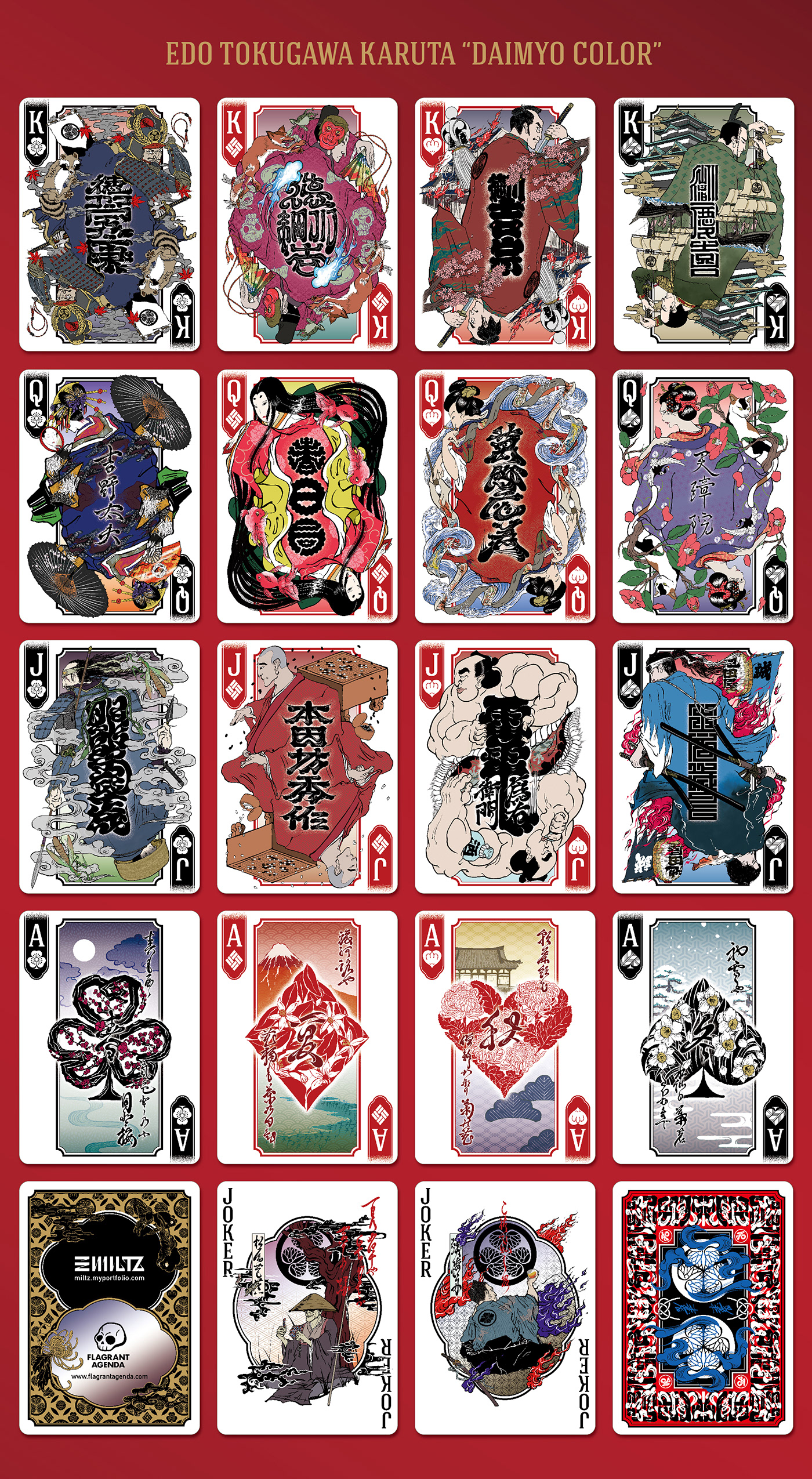
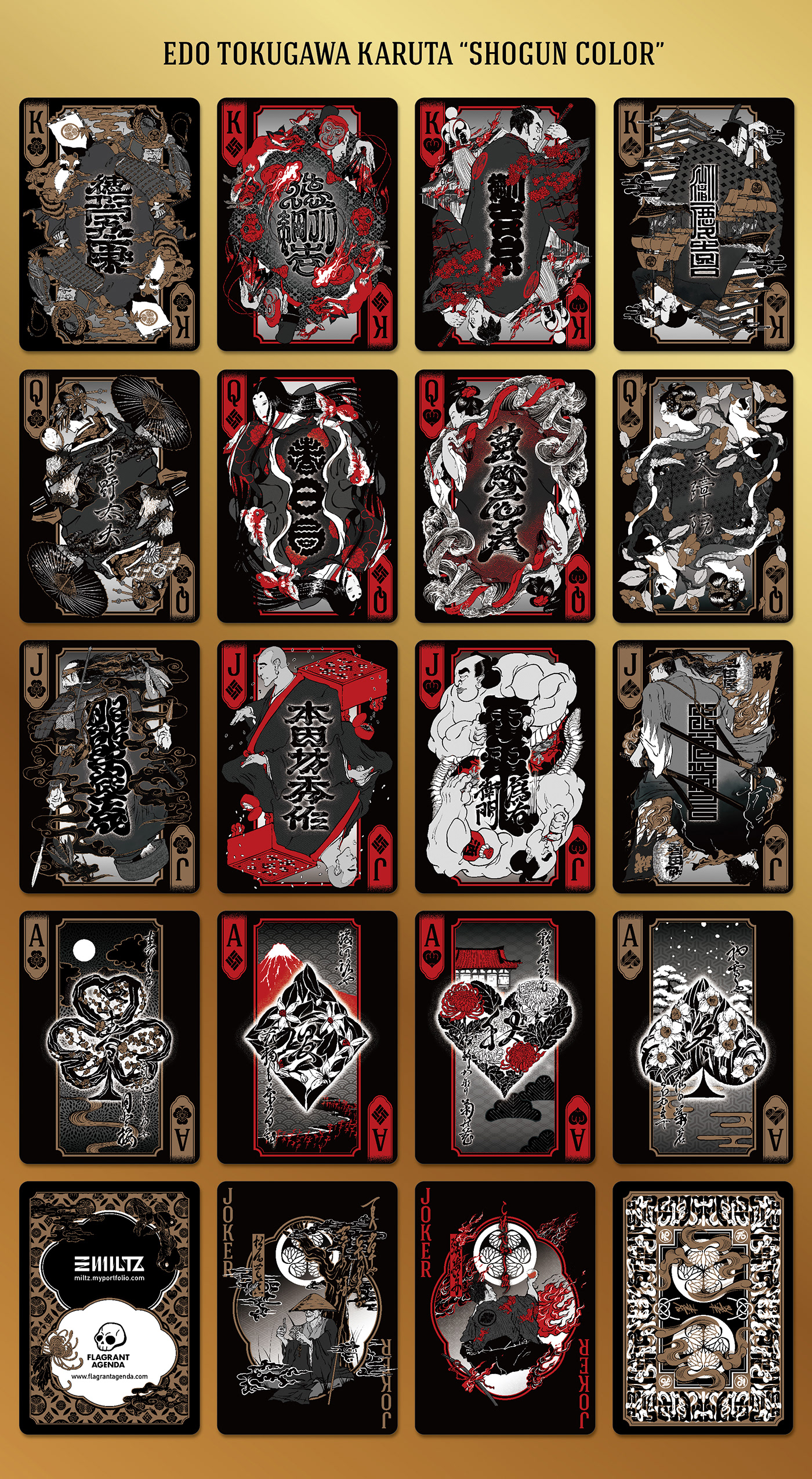
The aesthetic and thematic elements of this project bring us full circle on the nature of change. Edomoji represents the merchant class — the great beneficiaries of the Tokugawa peace, and paradoxically, one of the catalysts for the social upheaval that would eventually destabilize the order they thrived under. On the surface, the system appeared intact and prosperous, yet the forces of change were already quietly at work from within. As is so often the case, the final blow came from outside — in this instance, the black ships that appeared on the horizon.
このプロジェクトの意匠とテーマは、変化の本質を一巡りして私たちのもとへ還ってくる。江戸文字は商人階級を象徴している。彼らは徳川の平和の恩恵を最も享受した存在であり、同時に、自らが栄えた社会秩序を内側から揺るがす変化の触媒ともなった。表面上、体制は安定し繁栄しているように見えた。しかし変革の力は、すでに静かに内部で動き始めていた。そして最後の一押しは、いつの時代もそうであるように、外からやってくる——この場合、水平線の彼方に現れた黒船として。


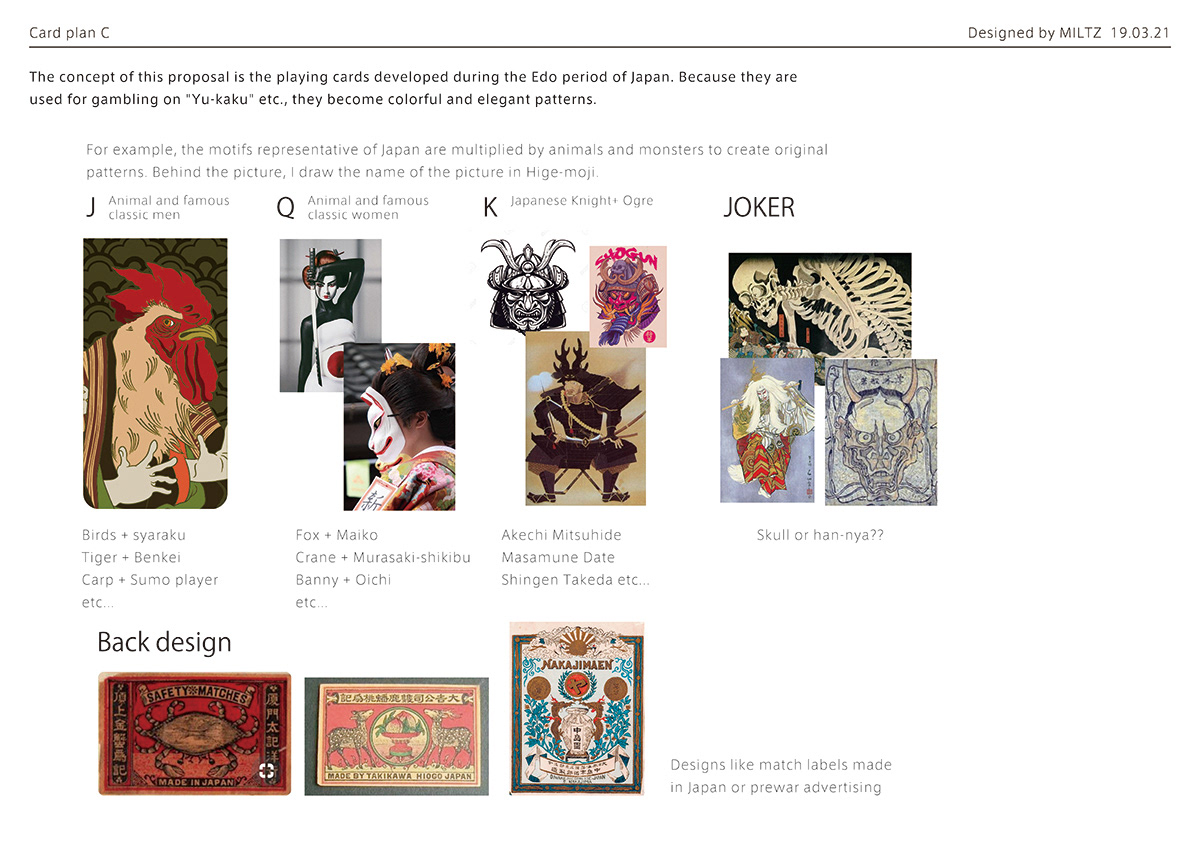
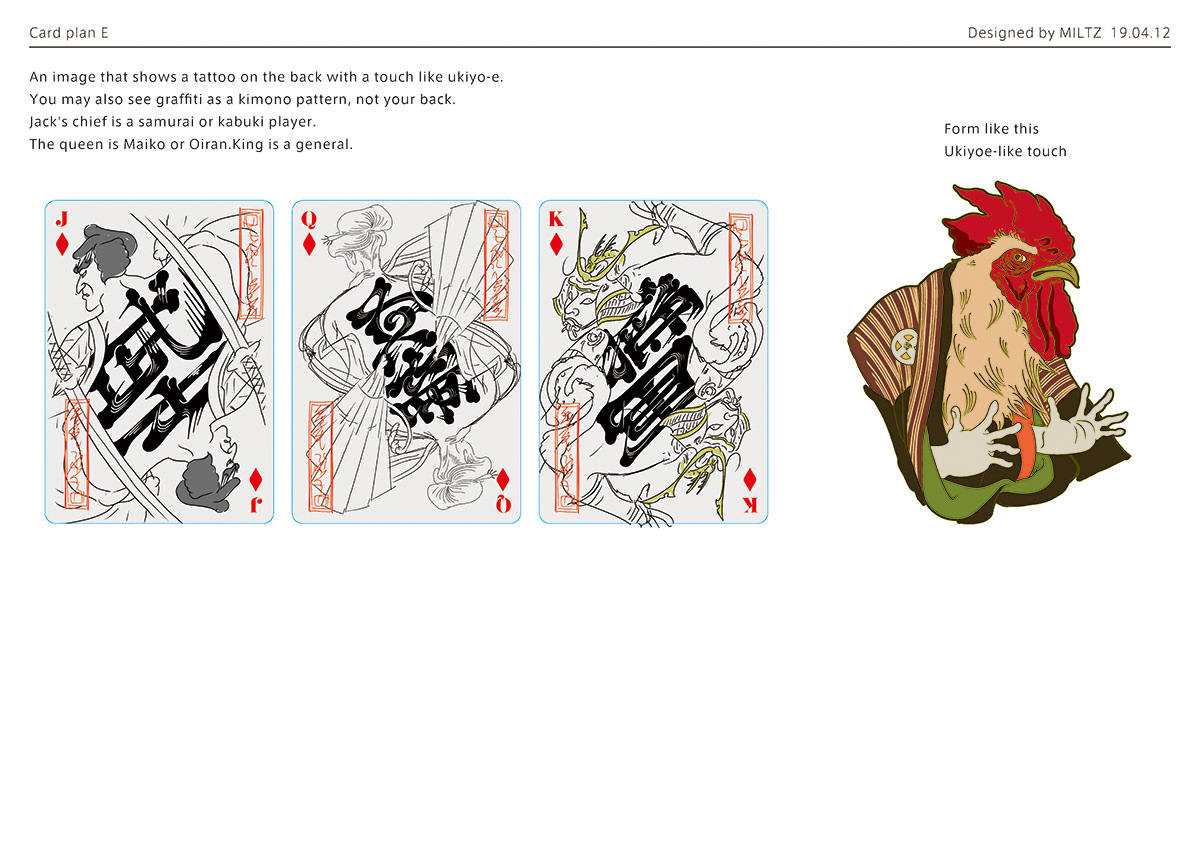
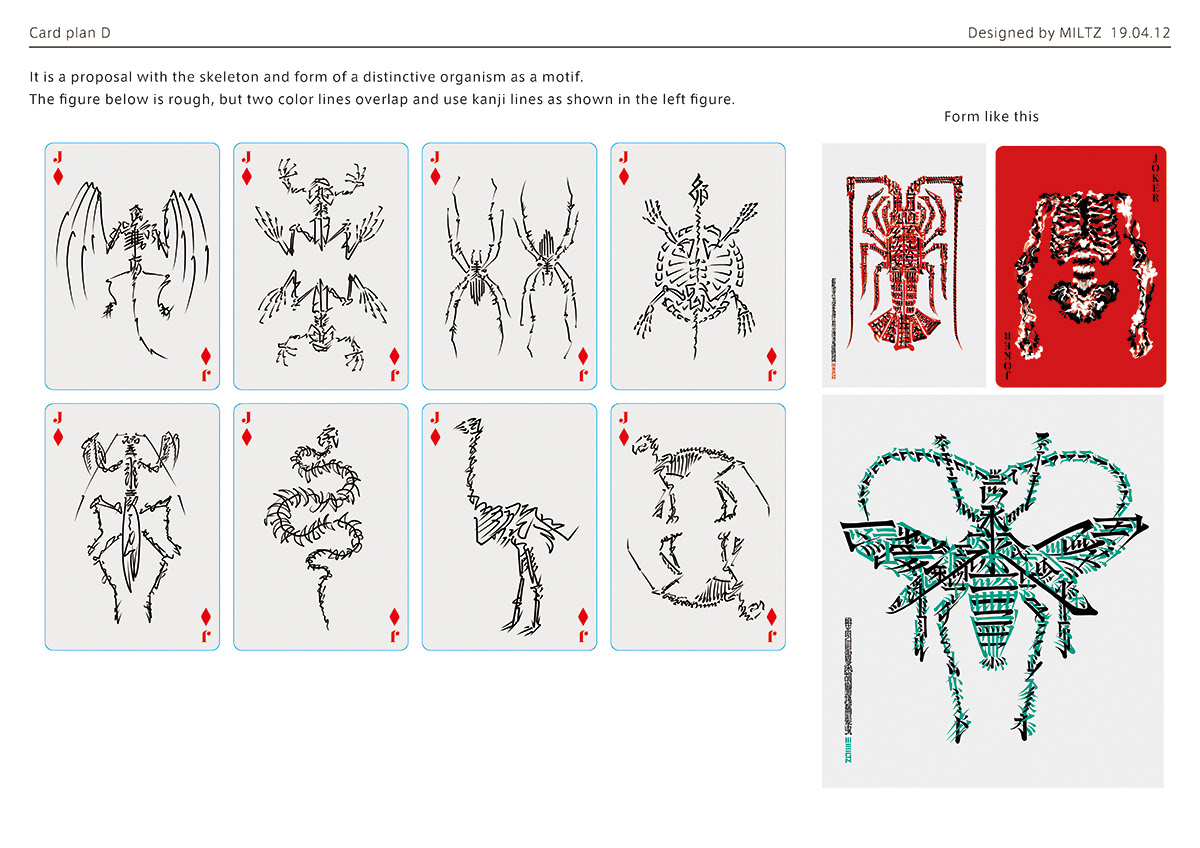
In the early stages of conception, my thinking gravitated naturally toward lettering art — the discipline that forms the very core of my practice. As I explored the history of playing cards and the symbolic weight embedded within each suit, I began to find organic points of convergence with the cultural soil of Japan. This recognition crystallised into the first concept: elevating lettering into the visual language of tattooing, adorning historical figures with its intricate forms. Through the process of making, however, the concept underwent an organic transformation — ultimately arriving at the form it takes today.
初期の構想段階では、私の表現の核であるレタリングアートを中心に思考を展開していった。トランプの歴史やスートが持つ象徴的な意味を掘り下げるうち、日本の文化的土壌との間に自然な接点を見出すようになった。その気づきが最初のコンセプトへと結実する。レタリングを刺青の表現言語へと昇華させ、歴史上の人物たちをその意匠で彩るというものだった。しかし制作の過程においてコンセプトは有機的に変容し、現在の形へと辿り着いた。
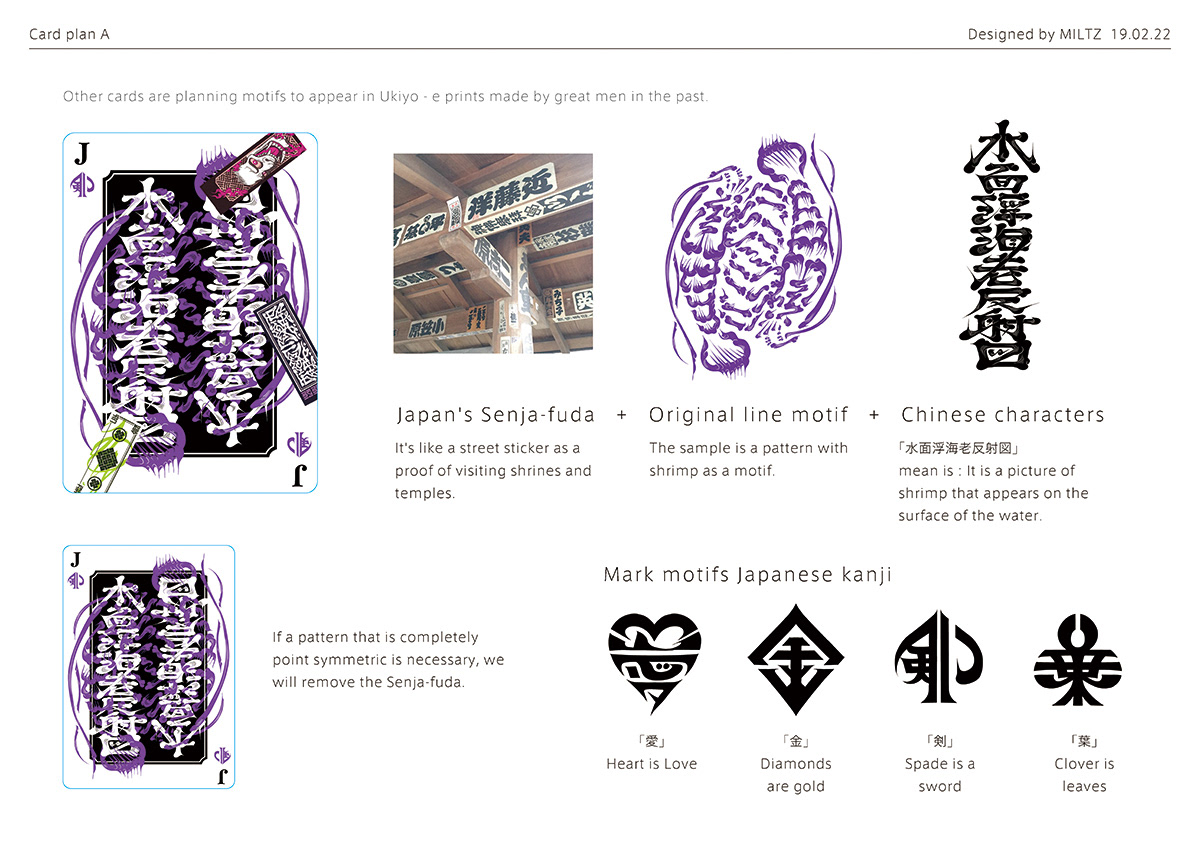
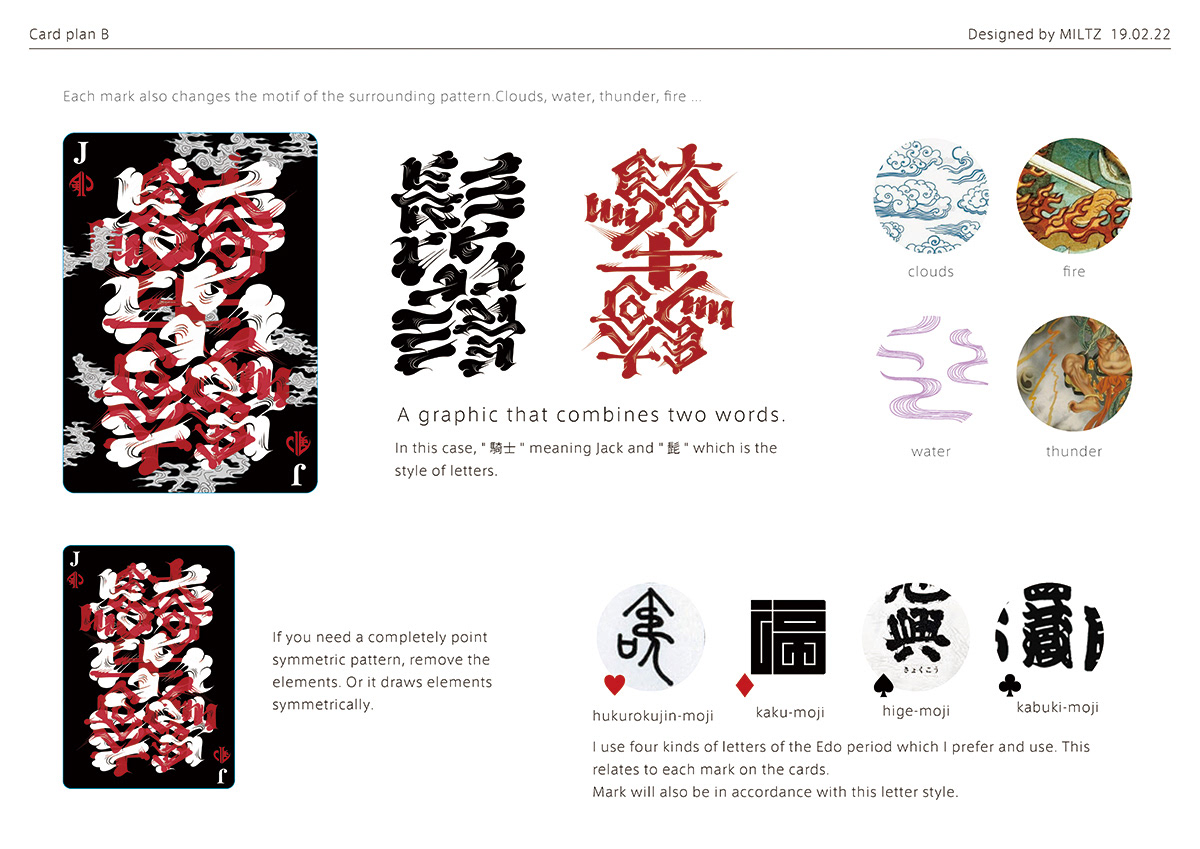

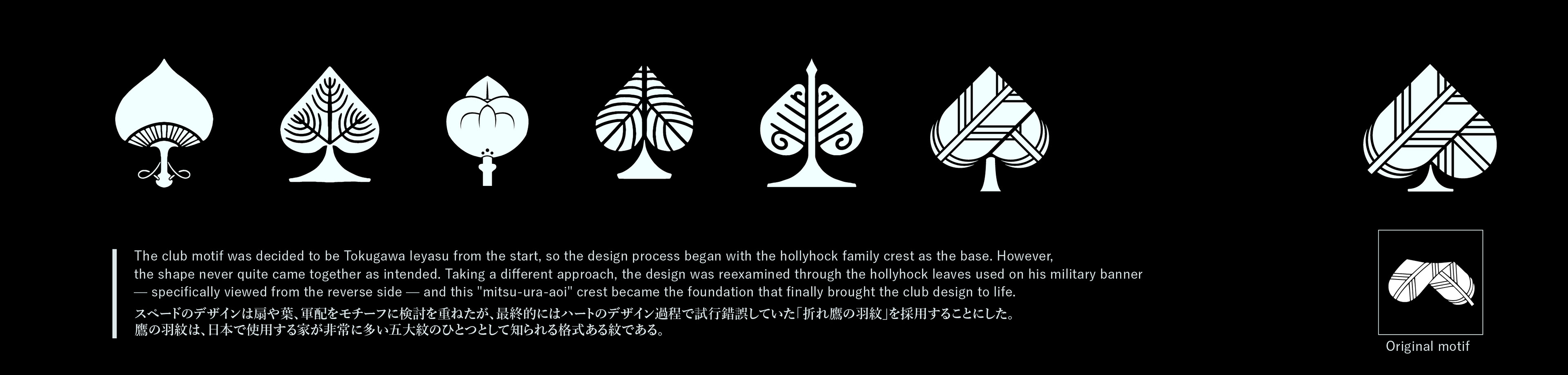
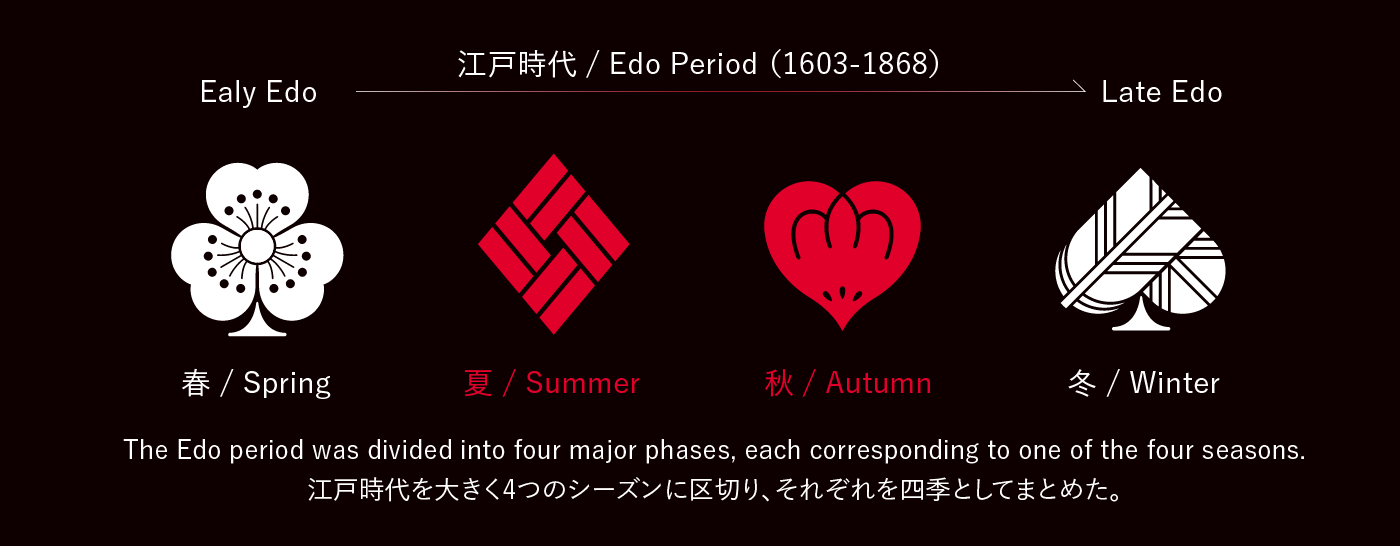


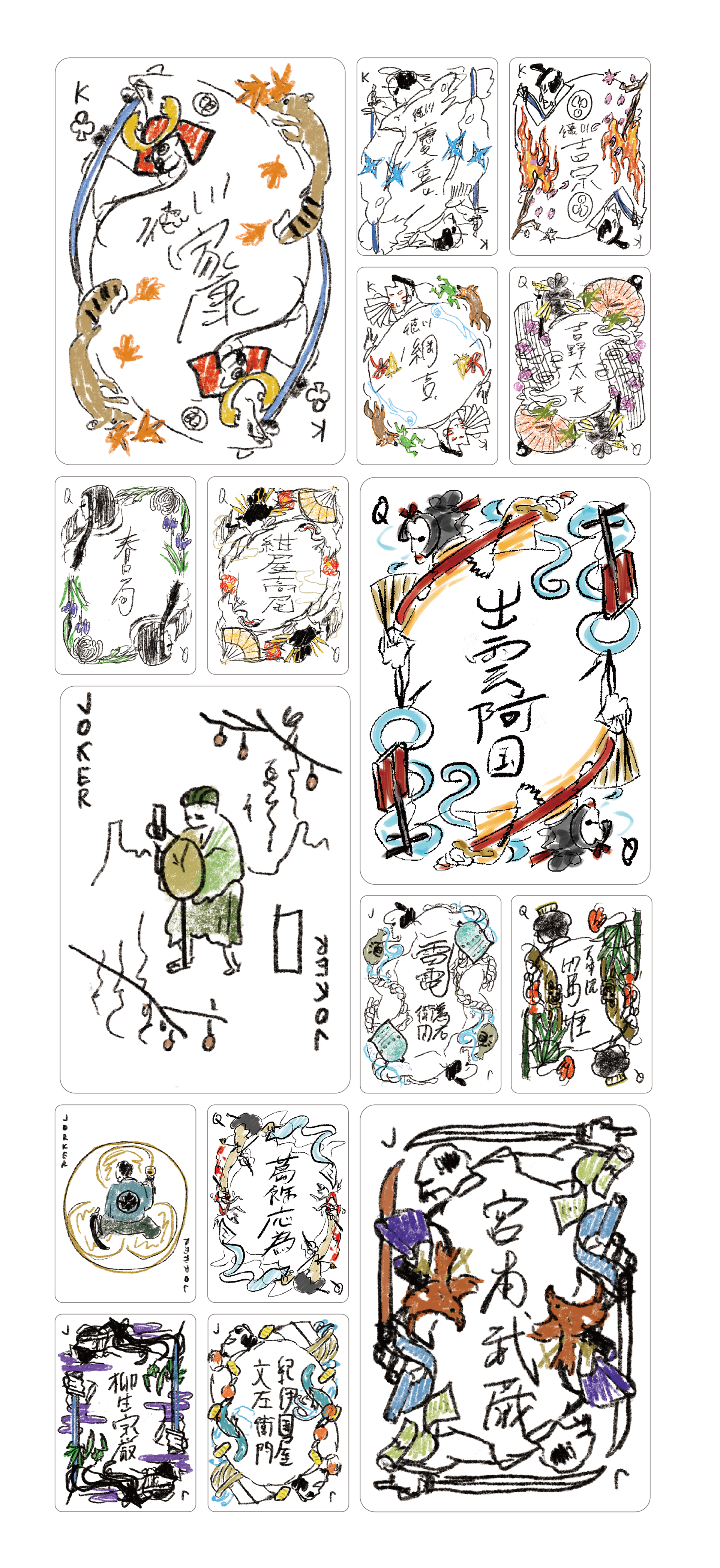
Card Taste Test
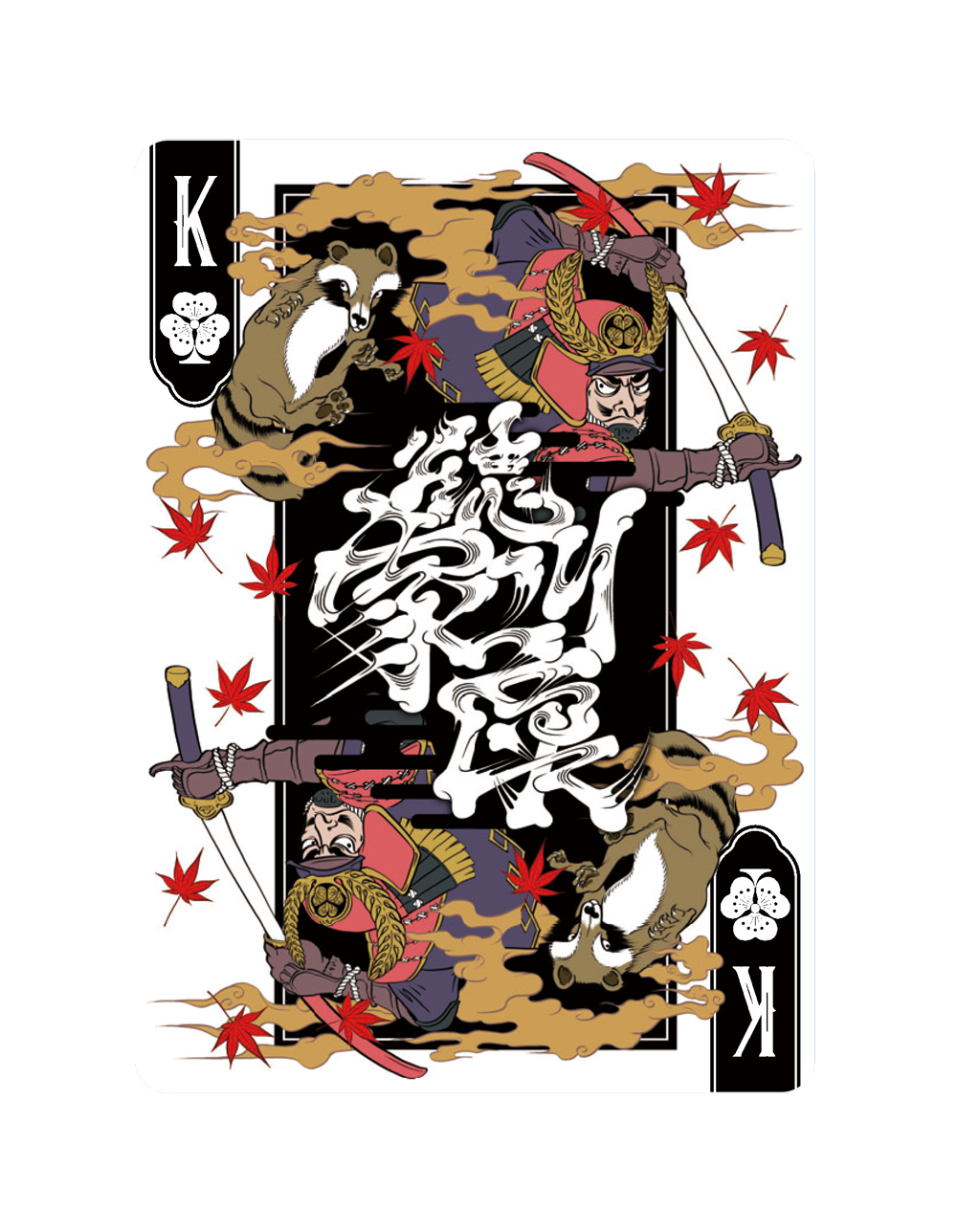
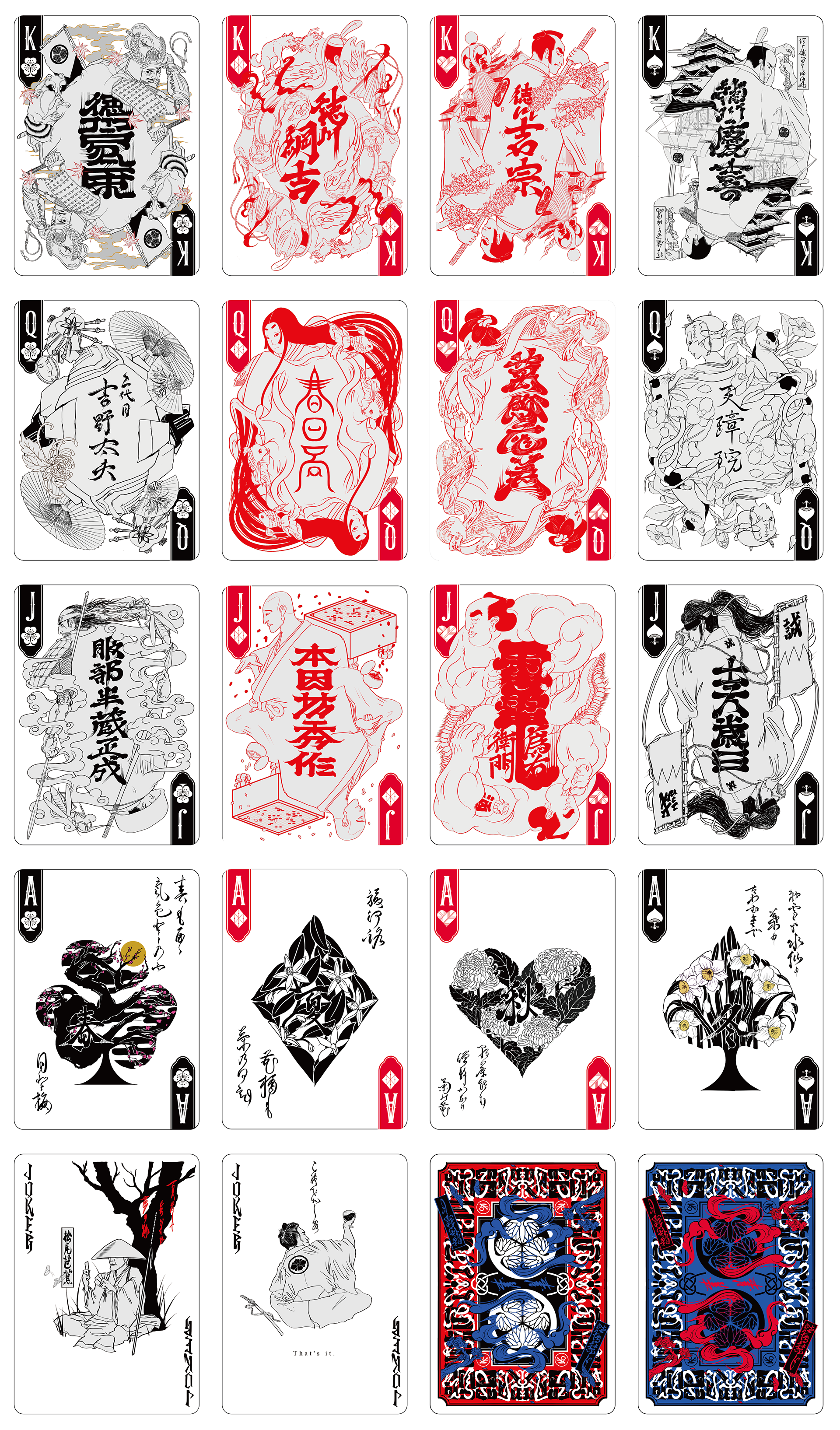
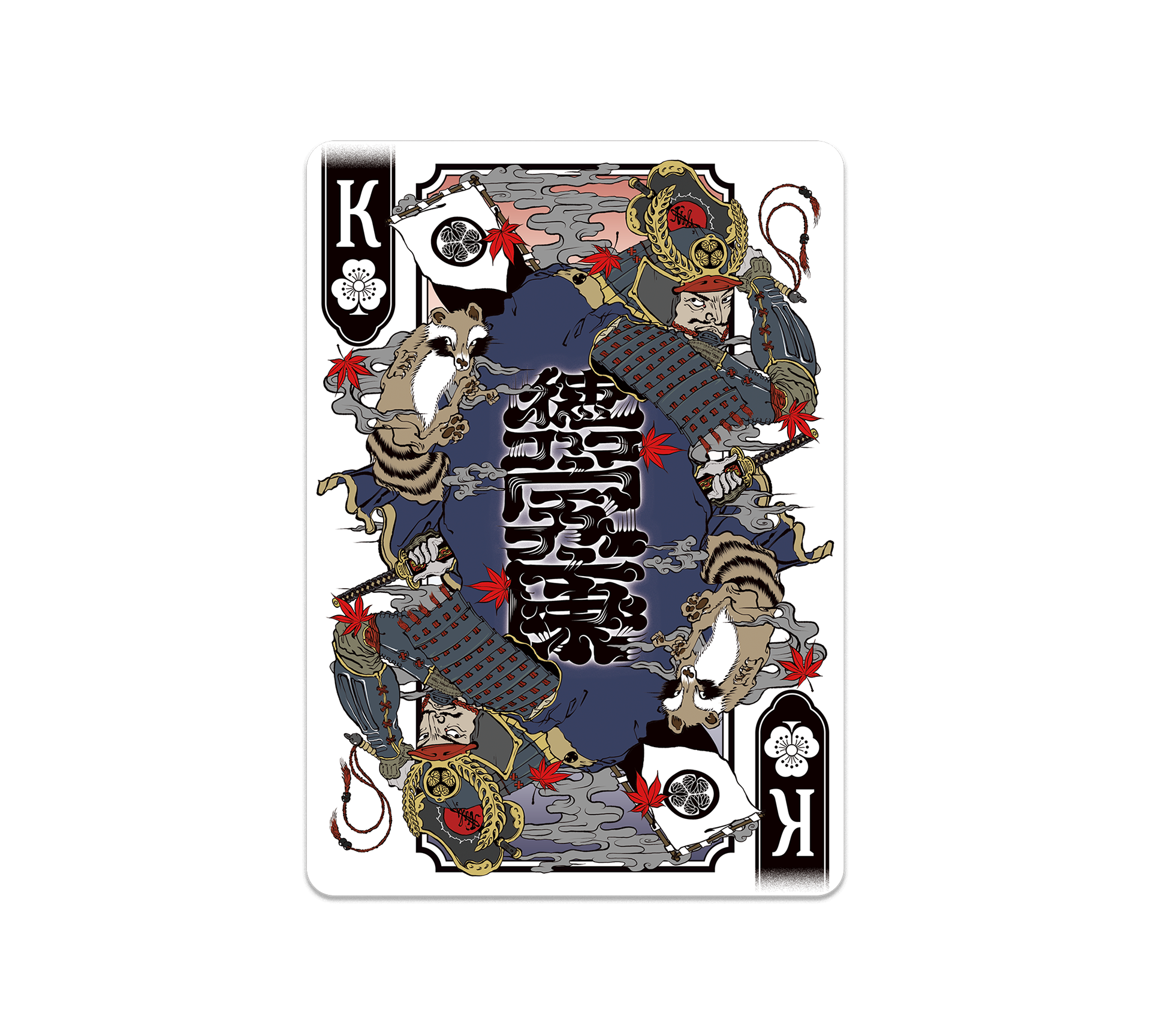
Tokugawa Ieyasu
One of the three great unifiers of Japan alongside Oda Nobunaga and Toyotomi Hideyoshi, Ieyasu founded the Tokugawa Shogunate and consolidated the foundations of a unified realm — ushering in over two centuries of peace that defined the Edo period. Nicknamed "the Tanuki" for his cunning and strategic patience, that shrewd intelligence is etched into his expression. The maple leaves adorning the design pay homage to the autumn foliage for which Nikkō Tōshō-gū, the shrine dedicated to Ieyasu, is celebrated.
徳川家康
織田信長・豊臣秀吉とともに三英傑のひとりに数えられ、江戸幕府を開くことで天下の秩序を盤石なものとした人物だ。その治世が礎となり、200年以上にわたる江戸時代の平和が築かれた。「狸」と称されたしたたかな知略家としての顔を、その表情に滲ませている。家康が祀られる日光東照宮が紅葉の名所であることから、デザインにも紅葉をあしらった。
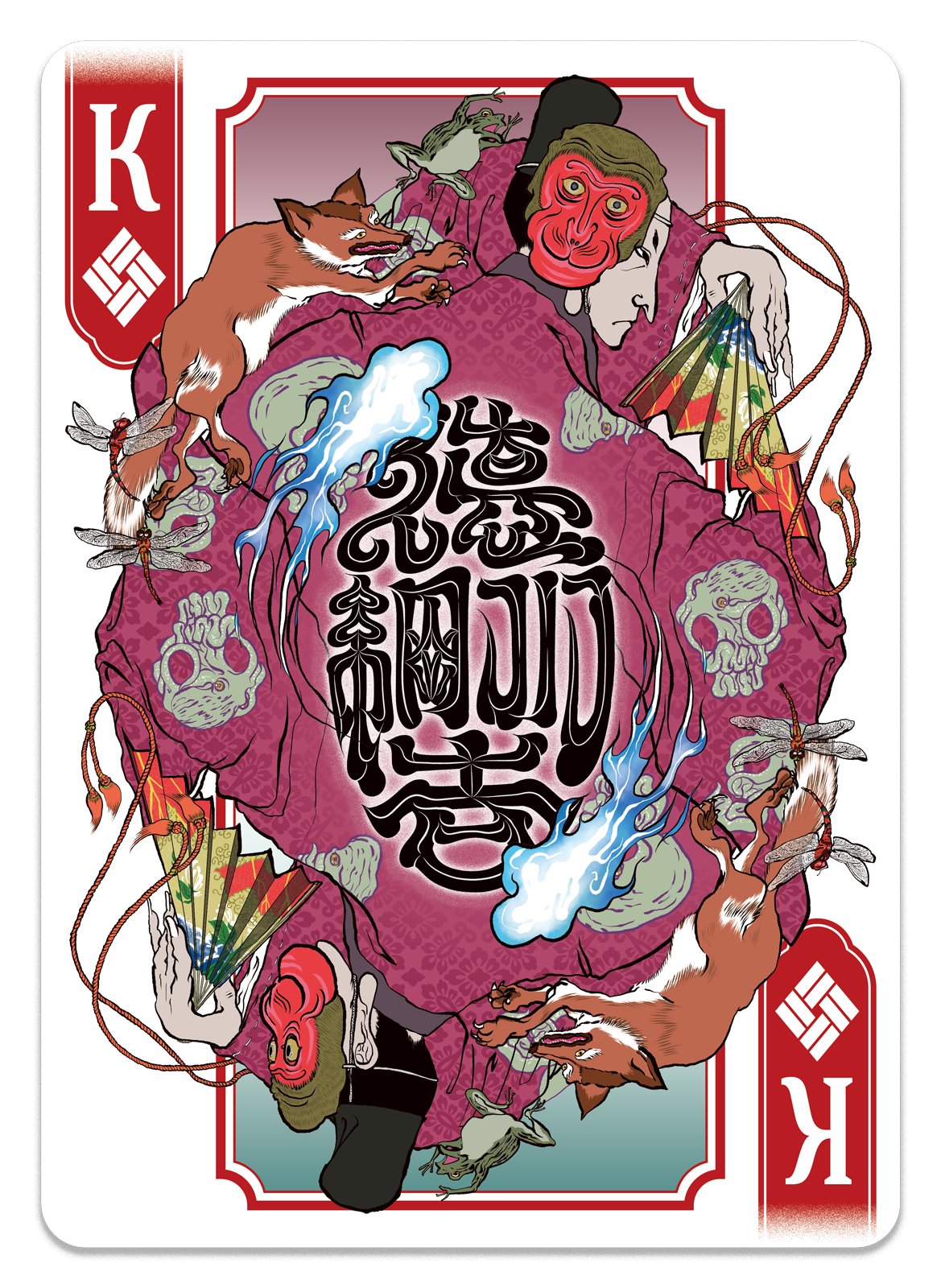
Tokugawa Tsunayoshi
A shogun so consumed by Noh theater that he earned the name "Noh Fanatic," depicted here wearing a monkey Noh mask. Known for the "Edict on Compassion for Living Things," which prohibited harm to all creatures, I believe that beneath his eccentric reputation lay a man of deep thoughtfulness and compassion. The design weaves together an octopus skull and swirling souls to capture his singular world.
徳川綱吉
「能狂」と呼ばれるほど能に傾倒した将軍で、猿の能面をまとった姿で描いた。あらゆる生き物を傷つけることを禁じた「生類憐れみの令」で知られるが、その根底には深い思慮と慈しみがあったのではないかと感じている。タコの髑髏と魂が舞うモチーフで彼の世界観を表現した。
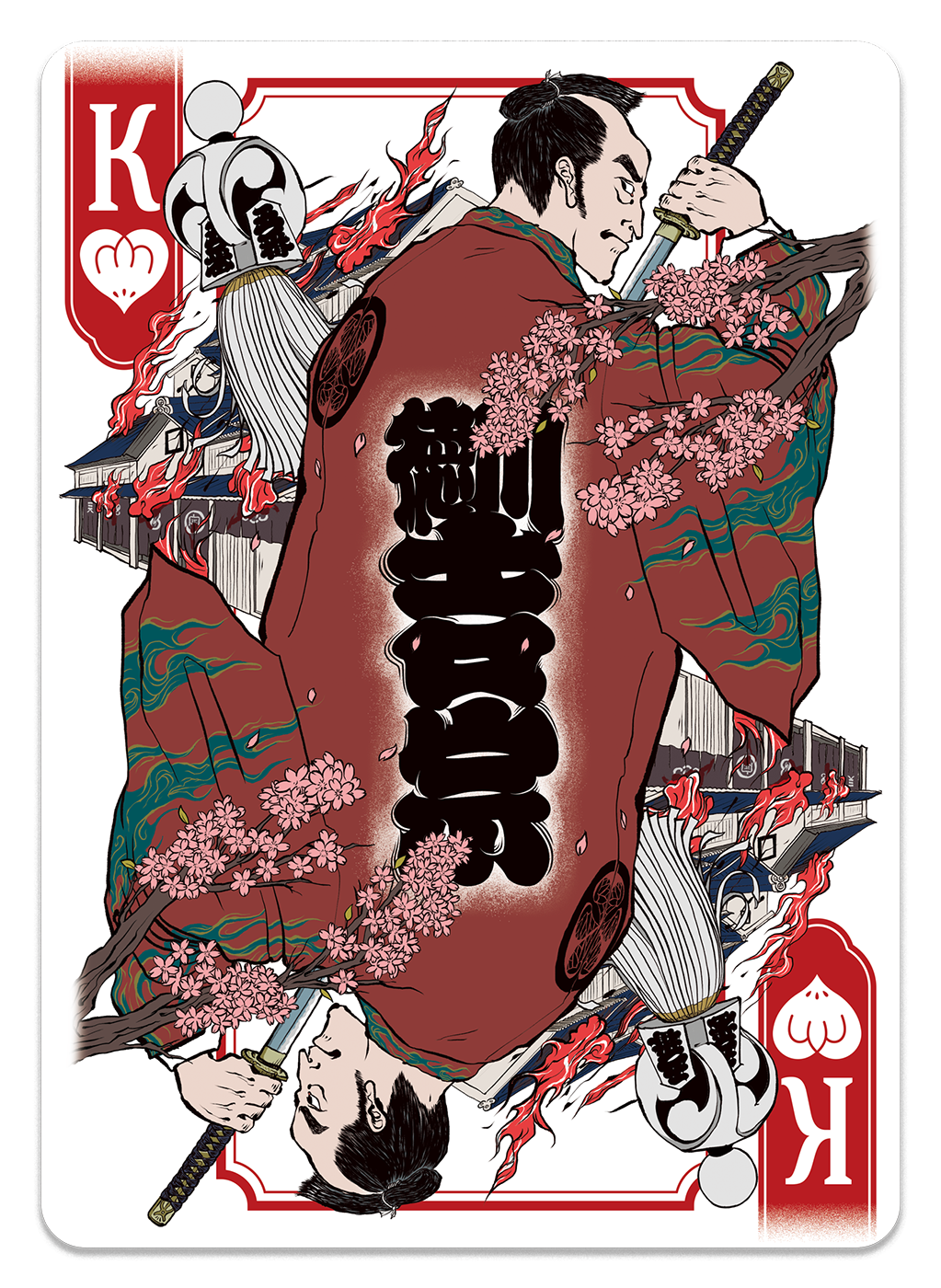
Tokugawa Yoshimune
Known as the "Rebel Shogun," his cherry blossom tattoo has become his most iconic image. He was also the shogun who strengthened the firefighting infrastructure of Edo — a city of wooden buildings perpetually threatened by fire. The design draws its motifs from the fires of Edo and the tools of the firefighters who battled them.
徳川吉宗
「暴れん坊将軍」として知られ、桜吹雪の刺青が印象的な人物だ。木造建築が立ち並ぶ江戸の街で消防体制の整備に貢献した将軍でもある。江戸の火事と火消しの道具をモチーフに描き上げた。
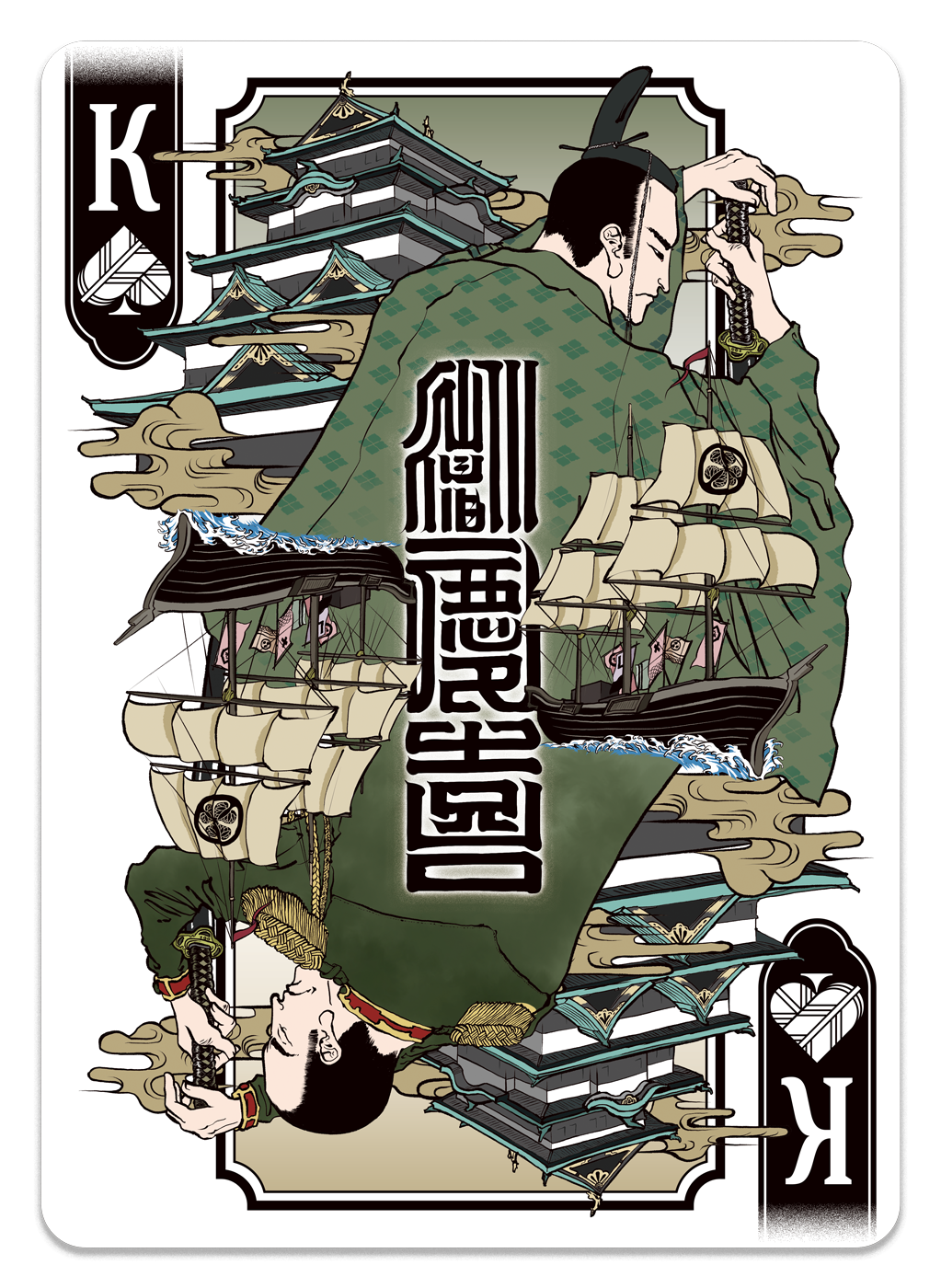
Tokugawa Yoshinobu
The last shogun of the Edo period. He is portrayed as a man tormented by the fate of Japan, caught between the forces of the imperial restoration and mounting foreign pressure. The illustration places the already-lost Edo Castle against a ship bound for foreign shores, with traditional Japanese robes set against a Western military uniform — a composition built to embody the end of an era.
徳川慶喜
江戸時代最後の将軍。倒幕勢力と外国の圧力に挟まれ、日本の行く末に苦悩した人物として描いた。すでに失われた江戸城と海外へ向かう船、和服と西洋の軍服を対比させ、時代の終わりを象徴するイラストレーションに仕上げた。
Katsushika Ōi
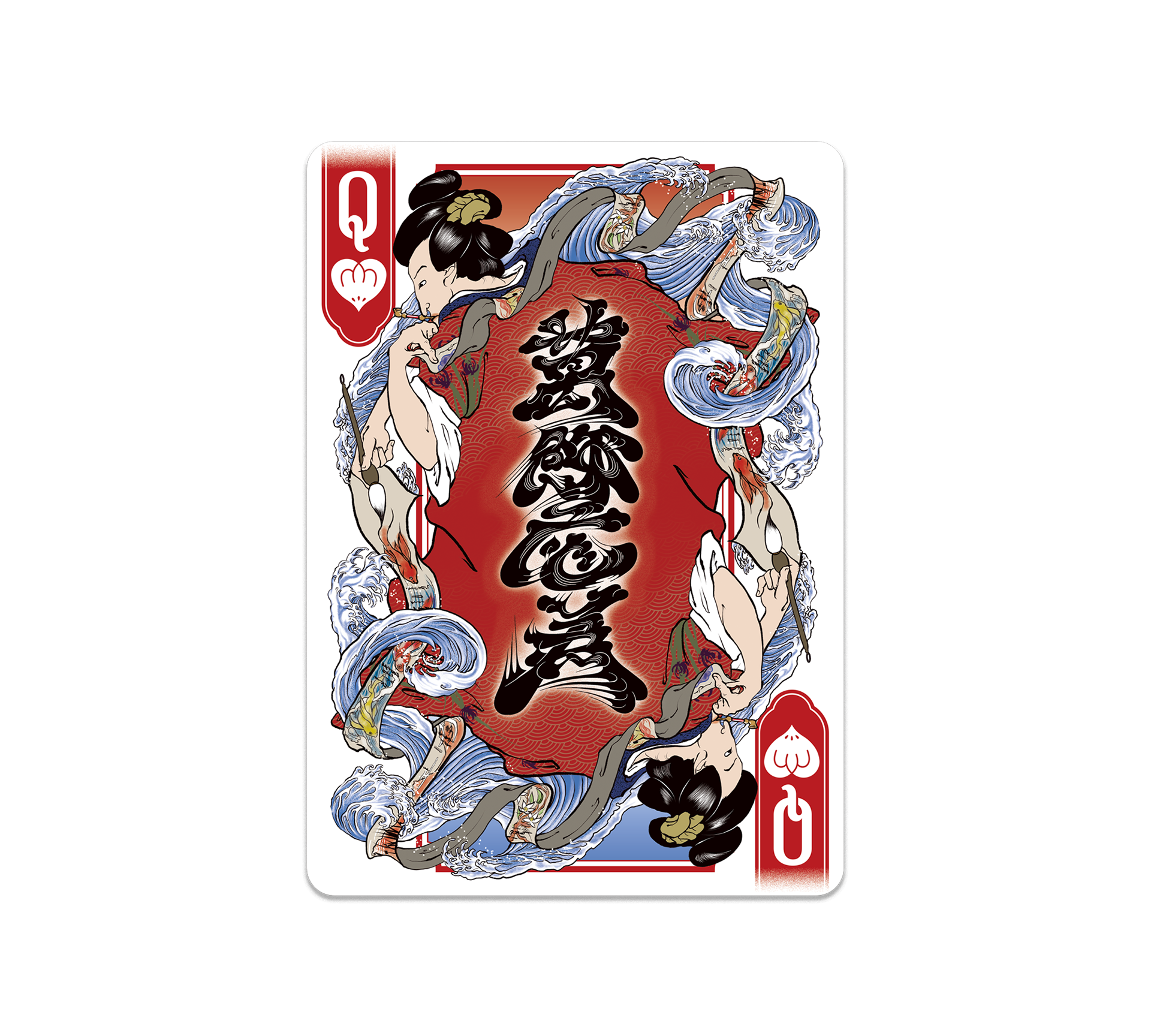
The daughter of Katsushika Hokusai, the master behind "The Great Wave off Kanagawa." In an era dominated entirely by male craftsmen, she carved out her own place through sheer talent. Renowned for her extraordinary ability to capture the play of light in nocturnal scenes, her work is said to have left even her father in admiration. Her name "Ōi" remains uncertain in origin — legend has it that it derived from nothing more than Hokusai calling out "Ōi!" to get her attention.
葛飾応為
「神奈川沖浪裏」で知られる葛飾北斎の娘。男性職人が全盛の時代に、その才能で確固たる地位を築いた人物だ。夜の情景における光の表現を得意とし、父・北斎をも唸らせたと伝わる。「おうい」という名は定かではなく、北斎が彼女を呼ぶ際の「おーい」という声がそのまま名前になったと言われている。
Yoshino Tayū
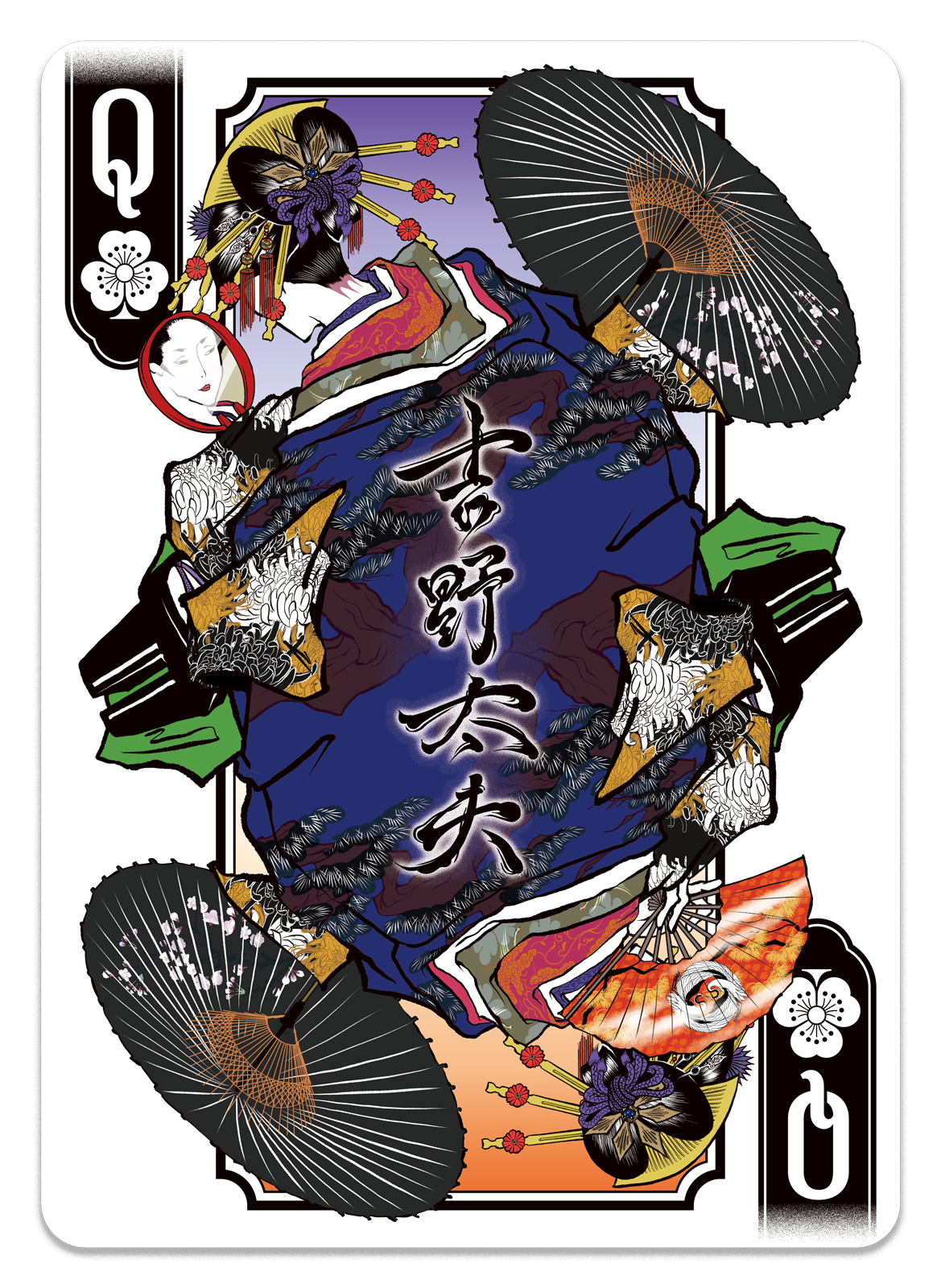
One of the most celebrated courtesans in Japanese history, renowned throughout the Shimabara pleasure district of Kyoto. Among the women who defined the Edo era, she stood apart as a figure of rare beauty, refinement, and grace. Rather than depicting her beauty directly, only a fleeting expression caught in a mirror was used to suggest her presence.
吉野太夫
京都・島原遊廓でその名を轟かせた、日本史上屈指の花魁。江戸という時代を彩った女性の中でも、美と教養と品格を兼ね備えた存在として別格の地位を持つ。その華やかな美貌を直接的には見せず、鏡に映ったわずかな表情のみで表現した。
Kasuga no Tsubone
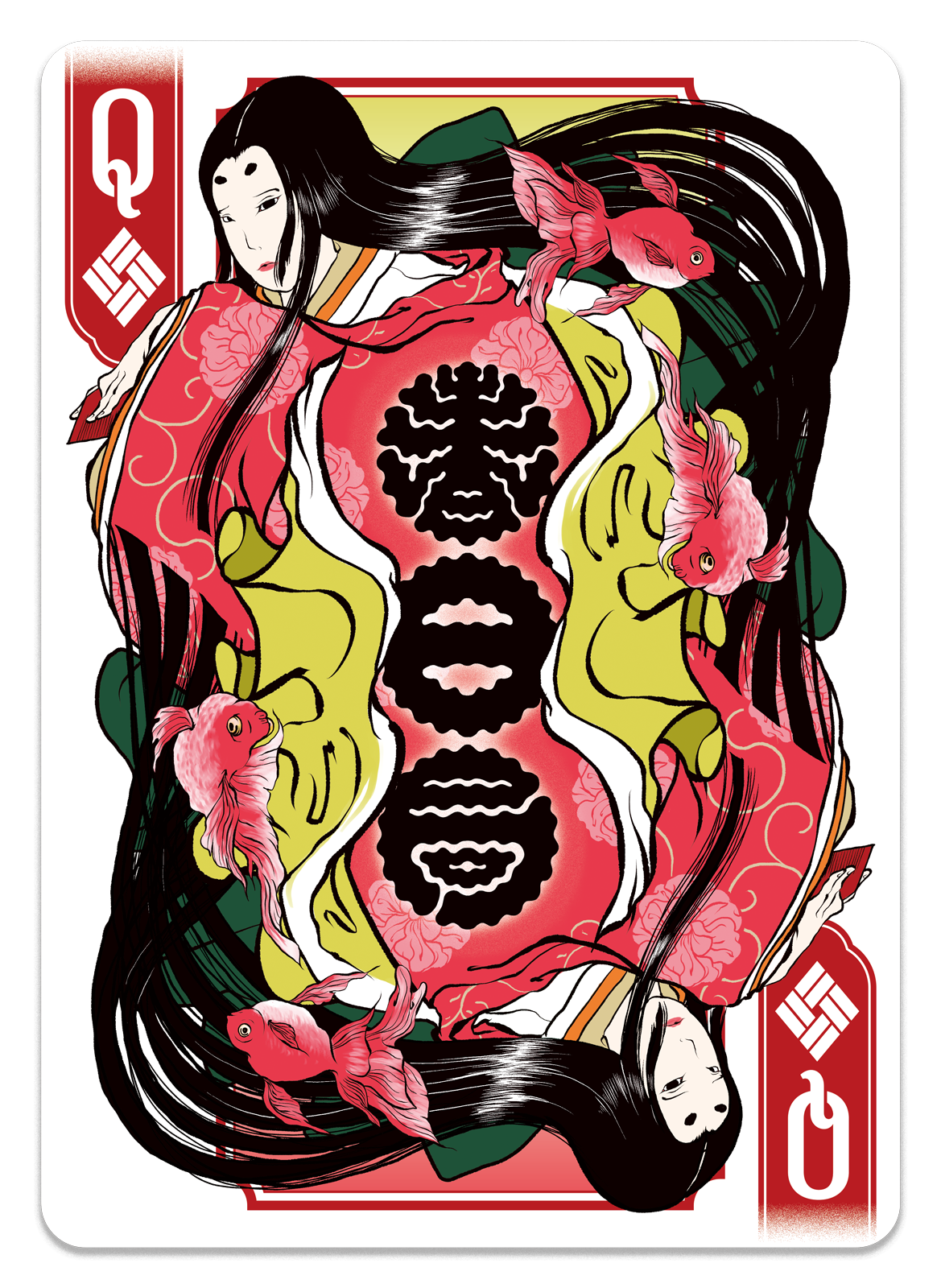
The architect of the Ōoku — the inner chambers of Edo Castle reserved for women — and the woman who shaped Tokugawa Iemitsu into the most powerful ruler of his time. Operating within a world built around male authority, she was a woman who moved the very foundations of history from the shadows.
春日局
大奥の制度を確立し、徳川家光を最高権力者として育て上げた江戸城の影の立役者。男性中心の権力構造の中にあって、女性でありながら歴史の根幹を動かした人物だ。
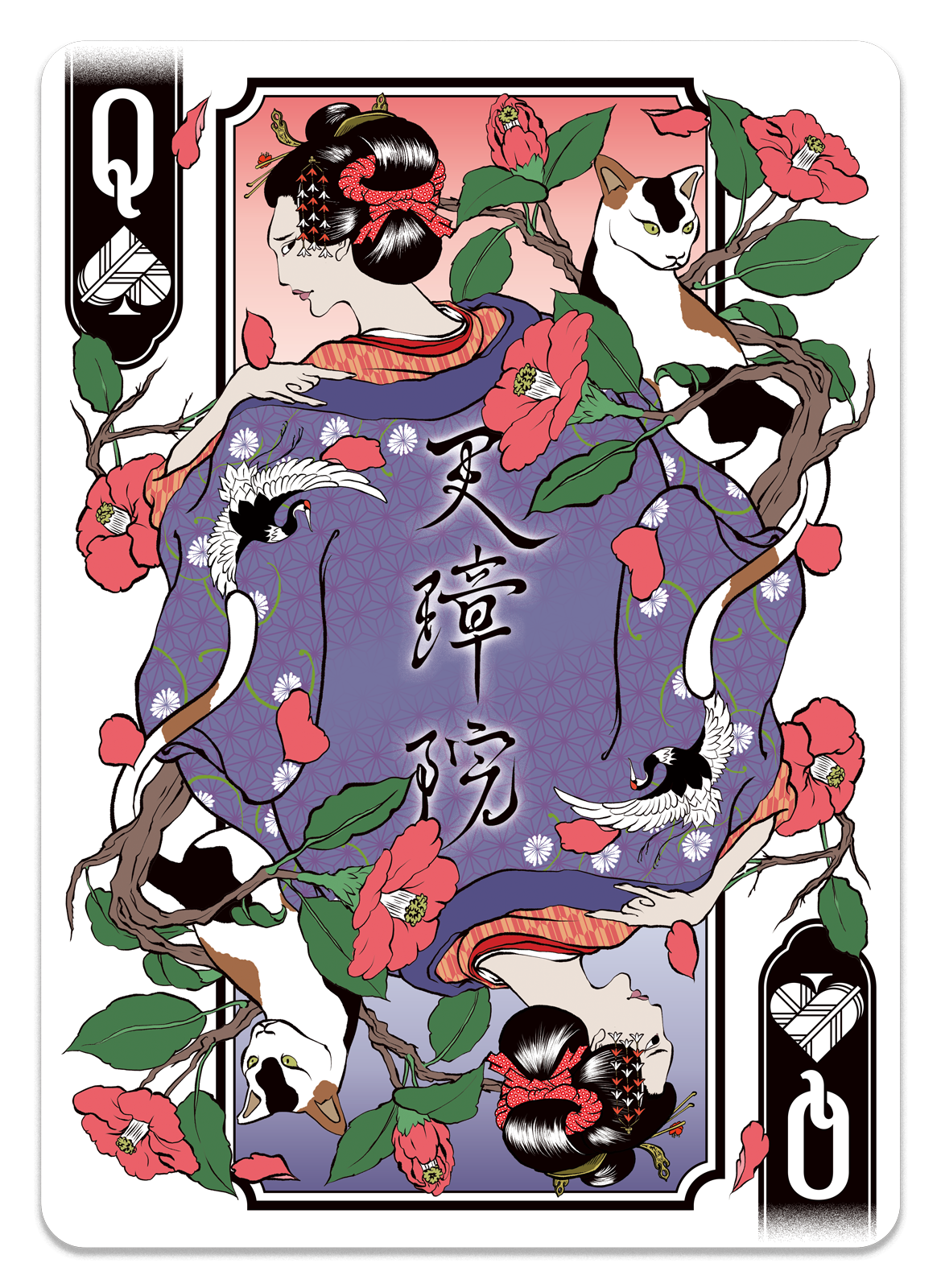
Tenshōin
Also known as Atsu-hime. Born into the Satsuma Domain, she entered the Tokugawa household as its principal wife. Even after the death of her husband, she worked tirelessly to secure the bloodless surrender of Edo Castle and ensure the survival of the Tokugawa clan — continuing to dedicate herself to the stability of the family long after the Meiji Restoration. It is said she had a deep fondness for cats, and so they find their place within her illustration.
天璋院
篤姫の名でも知られる。薩摩藩から徳川家に嫁ぎ正室となった。夫の死後も江戸城無血開城の実現と徳川家の存続のために奔走し、明治維新後も一族の安定に尽力した偉大な女性だ。猫を愛したことが伝わっており、イラストレーションにもその姿を忍ばせた。
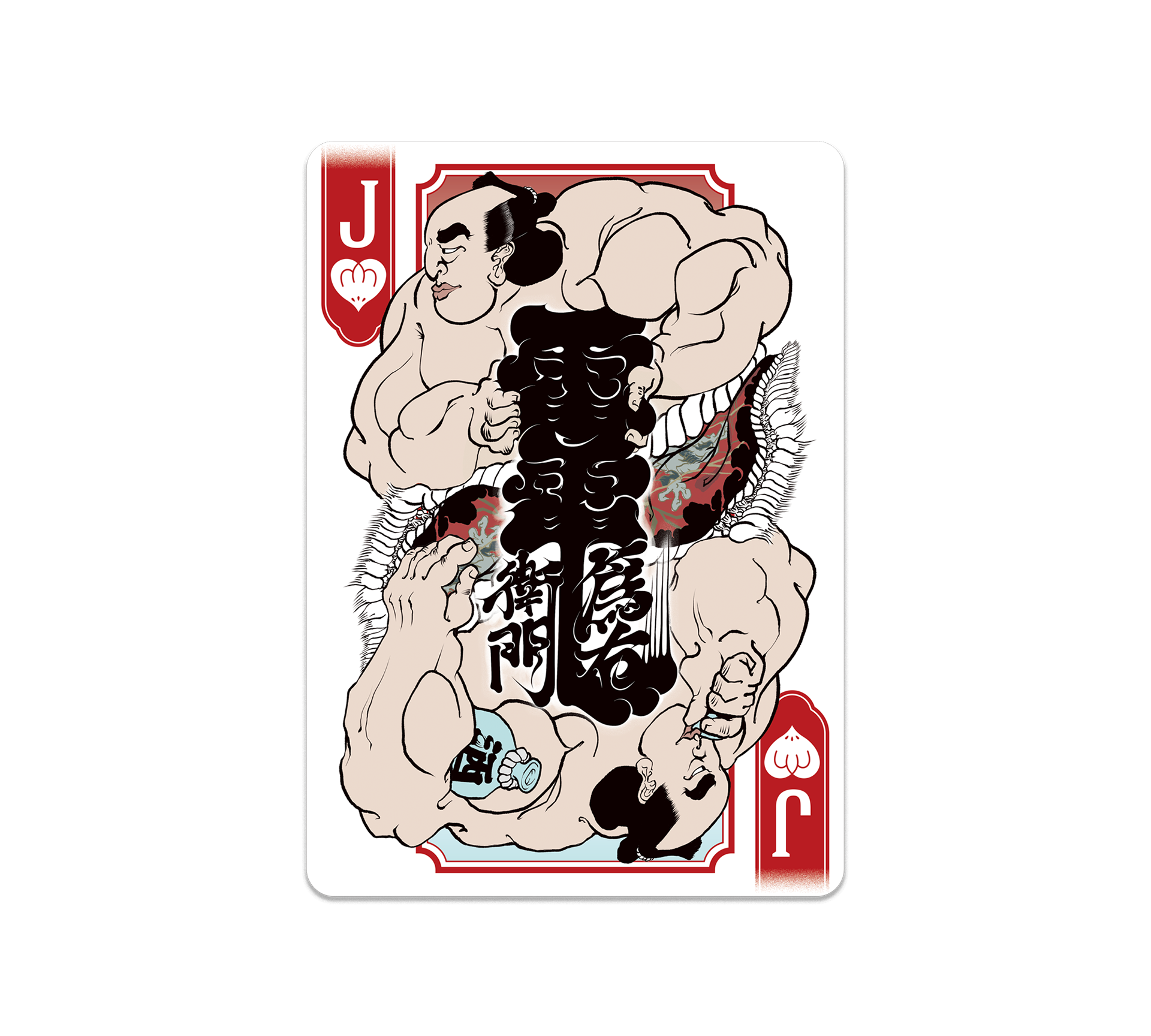
Raiden Tameemon
A legendary wrestler whose name is etched into the history of Edo sumo. Said to have stood over two meters tall, he was equally renowned for his formidable appetite for sake. His career winning rate exceeded ninety percent — a record that remains unmatched to this day. So overwhelming was his strength that certain techniques, including thrusting and slapping attacks, were banned specifically because of him. The illustration channels his fearsome power and larger-than-life presence without restraint.
雷電為右衛門
江戸相撲史に名を刻む伝説的力士。2mを超えるとも伝わる巨躯と酒豪ぶりで知られる。生涯勝率9割以上という前人未到の記録を誇り、あまりの強さに突き押しや張り手などの技を禁じ手とされたという逸話も残る。その勇ましさと豪快さをそのままイラストレーションに落とし込んだ。
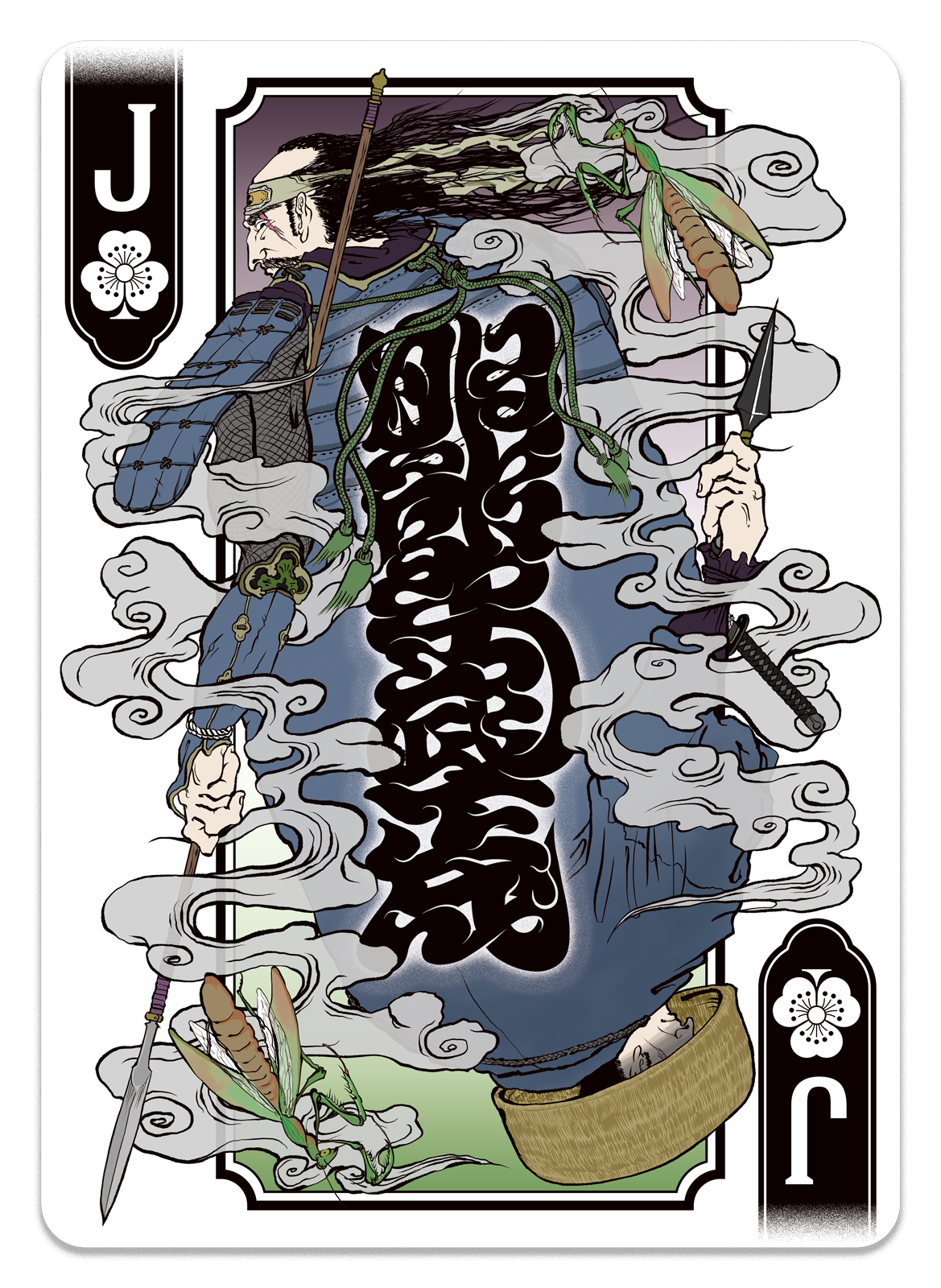
Hattori Hanzō Masanari
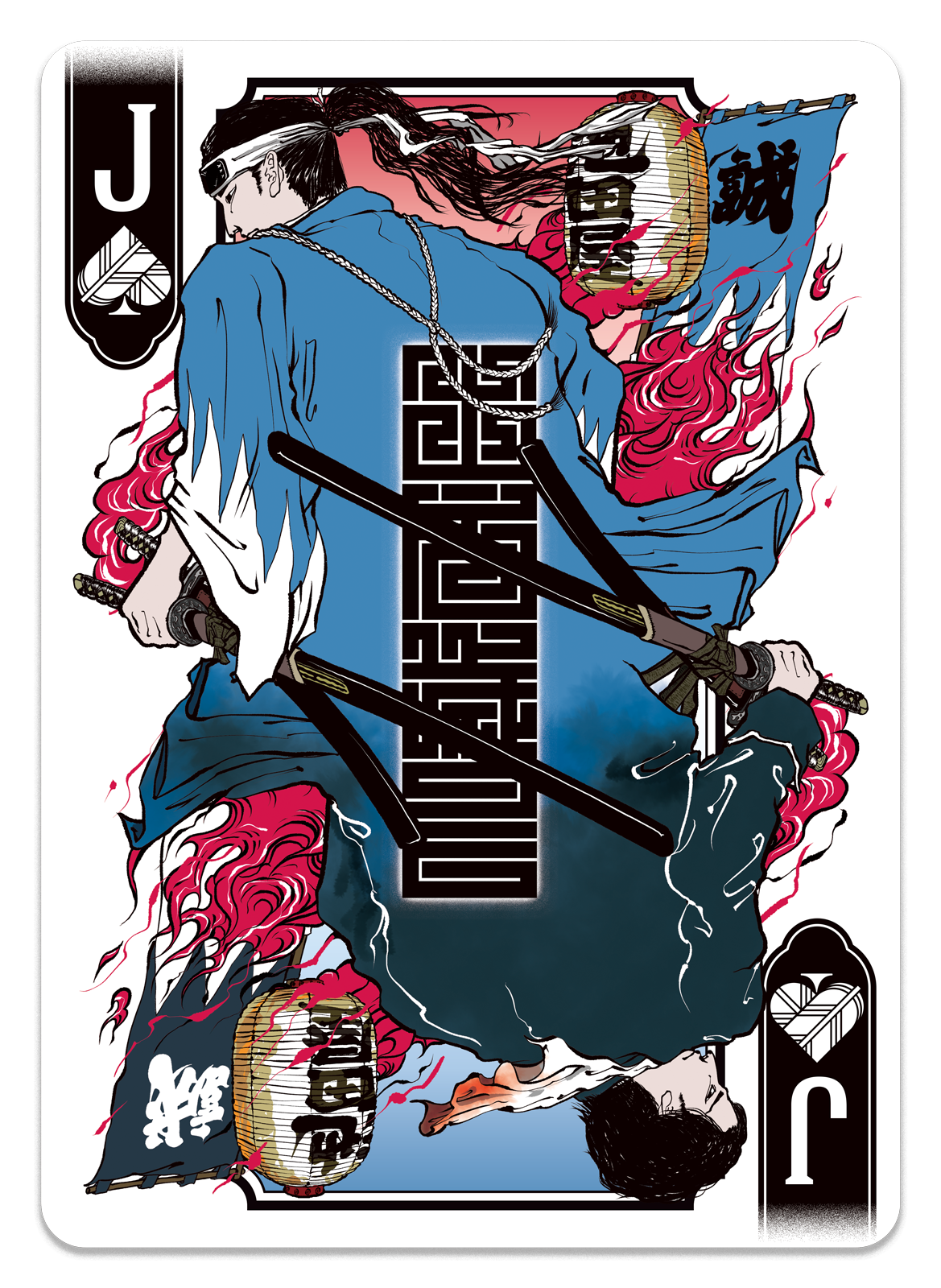
The quintessential figure when it comes to the ninja. While popular imagination dresses them in black from head to toe, real-life ninja are said to have spent their days disguised as farmers or traveling medicine peddlers, concealing their true identities within ordinary life. The illustration places these two contrasting faces — the fierce warrior of the battlefield and the unassuming figure blending into the world — side by side.
服部半蔵正成
いわゆる「忍者」の代名詞的存在。創作の世界では黒装束のイメージが定着しているが、実在の忍者は普段、農民や薬売りに扮して身分を隠していたと言われている。戦場での勇猛な姿と、世に紛れ込む市井の姿、その対比をイラストレーションに込めた。
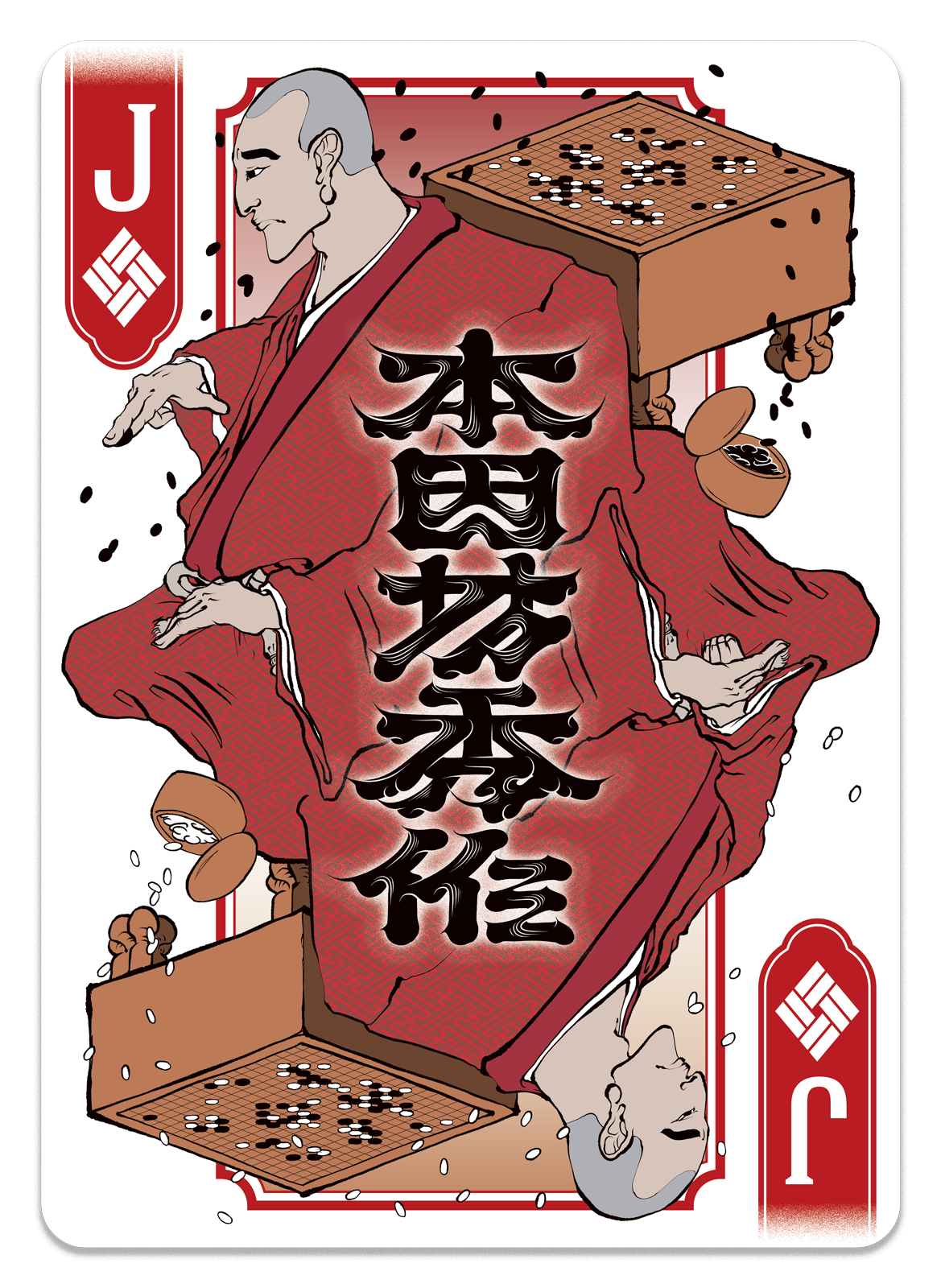
Honinbō Shūsaku
Known as the Go master who was once possessed by Fujiwara no Sai — the ghost at the heart of Shueisha's manga series "Hikaru no Go" — before the spirit moved on to the protagonist Hikaru. In historical fact, Shūsaku stands as one of the greatest Go players of the Edo period. The illustration captures the charged stillness of the board: one player poised to make their next move, the other waiting in quiet anticipation.
本因坊秀策
集英社の漫画「ヒカルの碁」に登場する幽霊・藤原佐為が、主人公ヒカルの前に乗り移っていた棋士として知られる。史実においても江戸時代最強の棋士のひとりとして名高く、白と黒、まさに次の一手を打つ瞬間と相手の手を待ち構える緊張の場面を描いた。
Hijikata Toshizō
The vice-commander of the Shinsengumi — a fiercely loyal armed organization that fought to the last in defense of the Tokugawa shogunate during the turbulent final years of the Edo period. Feared as the "Demon Vice-Commander" for his iron discipline, he continued to fight even after the fall of Edo, making his final stand as far north as Hokkaido.
土方歳三
幕末期、幕府を守ろうとした徳川家に忠実な武装組織・新撰組の副長。「鬼の副長」と恐れられた厳格な統率者であり、江戸崩壊後も北海道まで転戦しながら最後まで戦い続けた。
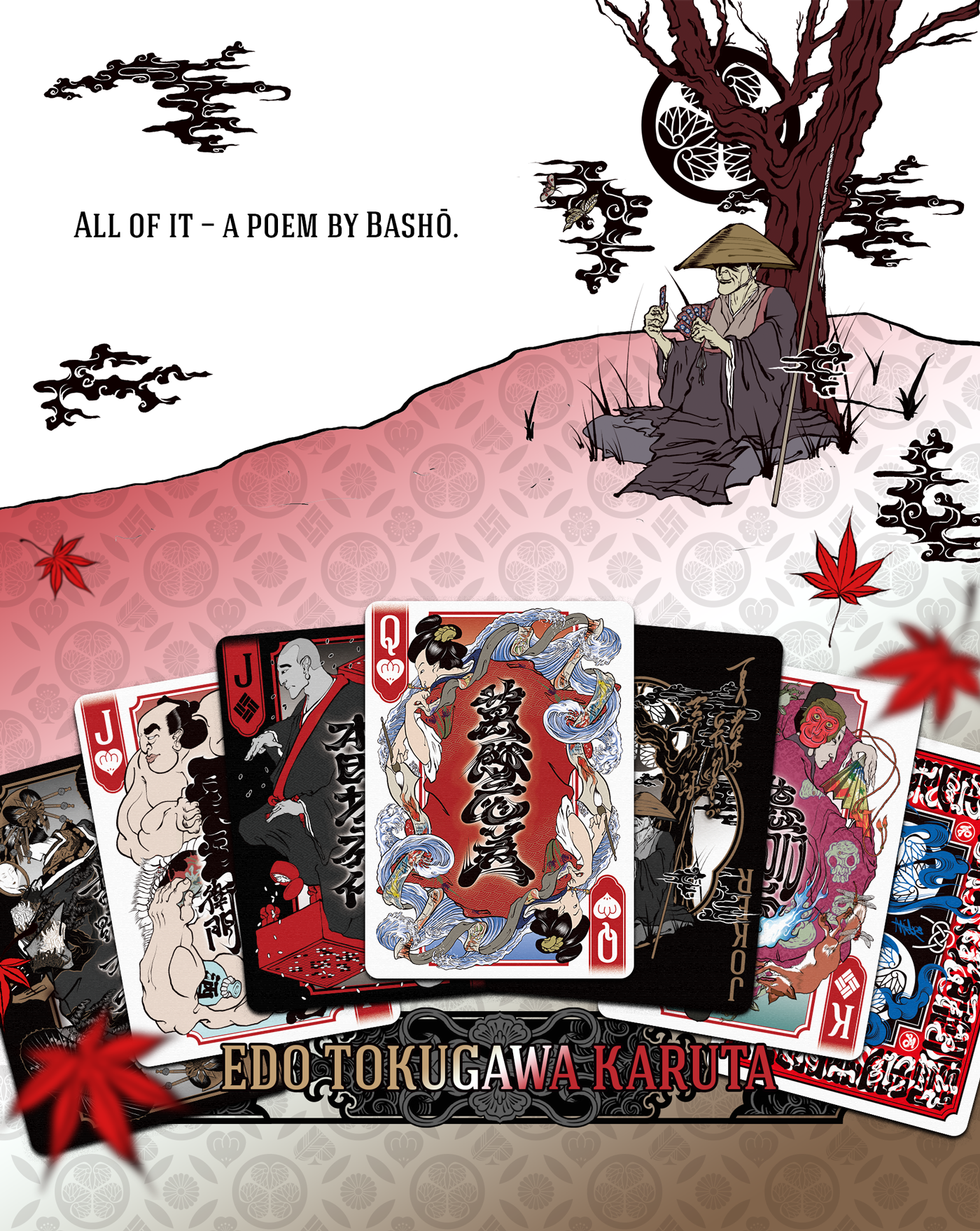
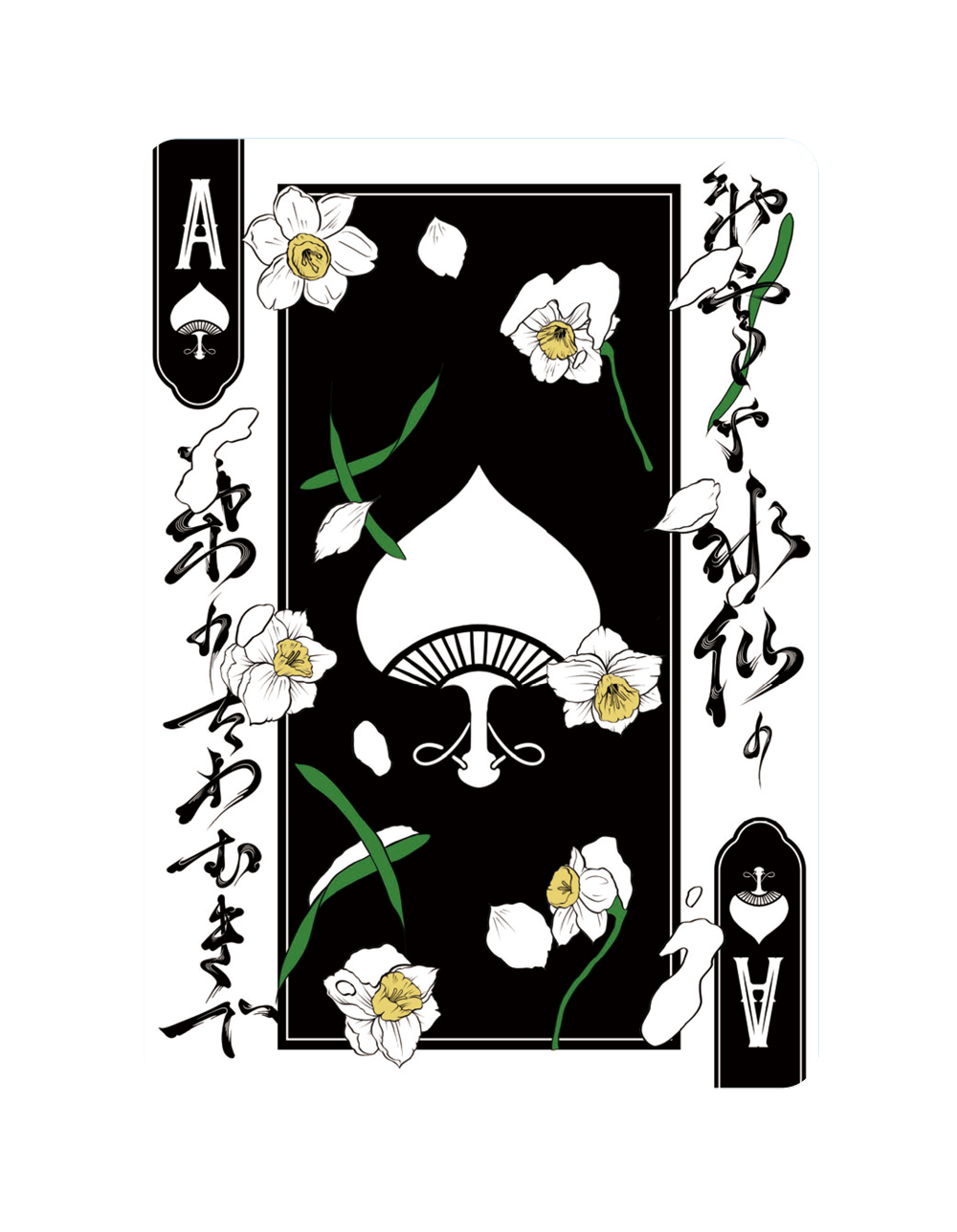
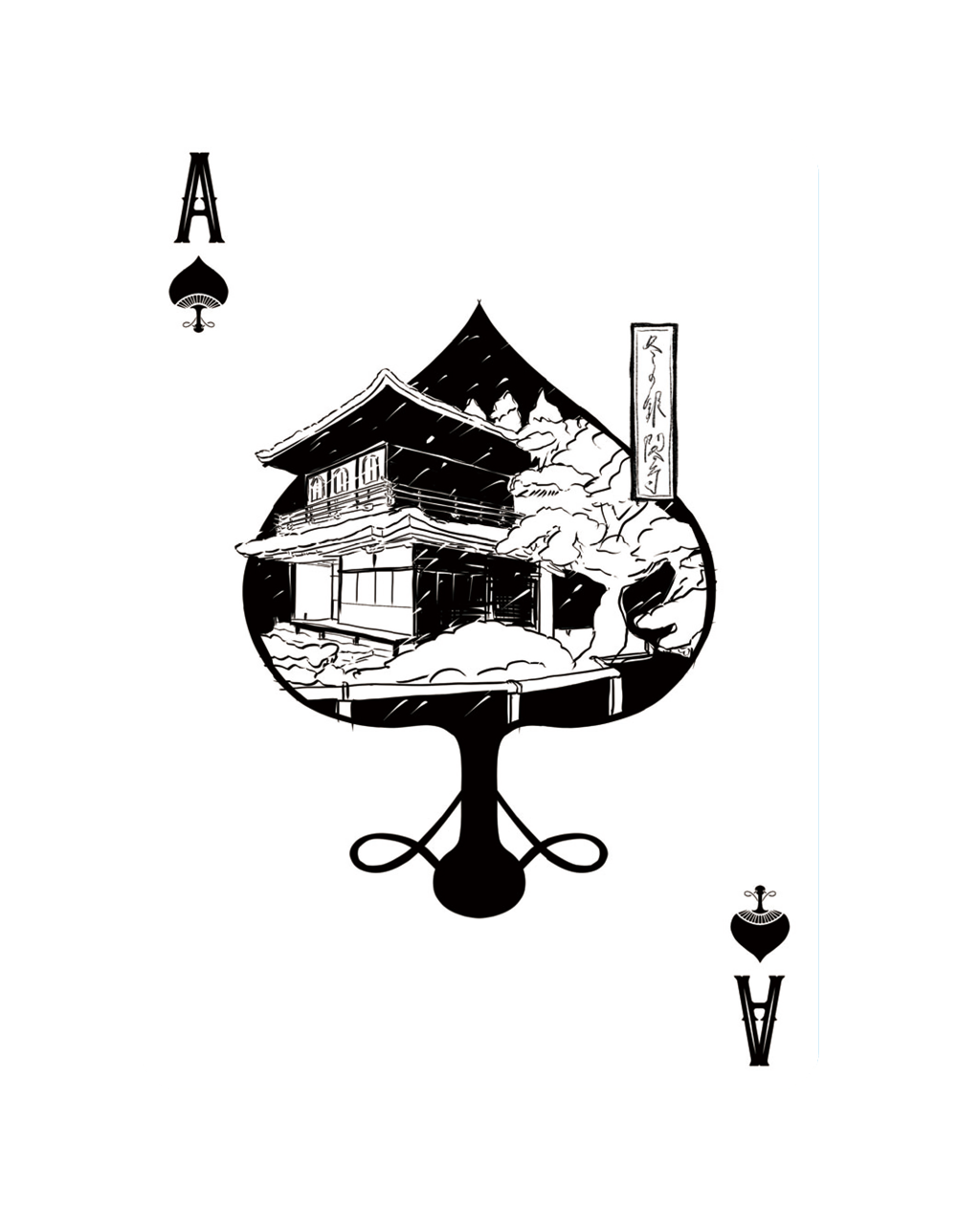
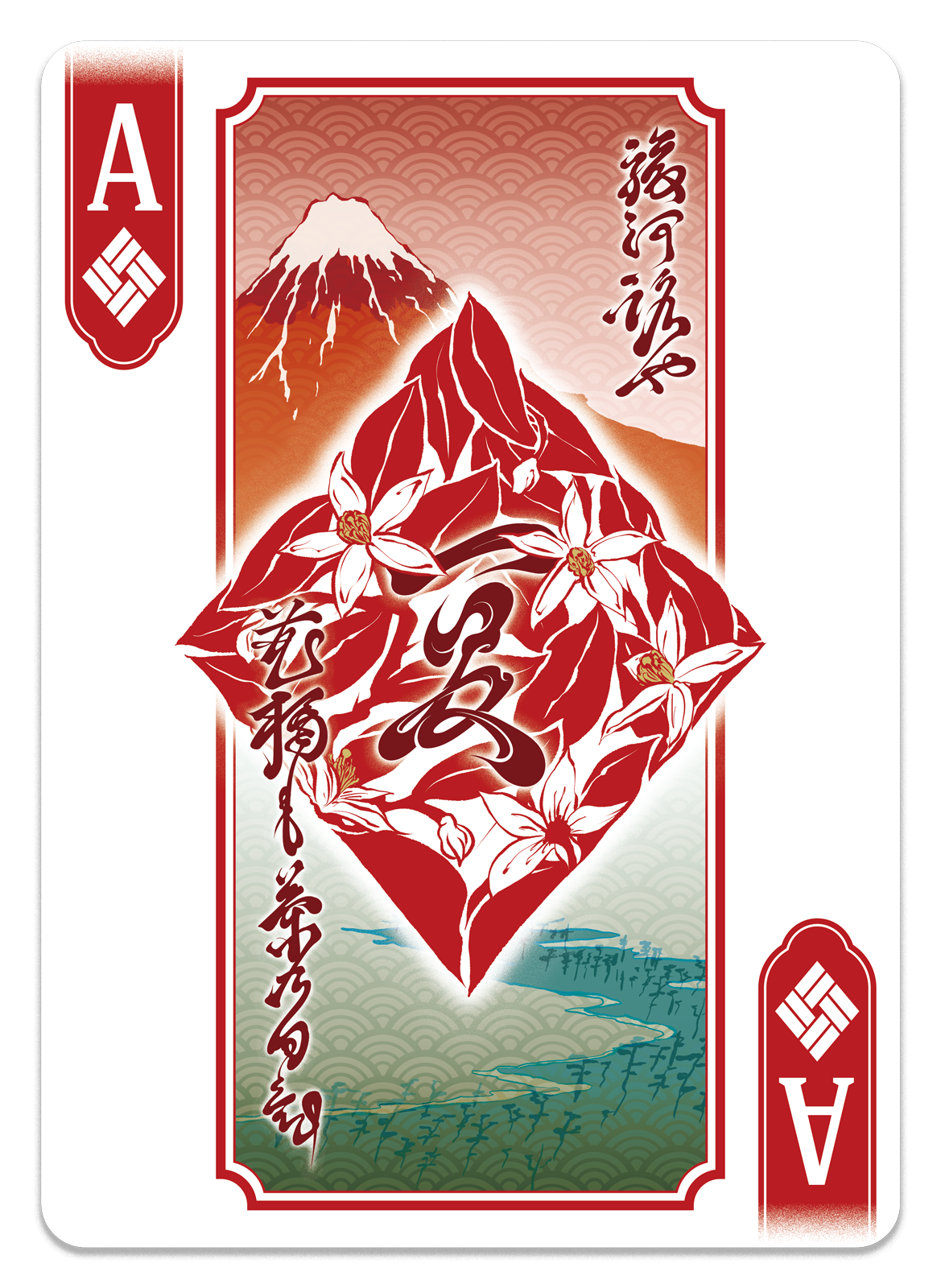
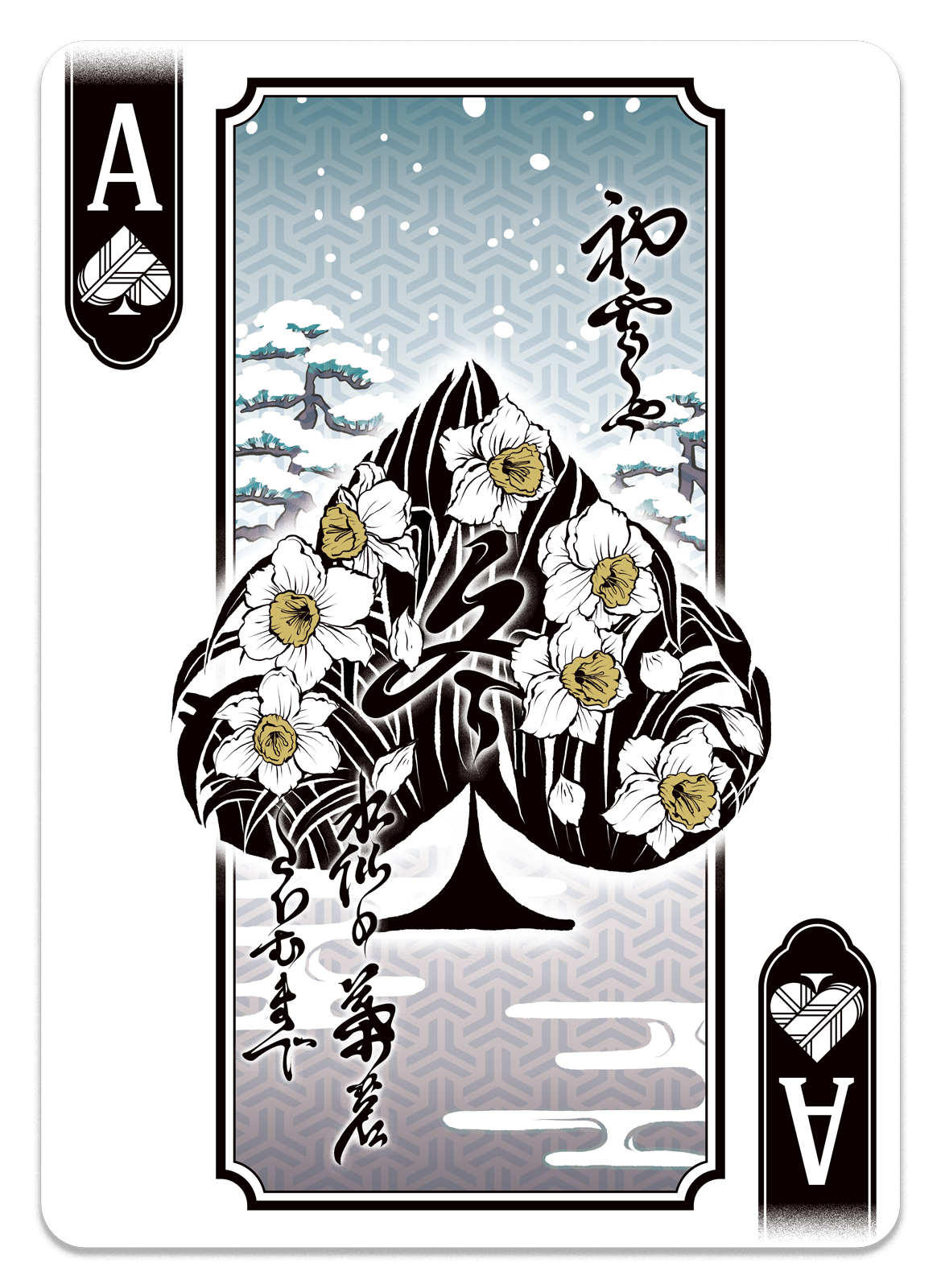
Each Ace is accompanied by a seasonal poem and floral motif. Every verse is drawn from the work of Matsuo Bashō — the JOKER of this deck. The world contained within these cards is woven entirely from the landscapes he witnessed and the truths he sought to convey.
各Aには、季節の歌と花を添えました。いずれも、このデッキのJOKERである松尾芭蕉が詠んだ句です。このトランプの世界観はすべて、彼が見た景色と、彼が伝えようとした事象によって紡がれています。
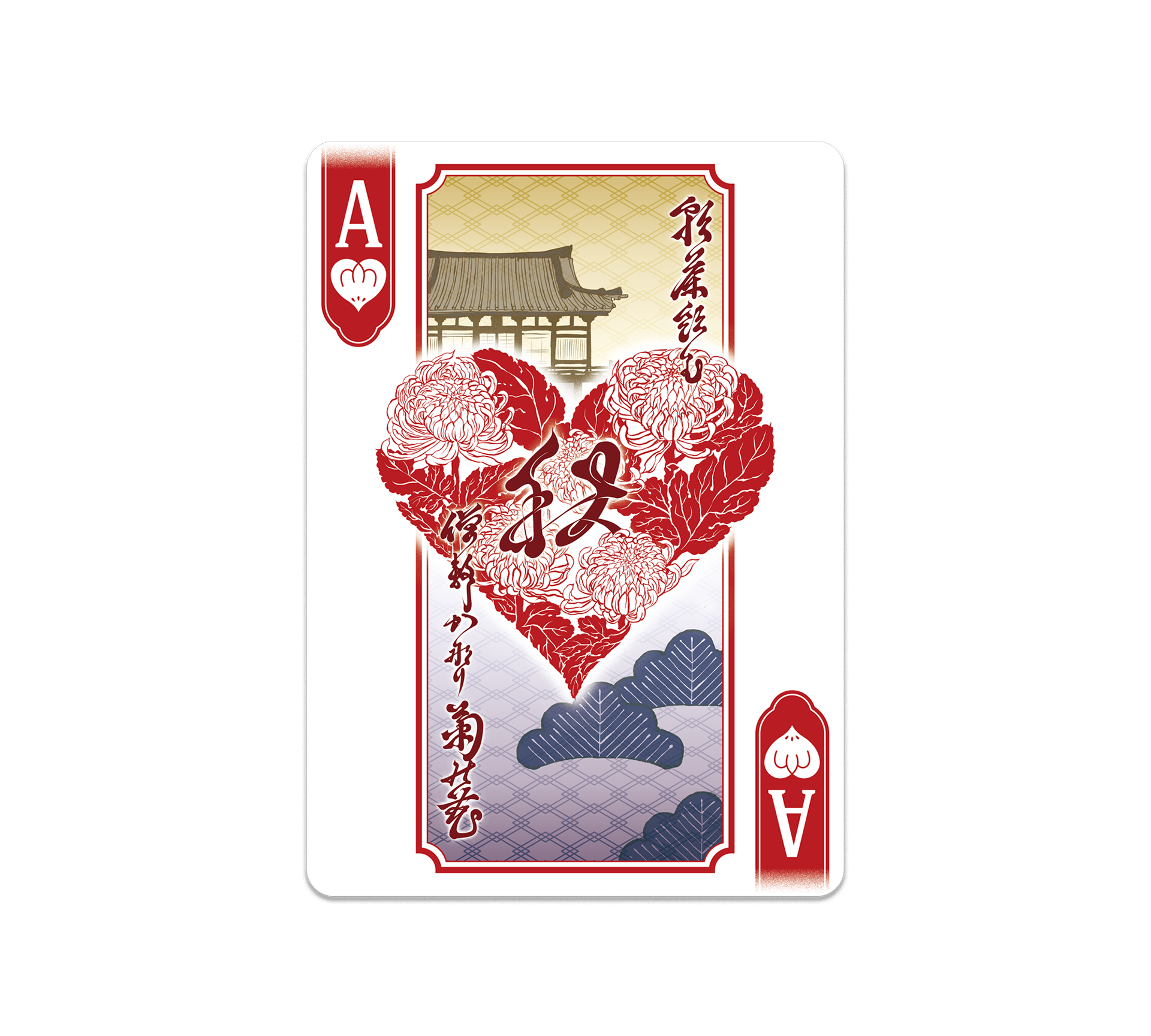
❤︎秋・菊の花・朝茶飲む僧静かなり菊の花
Autumn · Chrysanthemums
Autumn · Chrysanthemums
A monk is drinking tea in the garden in the morning.
Chrysanthemums bloom in front of their eyes.
Chrysanthemums bloom in front of their eyes.
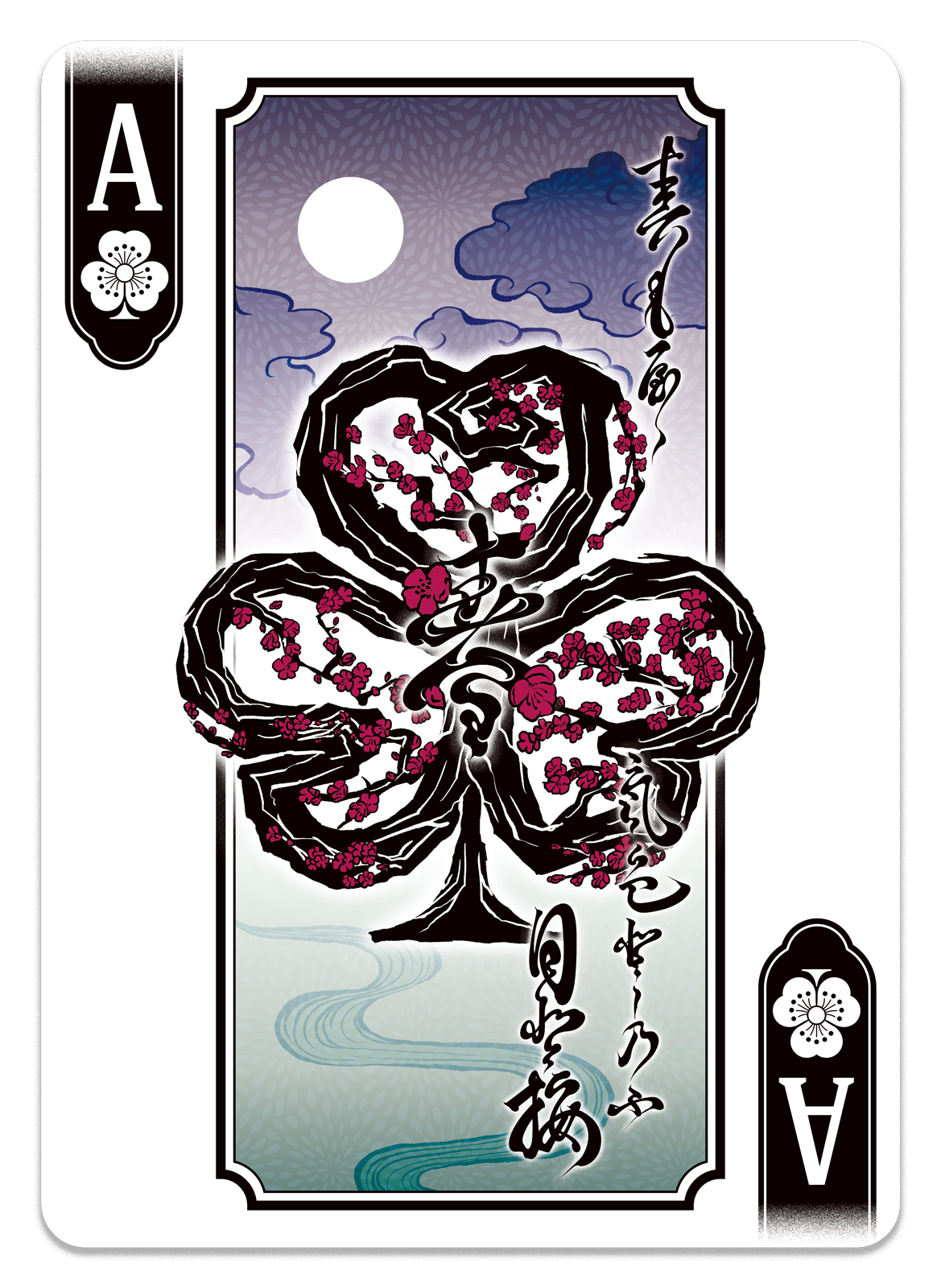
♣︎春・梅・春もやや気色ととのふ月と梅
After a long winter, plums began to bloom.
The moon has come.
After a long winter, plums began to bloom.
The moon has come.
♦︎夏・橘・駿河路や花橘も茶の匂ひ
Summer · Hana-Tachibana・Although it is the season of the flower of Tachibana,
Suruga-road smells of tea.
Summer · Hana-Tachibana・Although it is the season of the flower of Tachibana,
Suruga-road smells of tea.
♠︎冬・水仙・初雪や水仙の葉のたわむまで
Winter · Daffodils・The first snow has fallen. The snow piles up on the daffodils,
and the leaves are bent.
Winter · Daffodils・The first snow has fallen. The snow piles up on the daffodils,
and the leaves are bent.
- J O K E R -
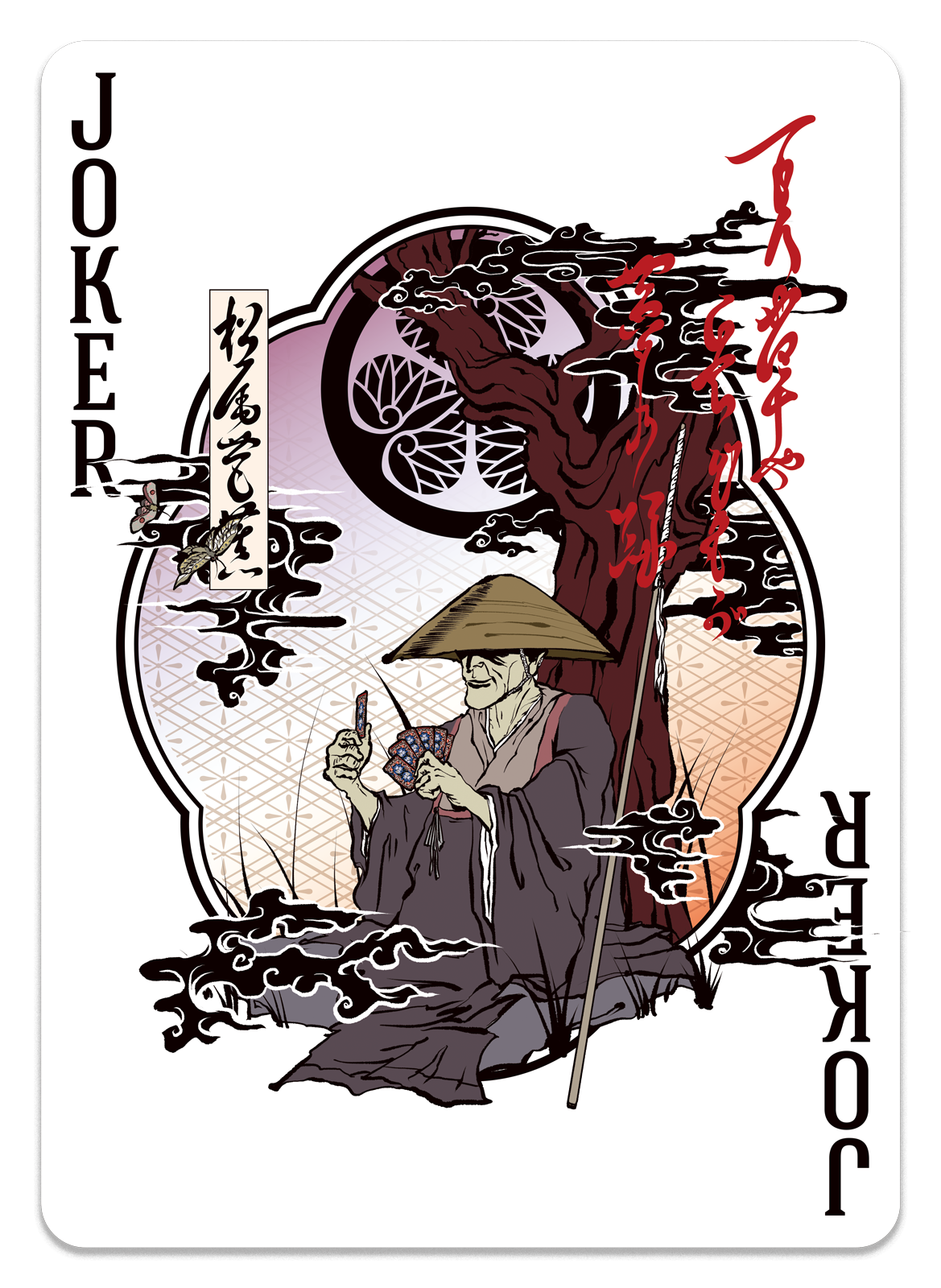
松尾芭蕉「夏草や 兵どもが 夢の跡」
Matsuo Basho -Poemer-
Matsuo Basho -Poemer-
The great people disappeared from their dreams, all buried in summer grass.
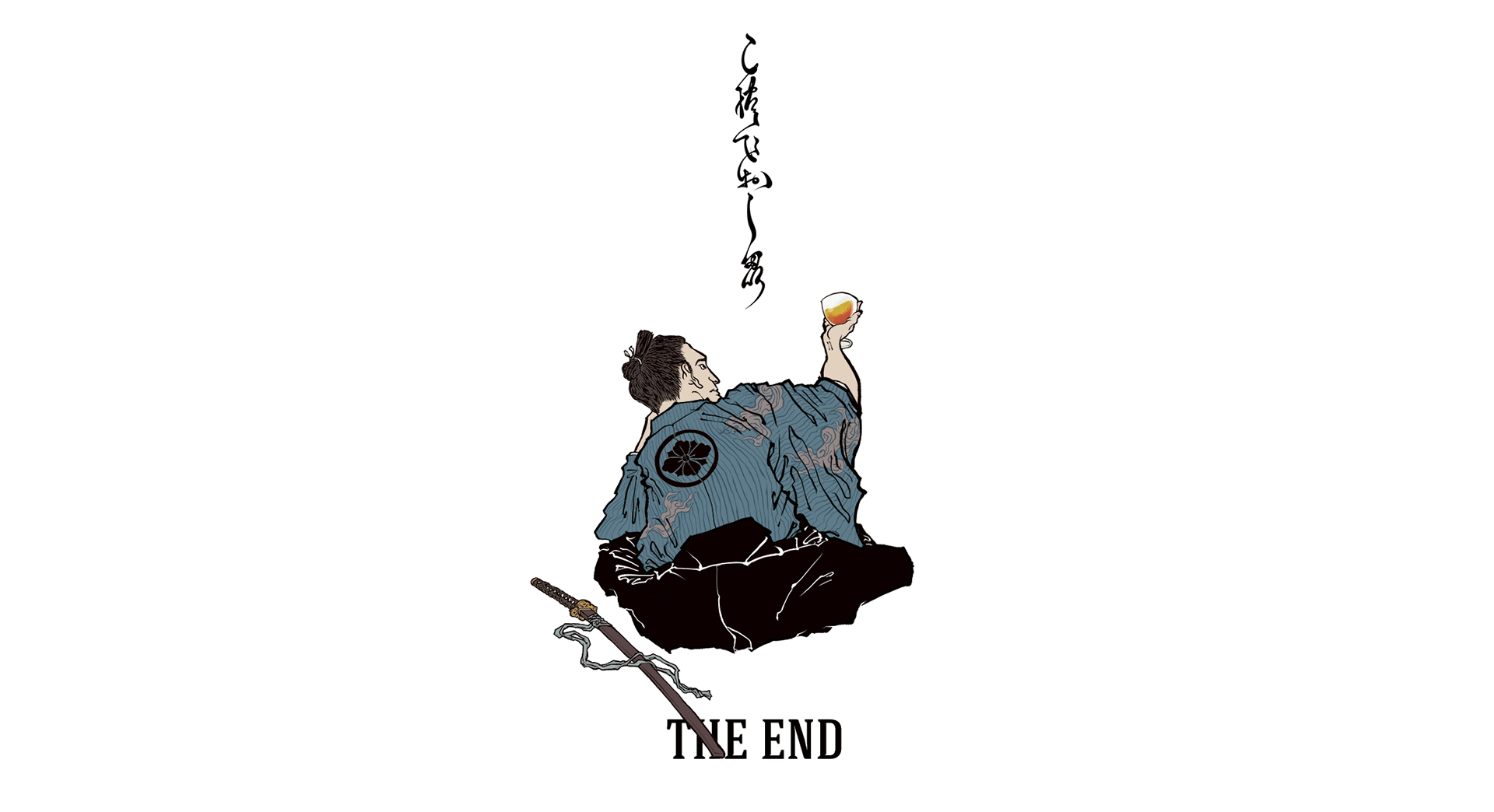
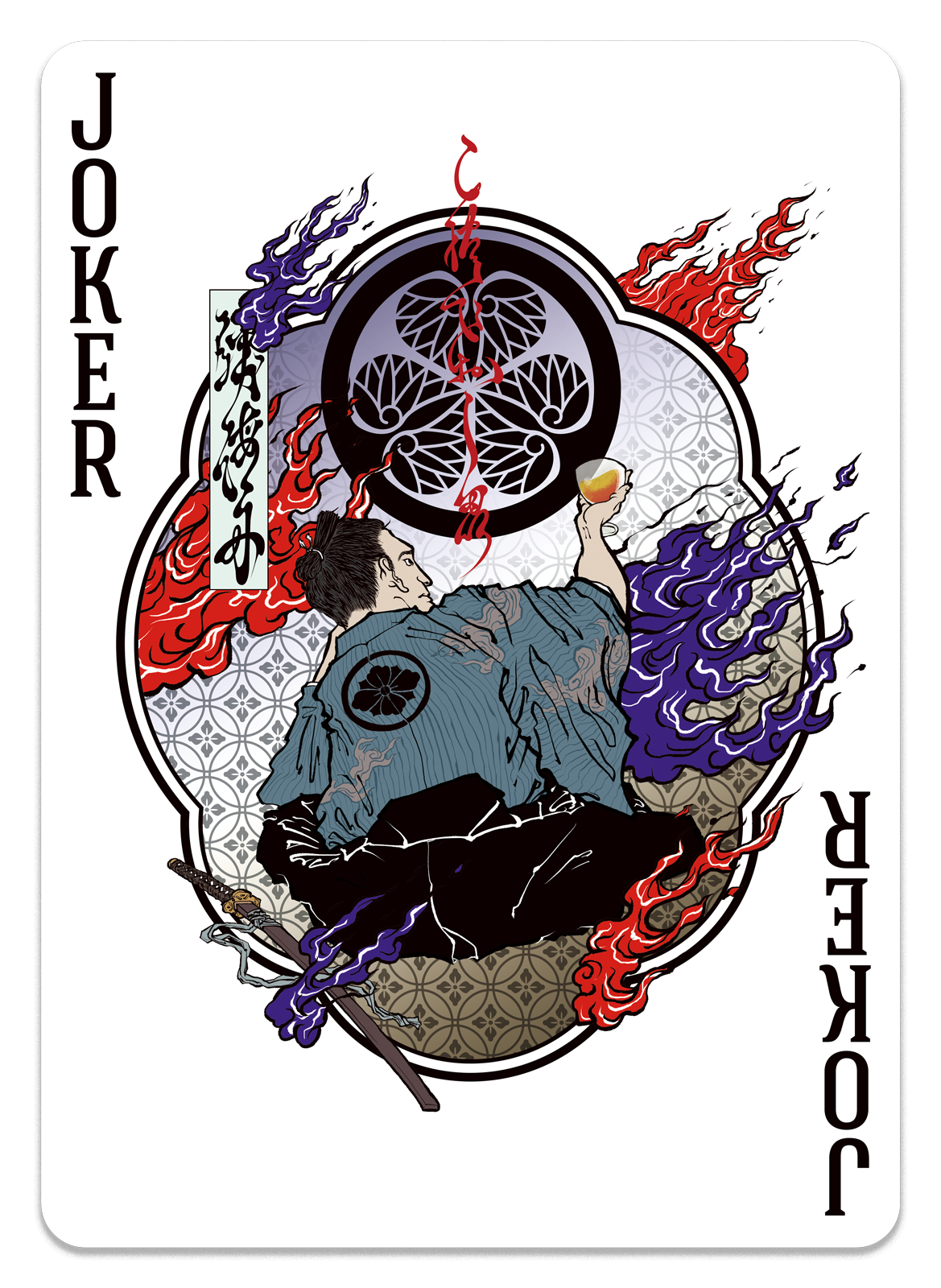
勝海舟「これでおしまい」
Katsu Kaishu
The end
At the end of the Edo era, he was a politician who tried to keep Tokugawa's blood from disappearing. He liked brandy and drank when he died. He said, "The end."
The entire world contained within this deck is built upon a single premise: everything here is a landscape seen and sung by Matsuo Bashō. Though celebrated as a poet who wandered the length and breadth of Japan, there is a theory that his travels concealed a hidden purpose — that of a spy. Within this deck, he is depicted taking a quiet moment of rest against a tree between missions, gazing in stillness at the cards before him.
The second Joker is Katsu Kaishū — the man who made possible the bloodless surrender of Edo Castle and set in motion the end of the Edo period. His death, too, was nothing short of dramatic. After collapsing following a bath, he was handed brandy in lieu of the ginger tea that could not be brought in time, and drew his last breath moments after drinking it. His final words were reported to be: "Kore de oshimai" — "This is the end."
このプレイングカードの世界観はすべて、松尾芭蕉が見て・詠んだ景色という設定のもとに成り立っています。詩人として各地を旅した芭蕉ですが、一説にはその旅の裏に諜報活動があったとも言われています。このデッキの中で彼は、その任務の合間に木に寄り添い休息をとりながら、静かにこのトランプを眺めています。
もう一枚のJOKERは勝海舟です。江戸城無血開城を実現し、江戸時代に終止符を打つきっかけを作った人物として、その役割を担っています。そして彼の最期もまた劇的でした。風呂上がりに倒れた際、間に合わないとして持ってこられたブランデーを飲んだ直後に息を引き取り、その最期の言葉は「コレデオシマイ」だったと伝わっています。
BACK DESIGN & EXTRA CARD
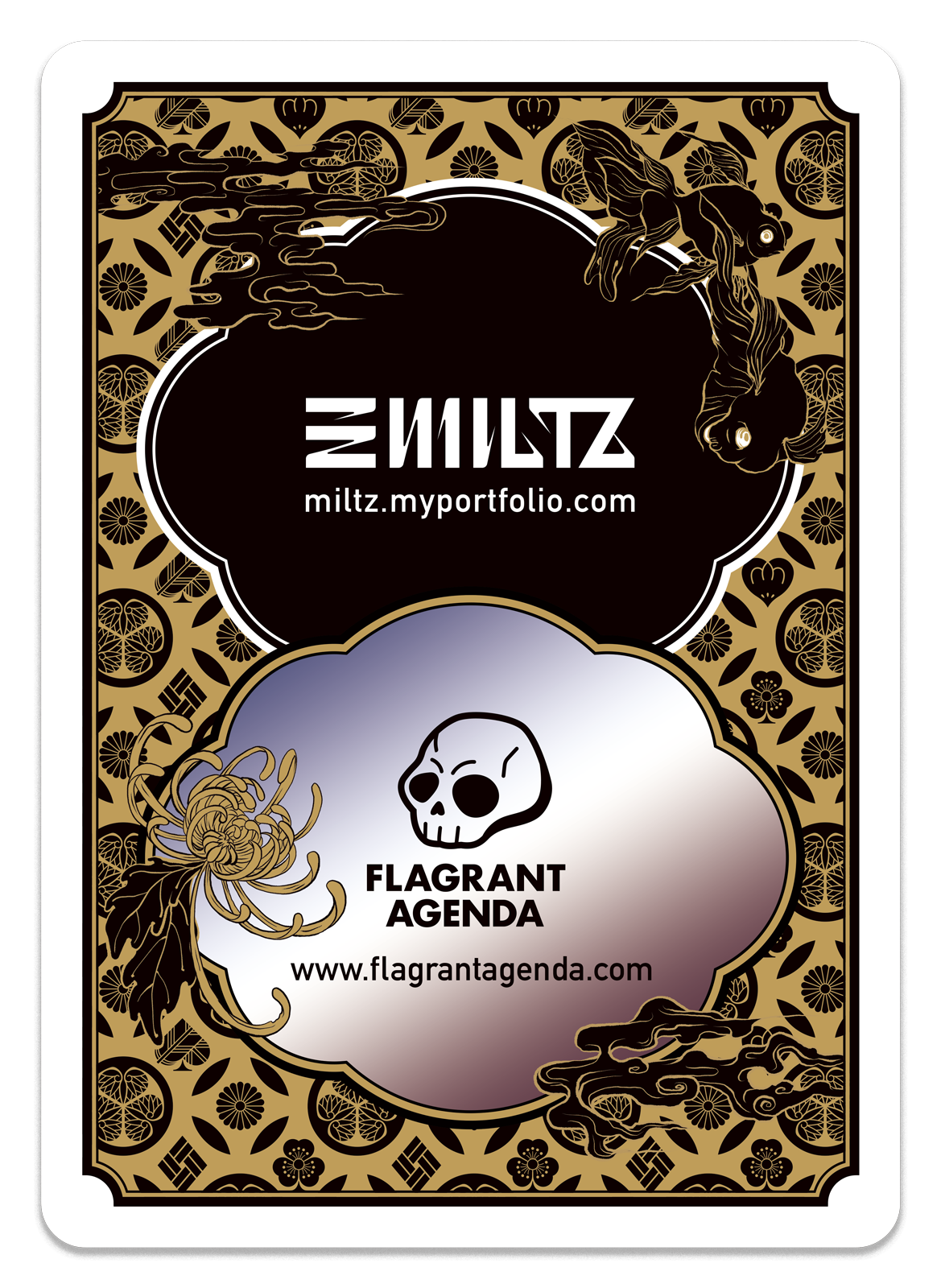
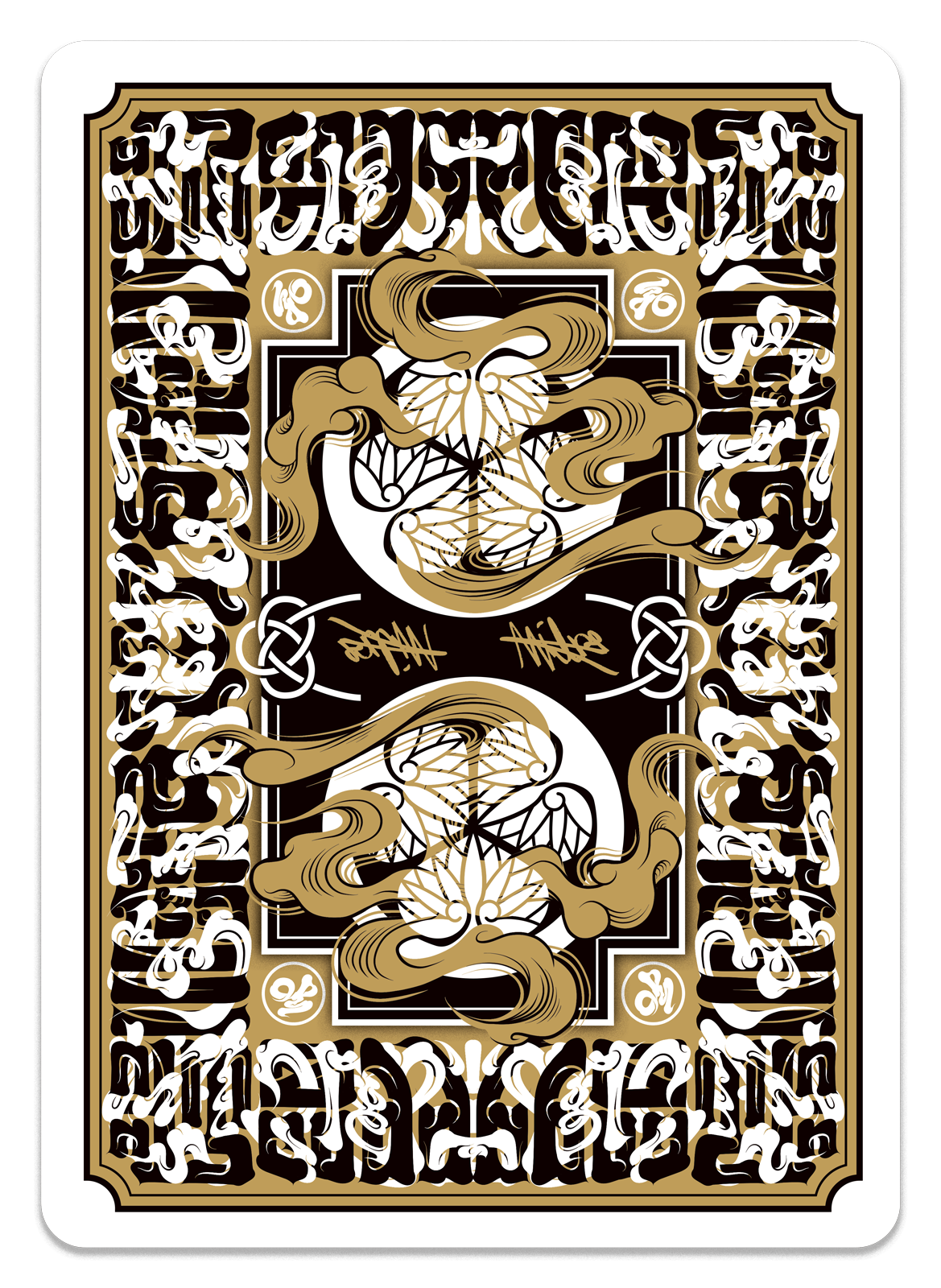
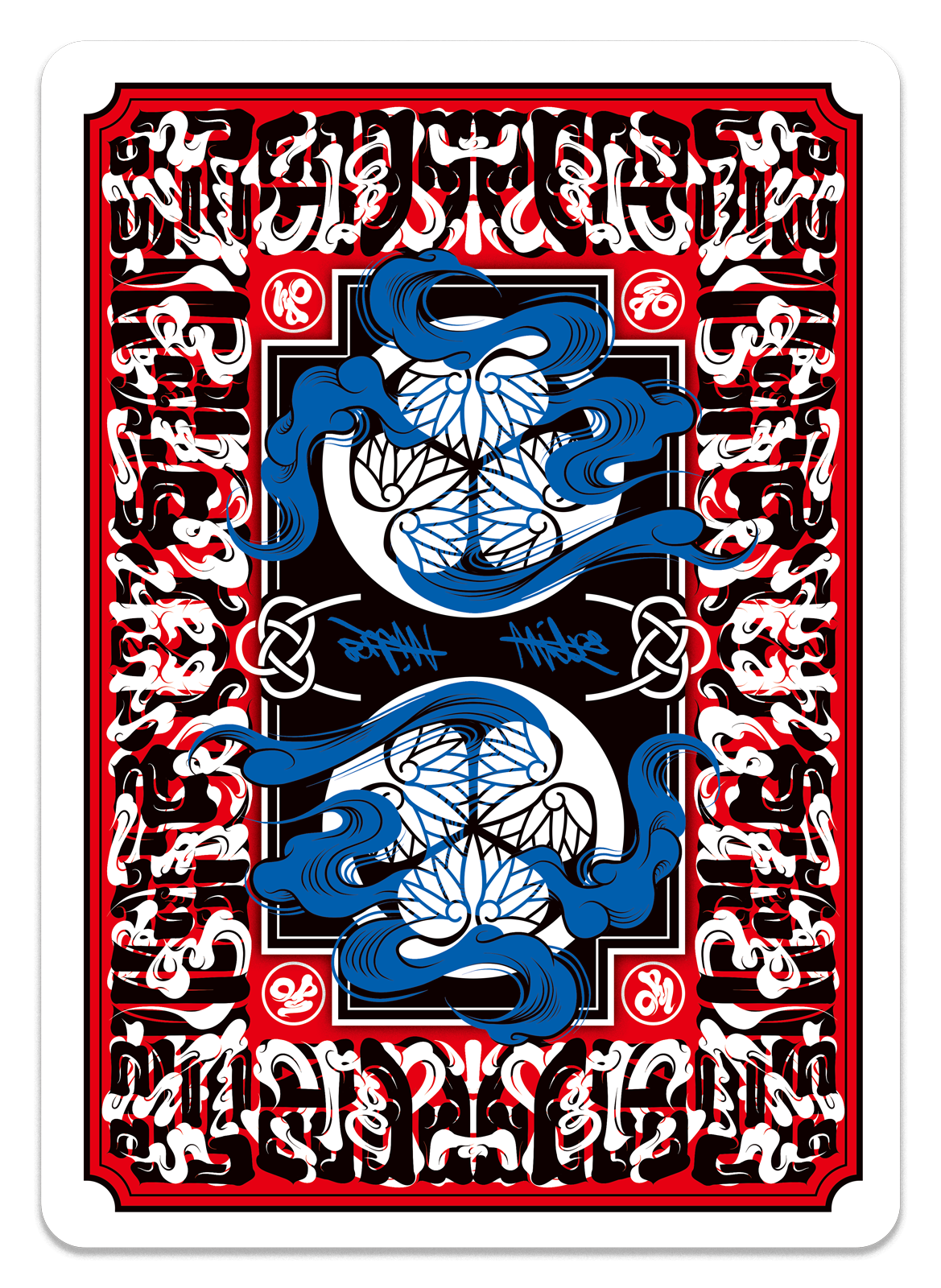
TYPOGRAPHY - NEO EDO MOJI -
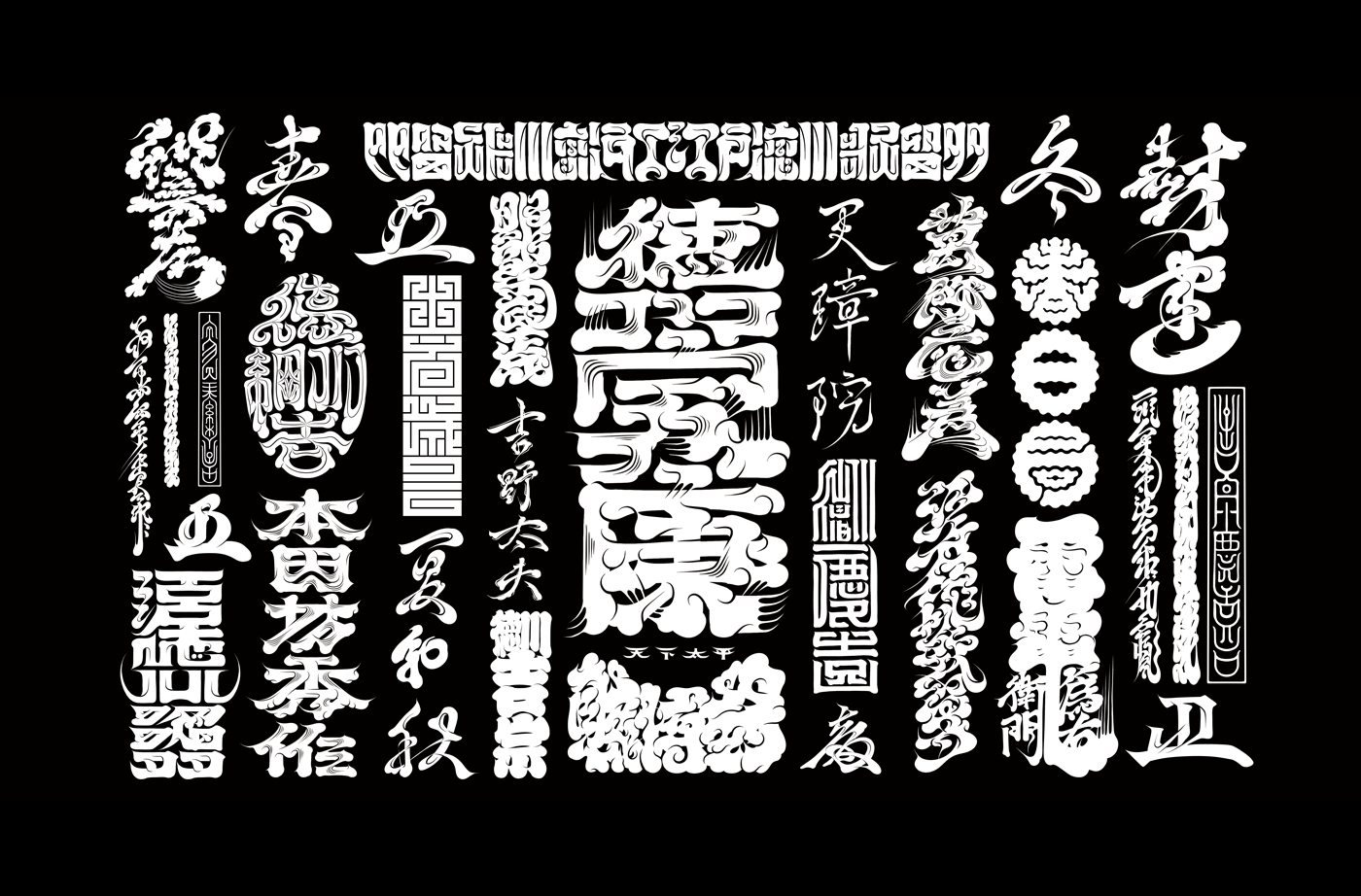
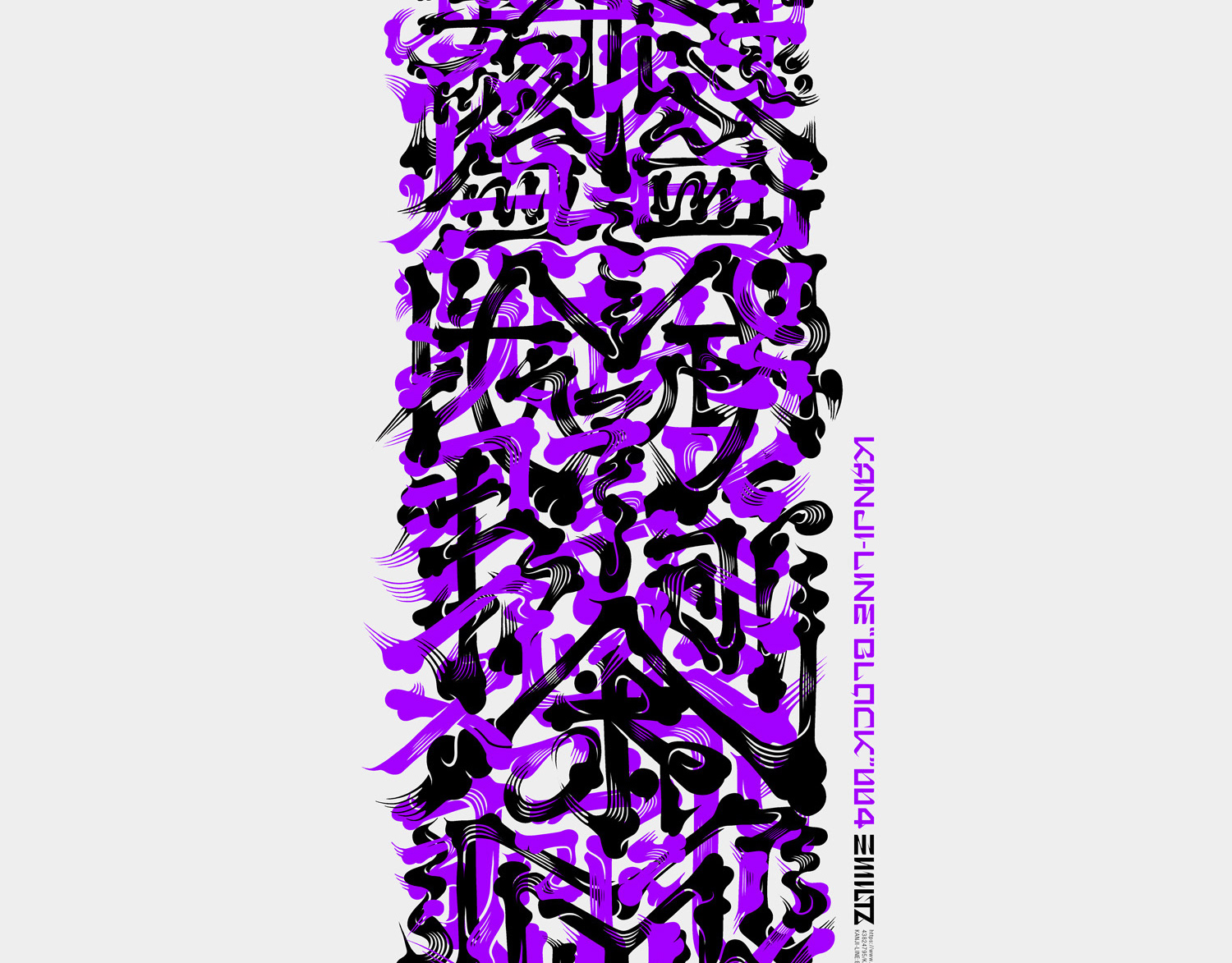
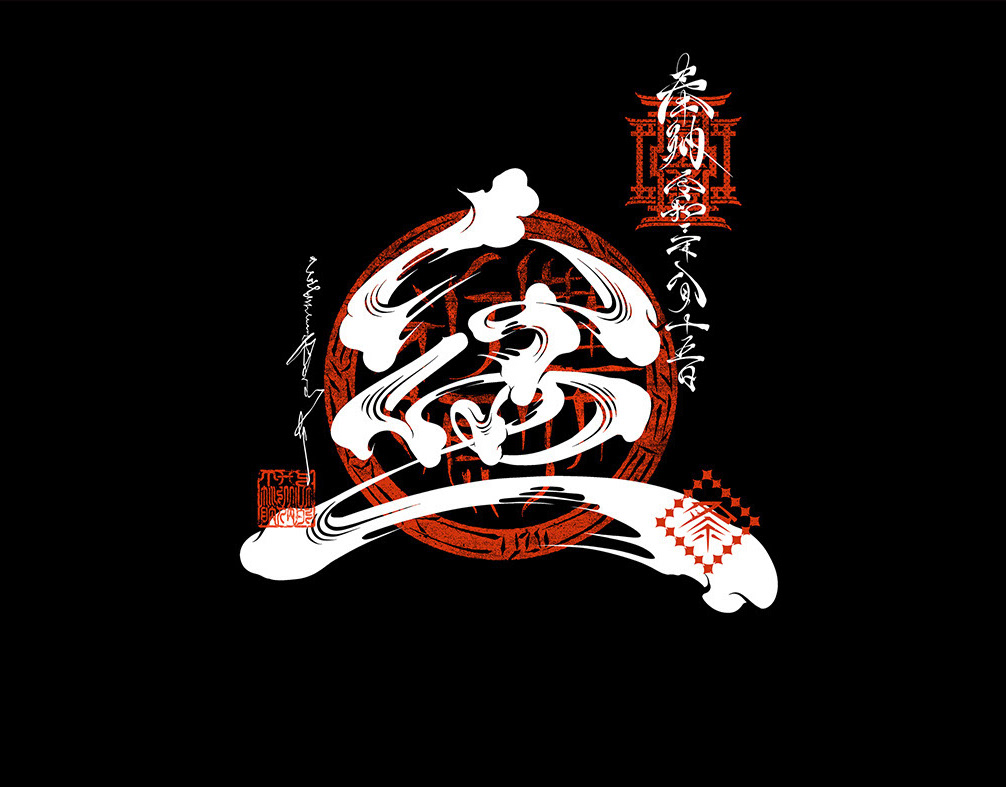
Traditional Edomoji forms the foundation, upon which original interpretations and arrangements are layered and expanded across a wide range of styles. Kabuki-moji, Kanteiryu, Kago-moji, Sumo-ji, Hige-moji, Kaku-ji, Kaō, Botan-moji, and Joryu-moji are thrown together without boundaries — constructing a singular, chaotic world of lettering that defies easy categorization.
伝統的な江戸文字をベースに独自のアレンジを加え、様々な形式で展開した。歌舞伎文字・勘亭流・籠文字・相撲字・髭文字・角字・花押・牡丹文字・女流文字など、異なる様式を垣根なく混在させることで、唯一無二のカオスな文字世界を構築している。


DX BOX PLANNING
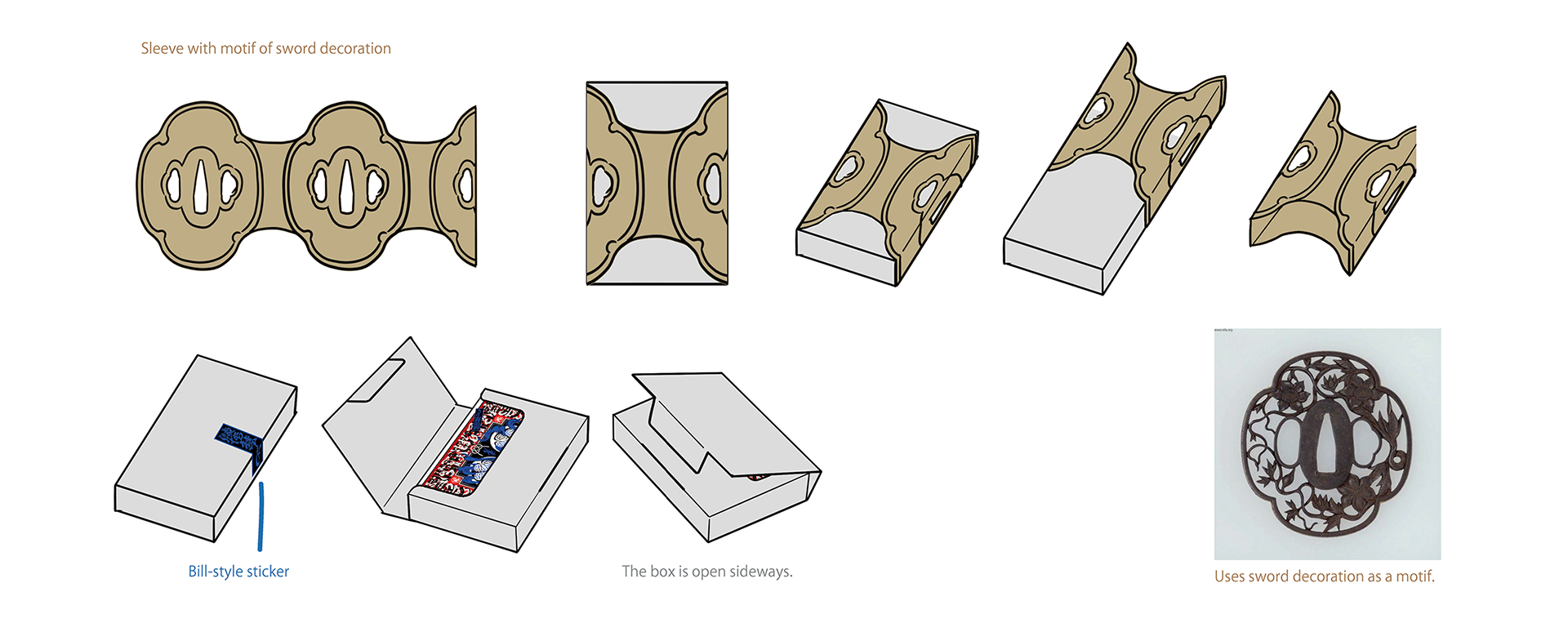
Case Prototype — 1st Draft
A commercially available confectionery box that matched the intended design was disassembled to obtain its die-cut layout, which was then used as the basis for reconstructing the structure. A mockup was first created using copy paper to verify the shape and dimensions.
ケース試作・第一稿
イメージに近い既製品のお菓子の箱を分解して展開図を取り出し、それをもとに構造を再構築した。まずはコピー用紙を使ってモックアップを作成し、形状と寸法を確認した。
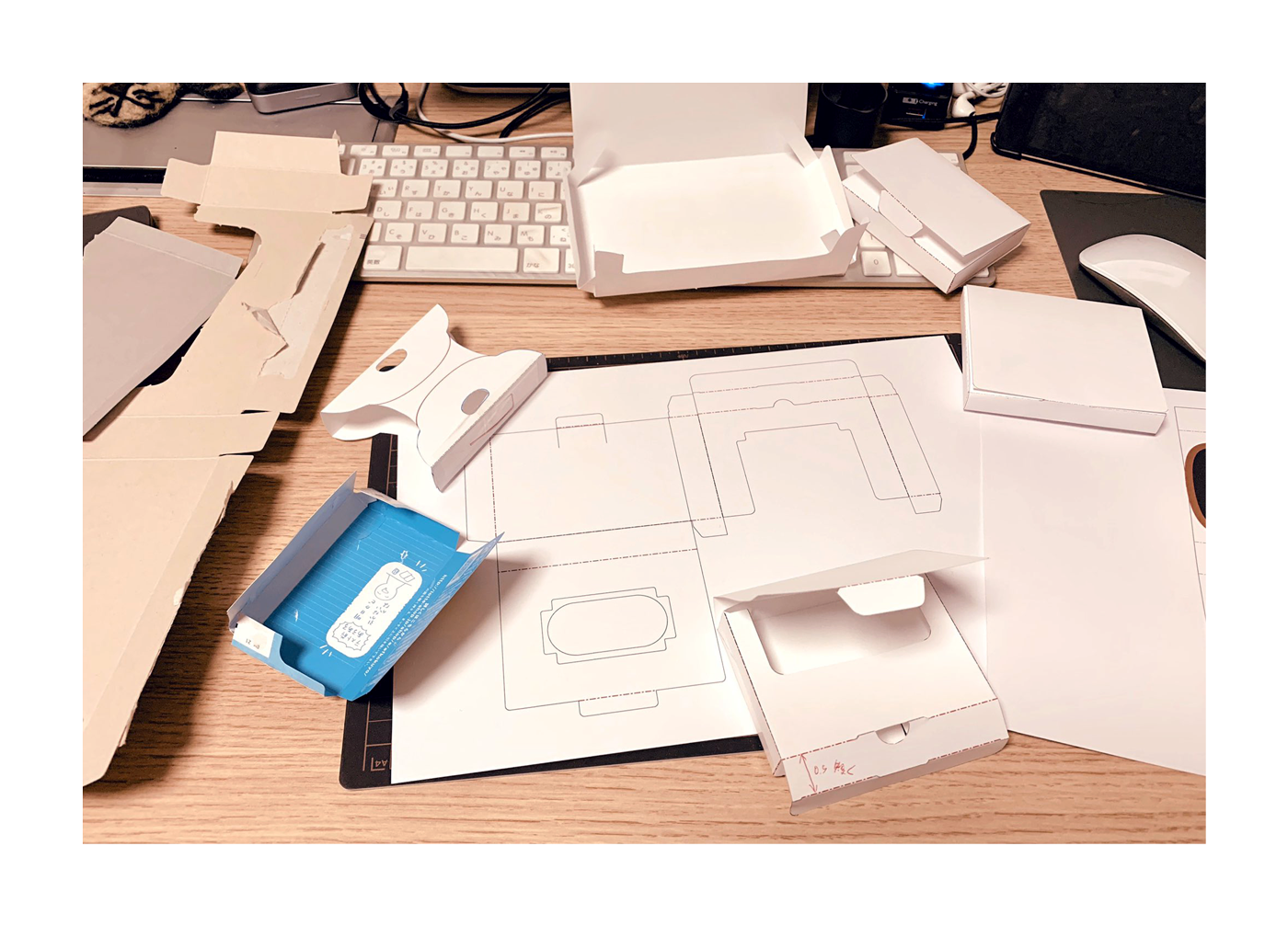
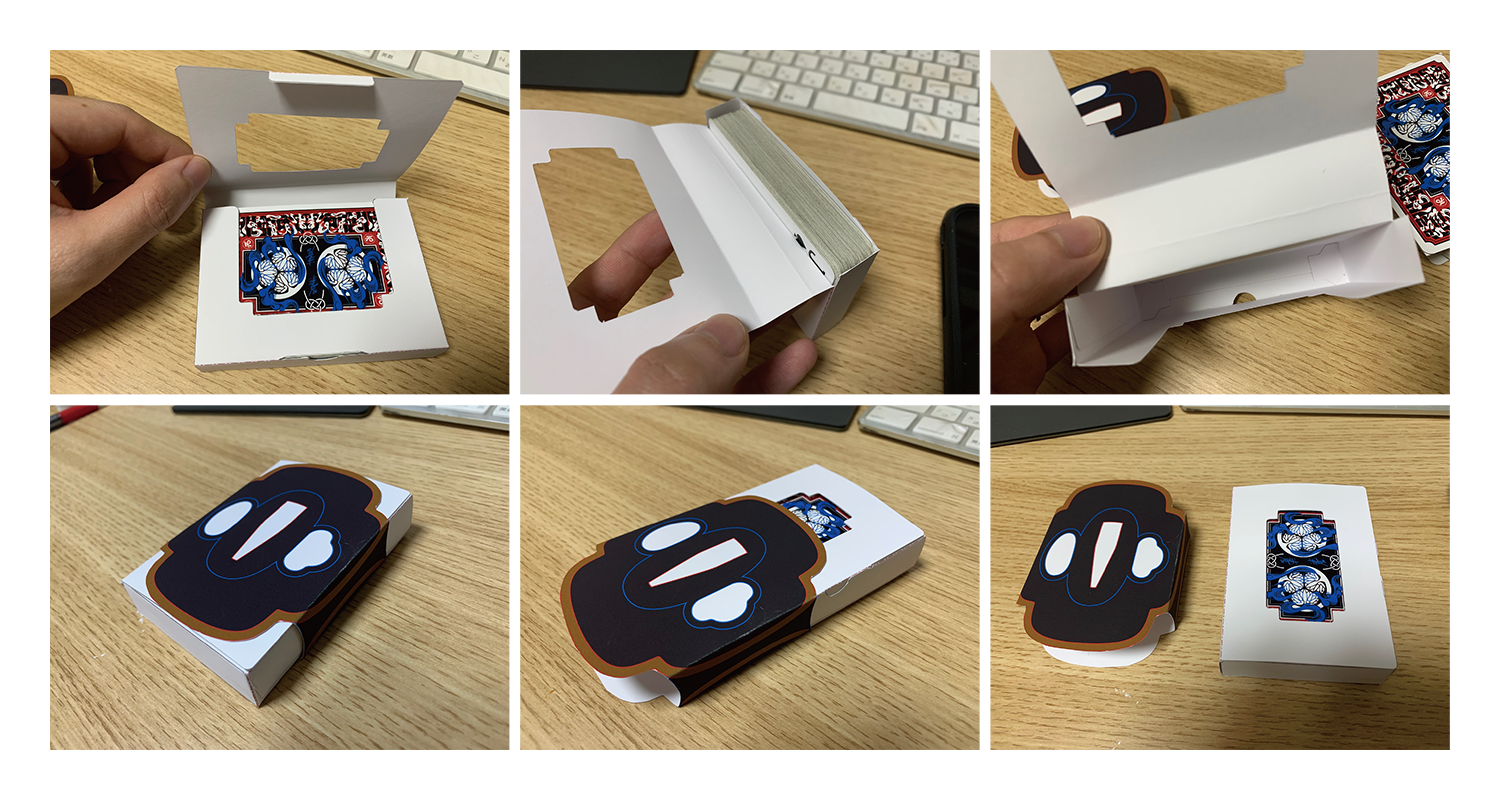
Case Prototype — 2nd Draft
With cards actually inserted, fine adjustments were made to details such as the appearance of the lid opening and the length of the slits.
ケース試作・第二稿
実際にカードを入れた状態で、蓋の穴の見え方やスリットの長さなどの細部を調整した。
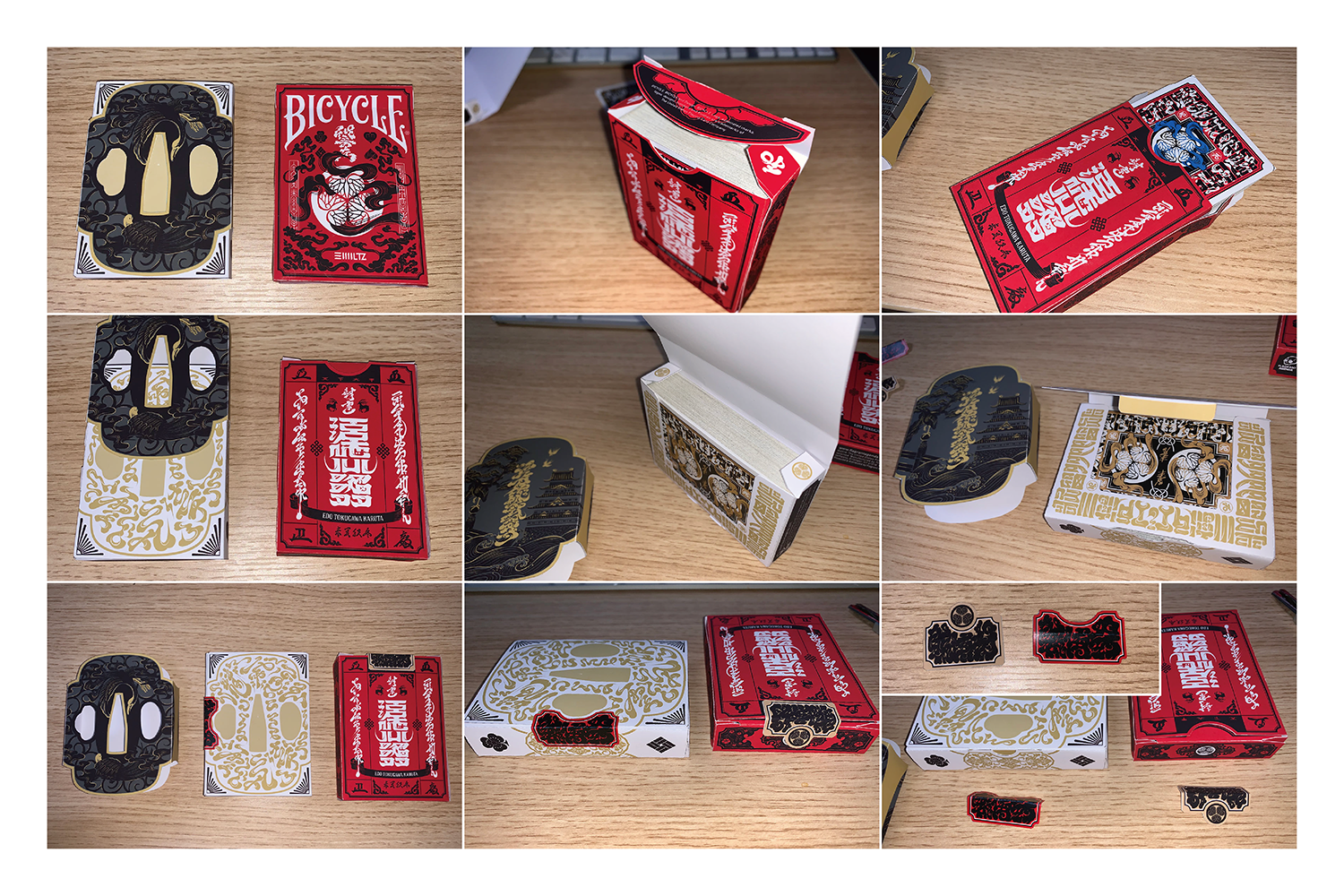
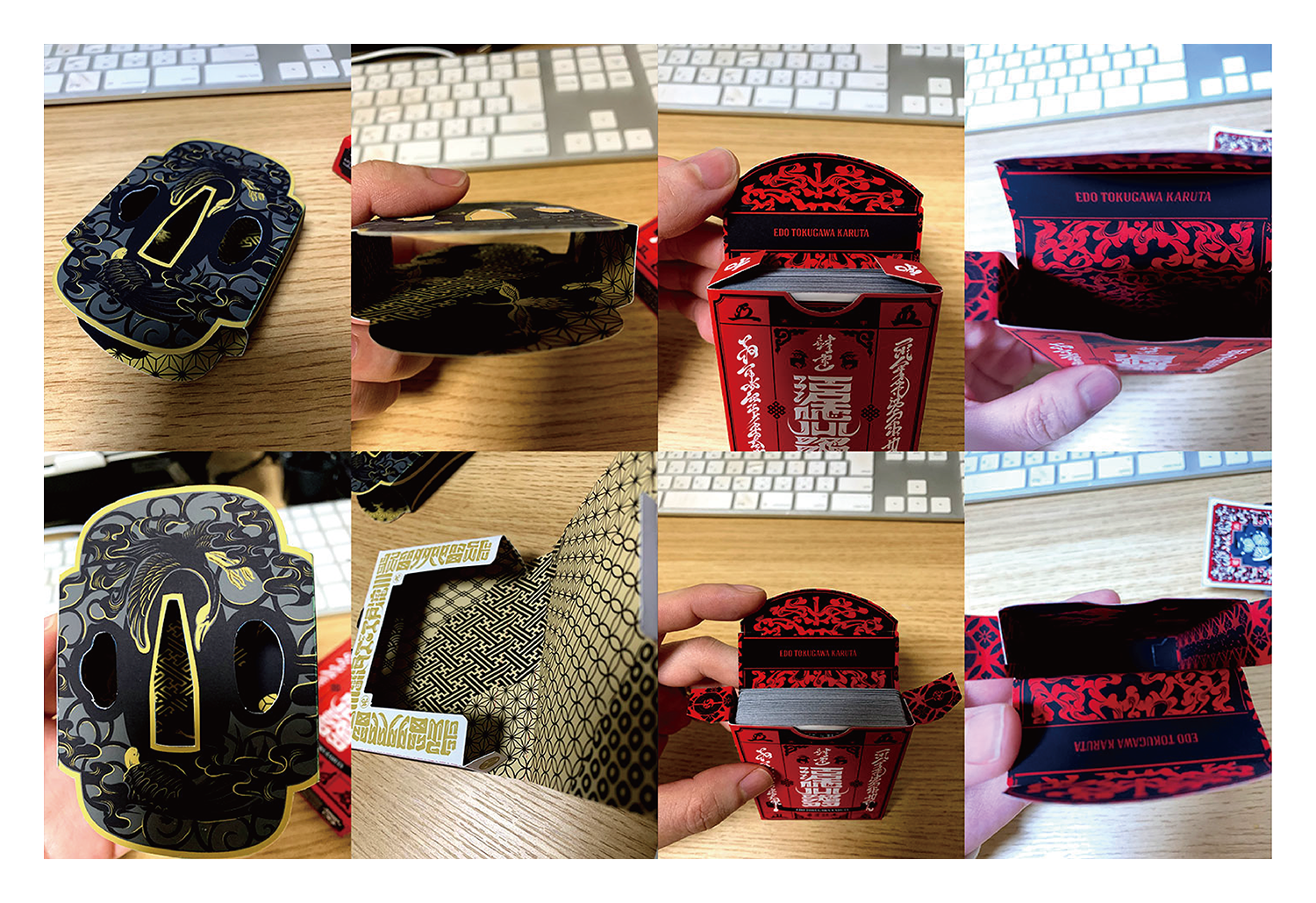
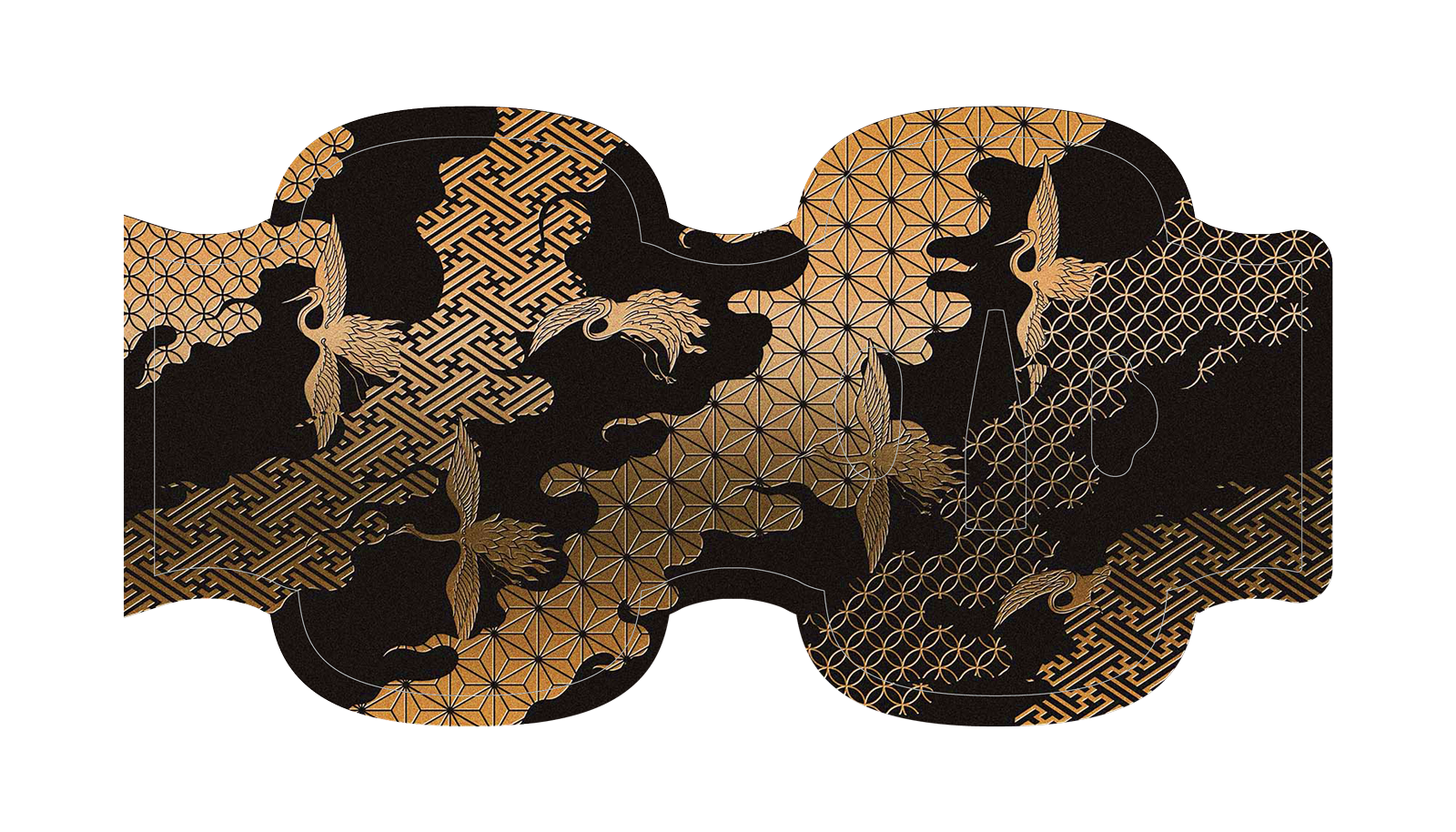
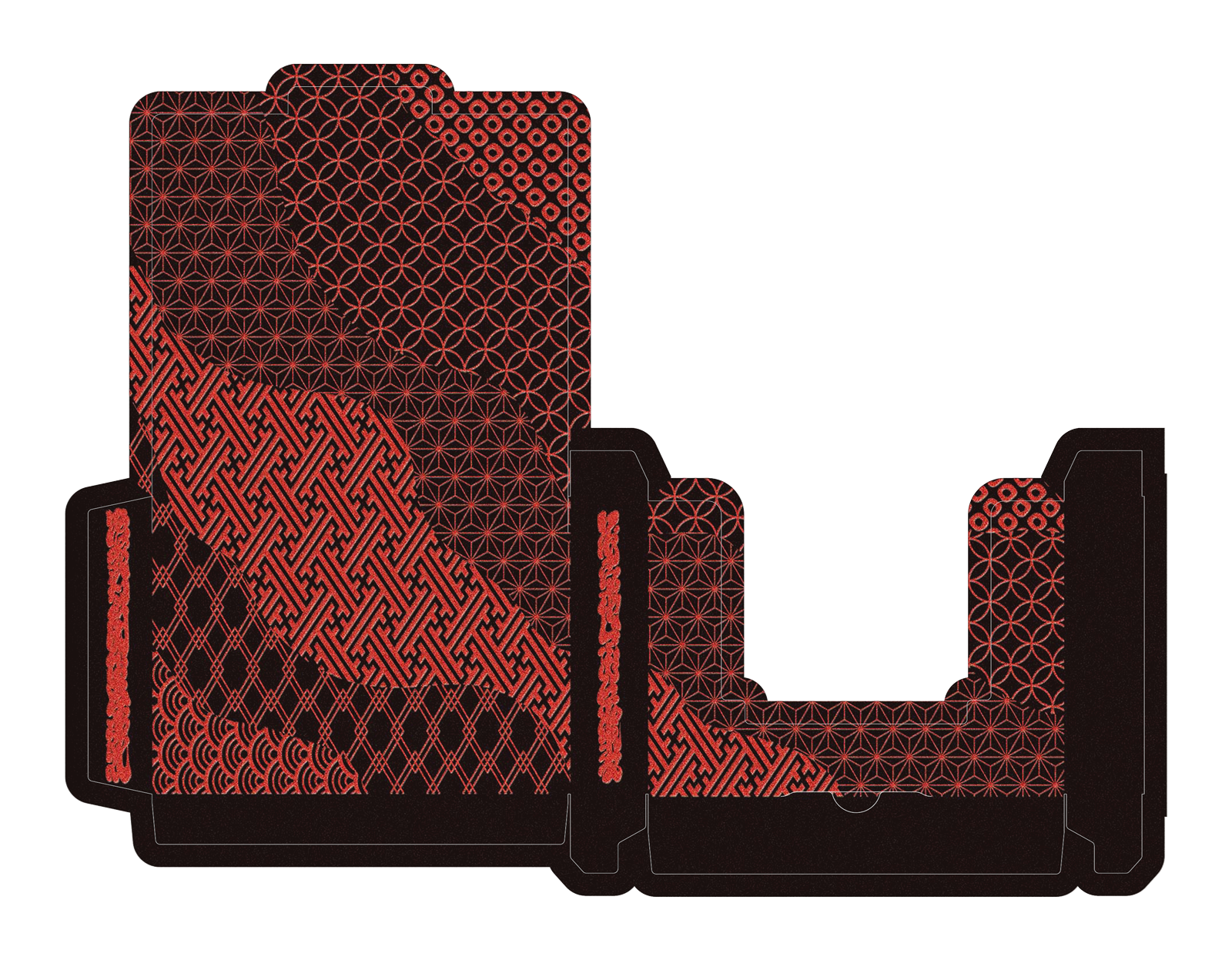
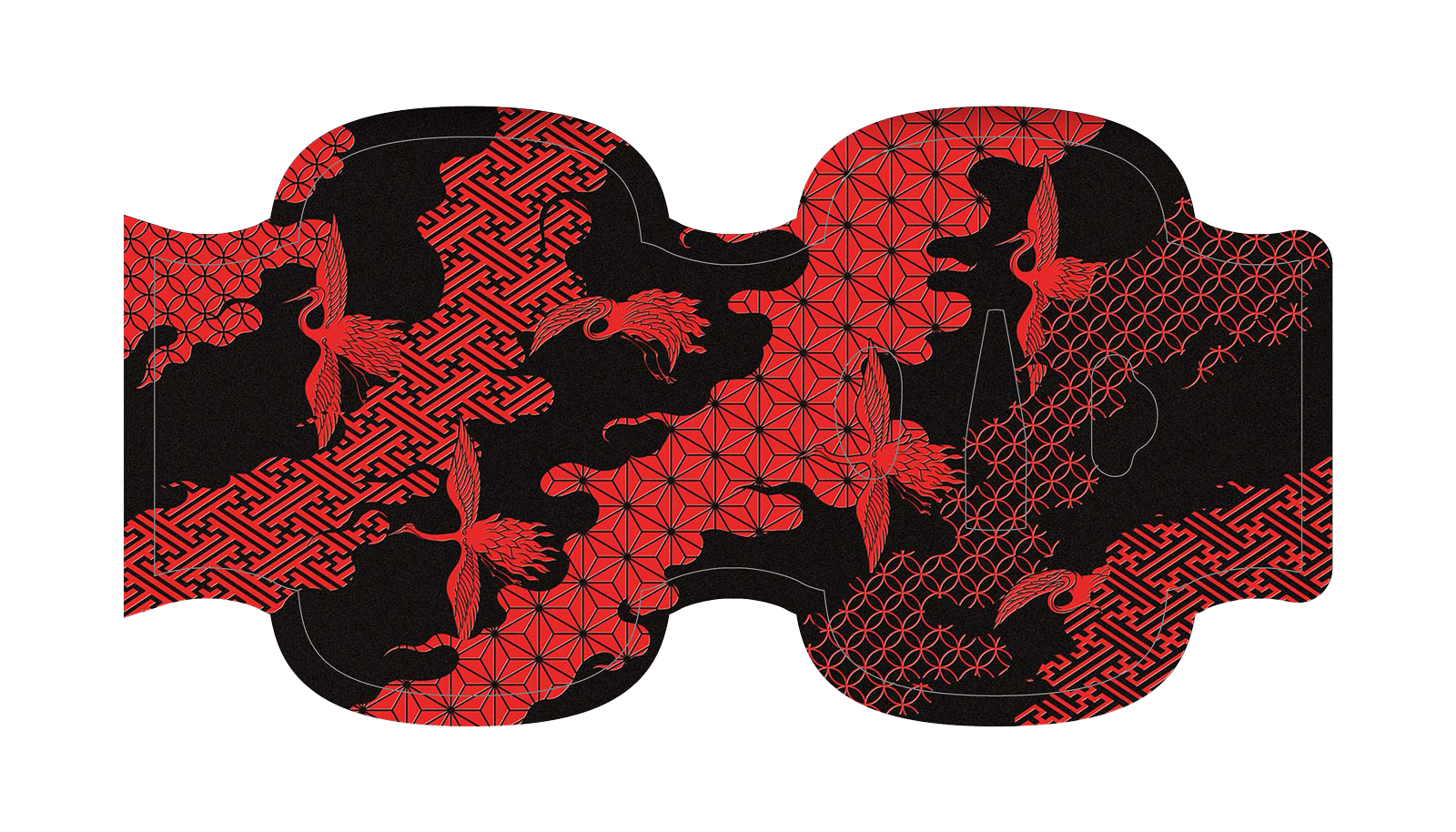
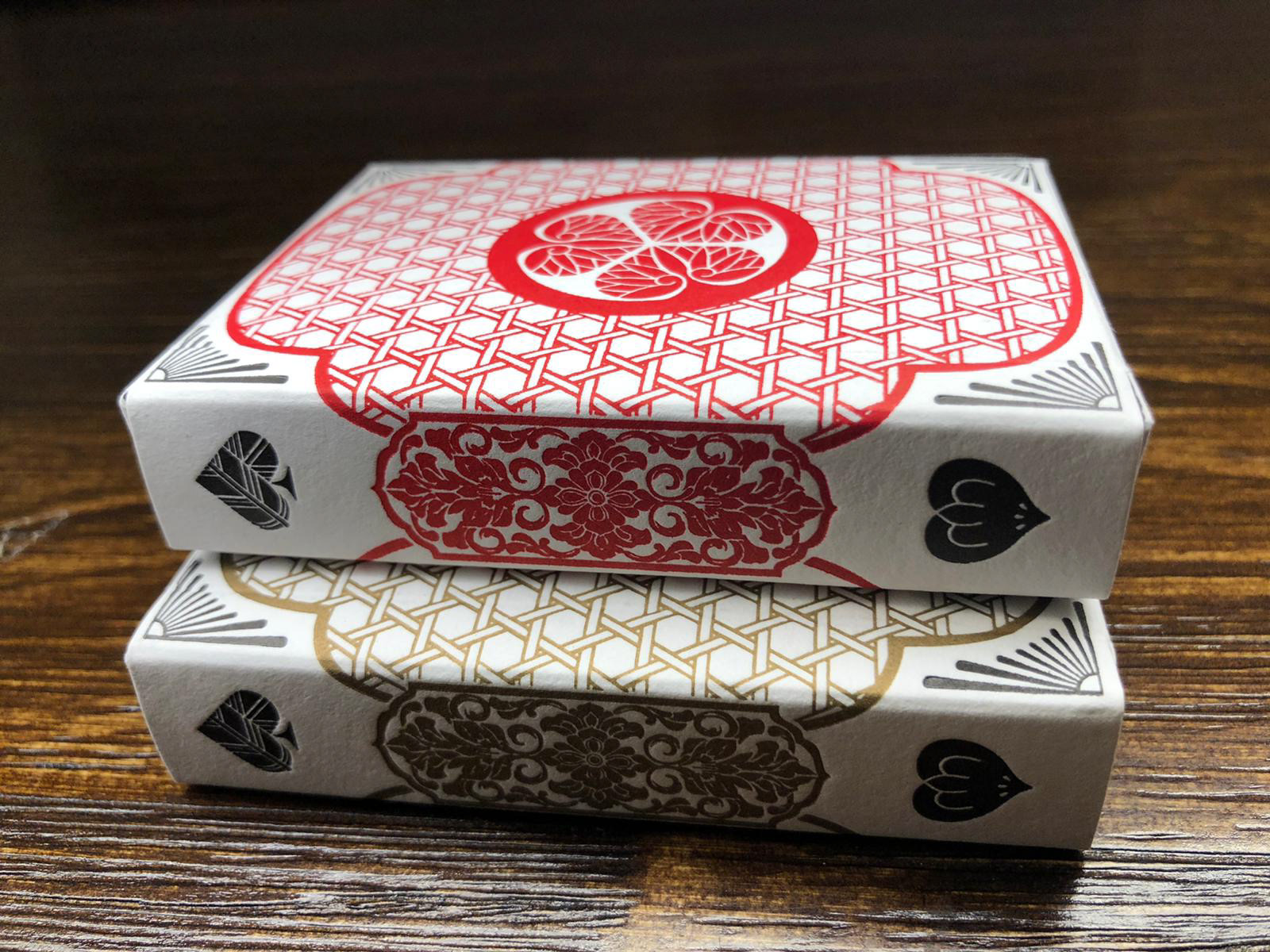
The Special Edition of both the Daimyo and Shogun decks includes a custom tuck case and deck sleeve. Since Edo Karuta's artwork covers every surface of the deck, the packaging has been redesigned to reveal the inner artwork without compromising its structural integrity. The tuck case opens from the front, with the middle section hollowed out to expose the card backs upon opening. As the cards are removed, the full inner artwork of the tuck case is gradually revealed.
大名版・将軍版のスペシャルエディションには、専用タックケースとデッキスリーブが付属する。デッキ全面にアートワークが施された「江戸かるた」の特性を活かすため、開封と同時に内側のアートワークが見える構造を採用した。ケース中央部は開口しており、開けた瞬間にカードの裏面が現れる。カードを取り出すにつれ、内側のアートワークが全て姿を現す仕組みだ。
Here's the English version:
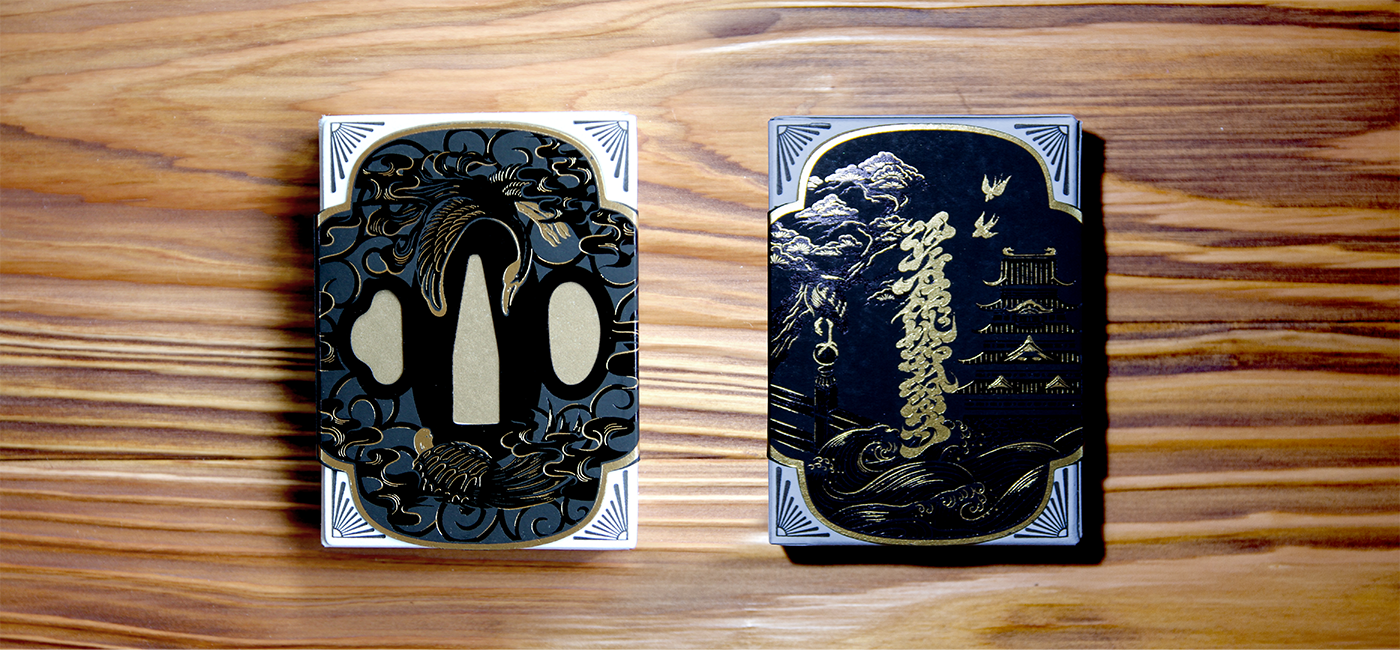
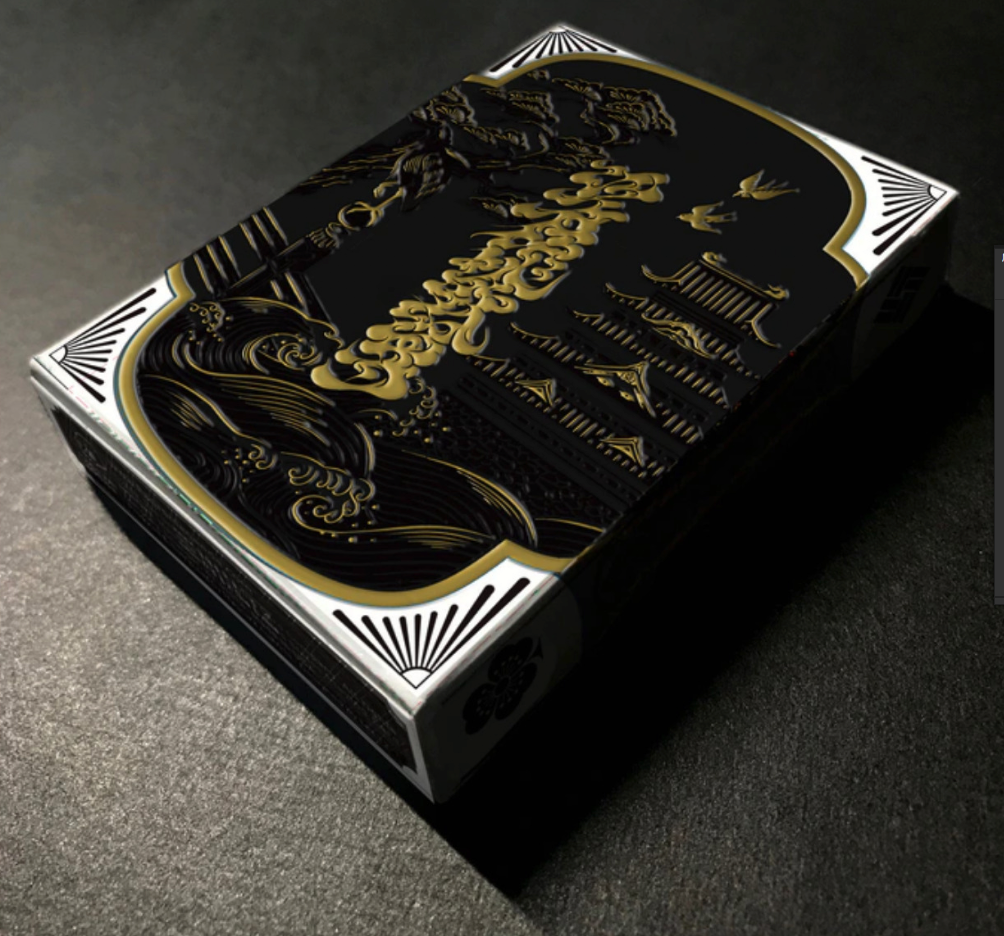
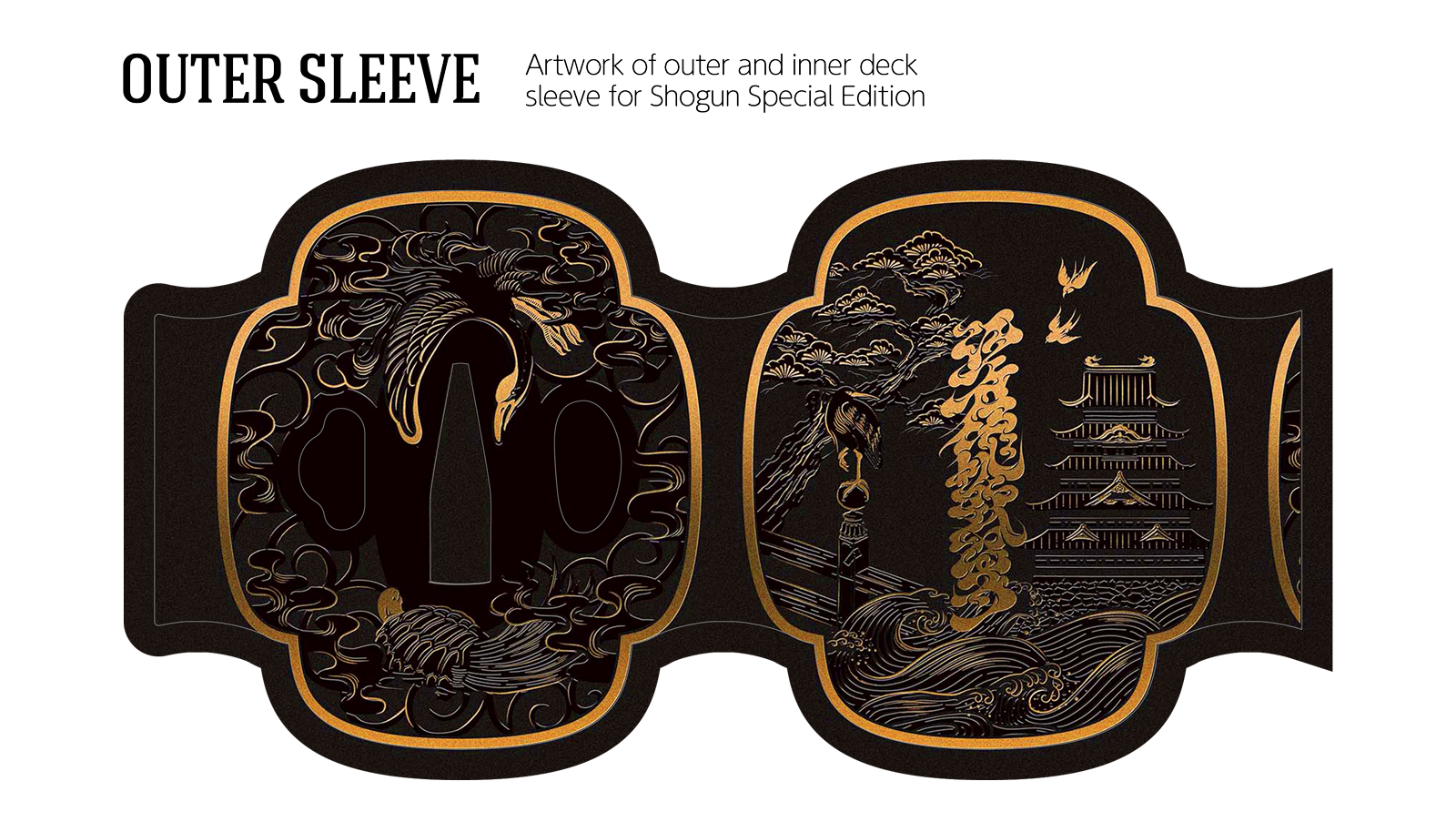
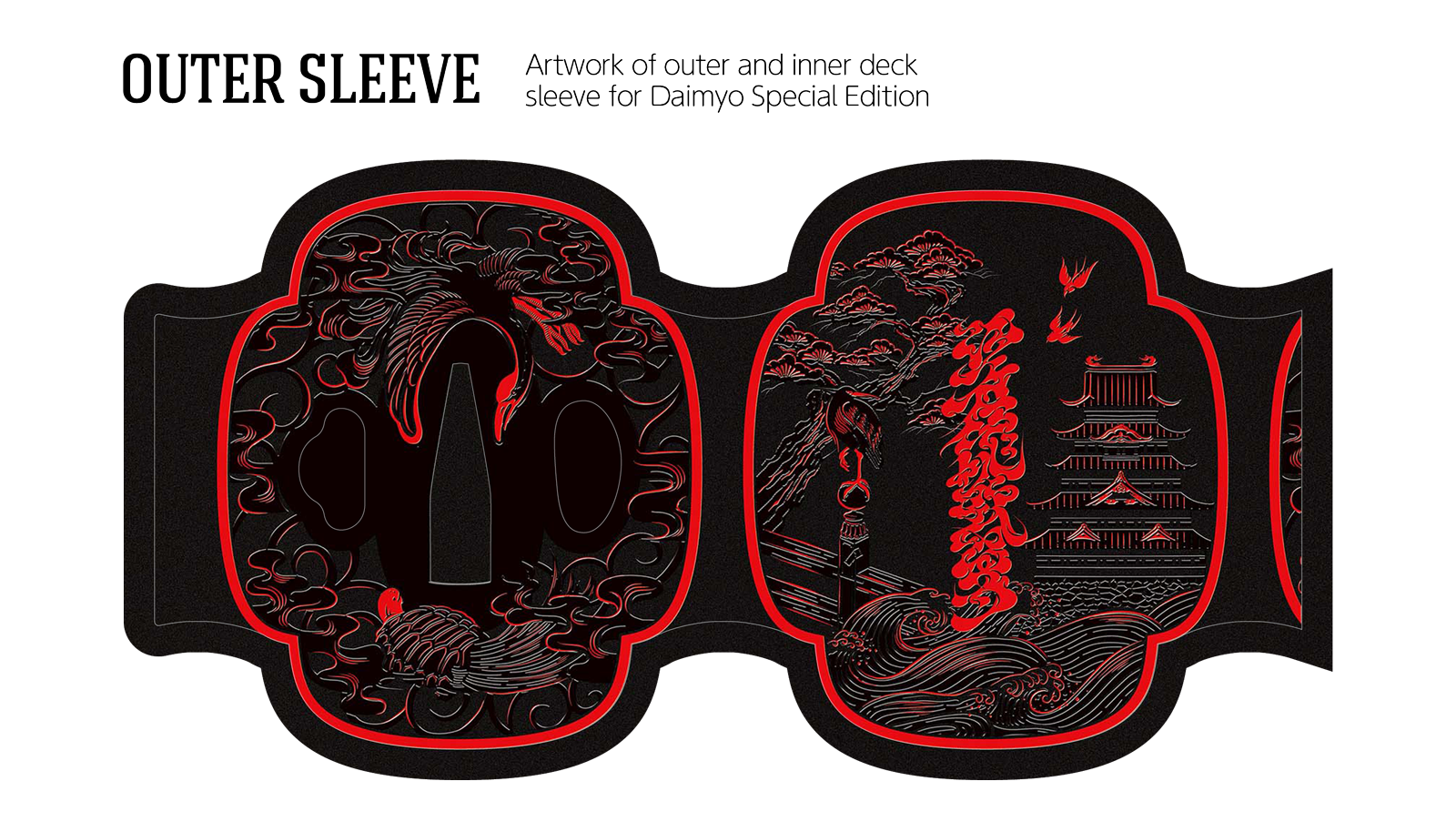
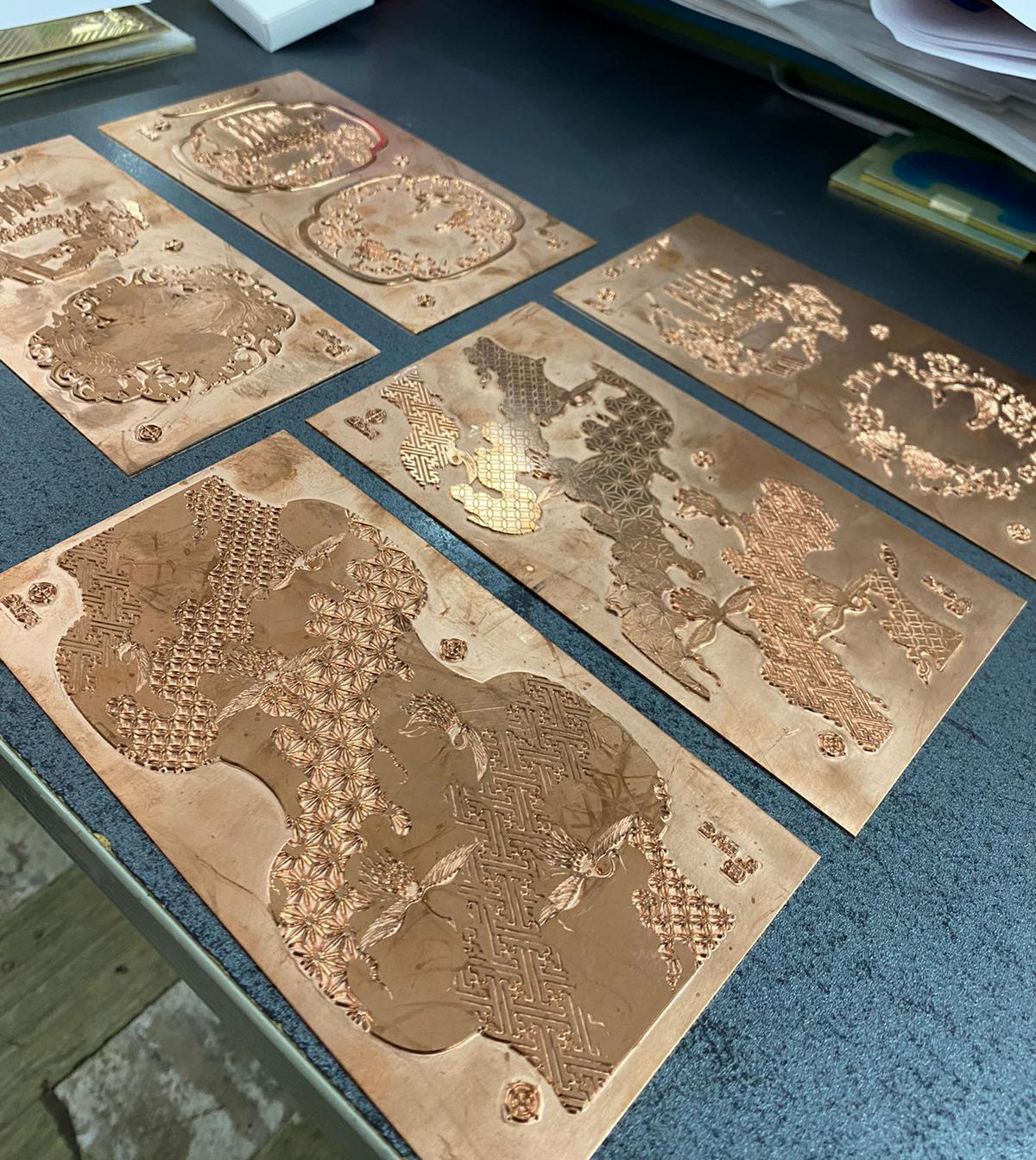
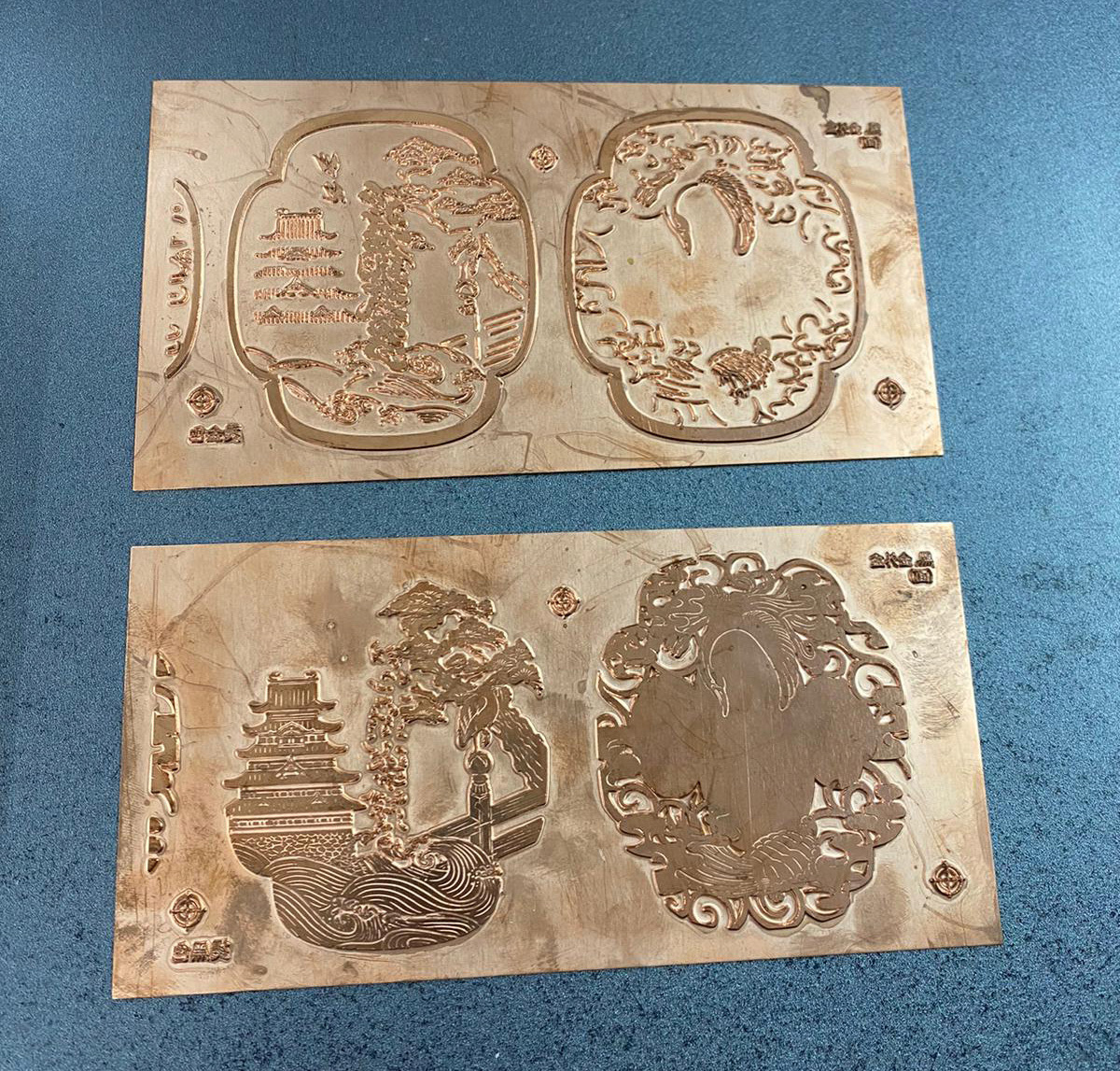
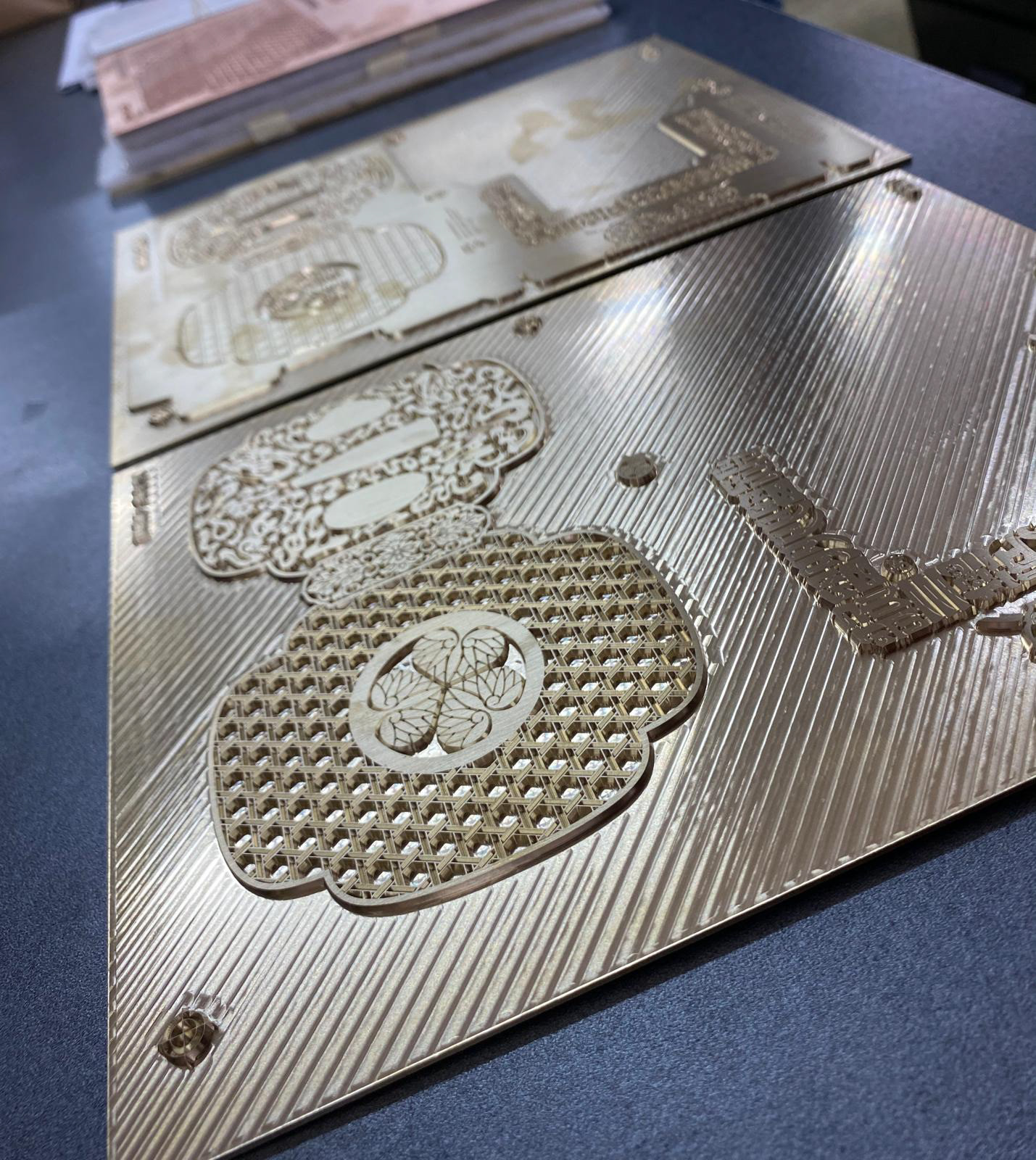
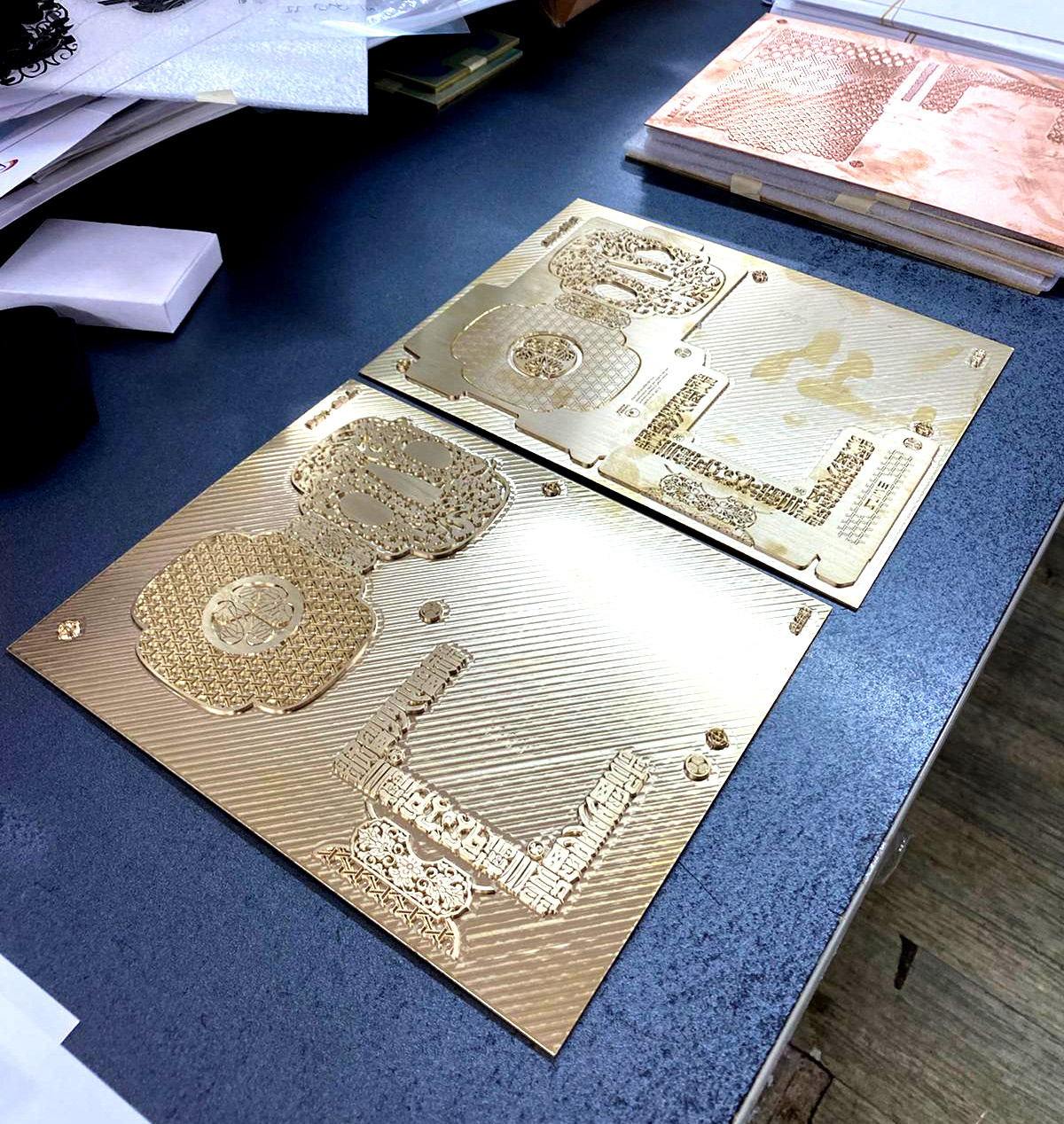
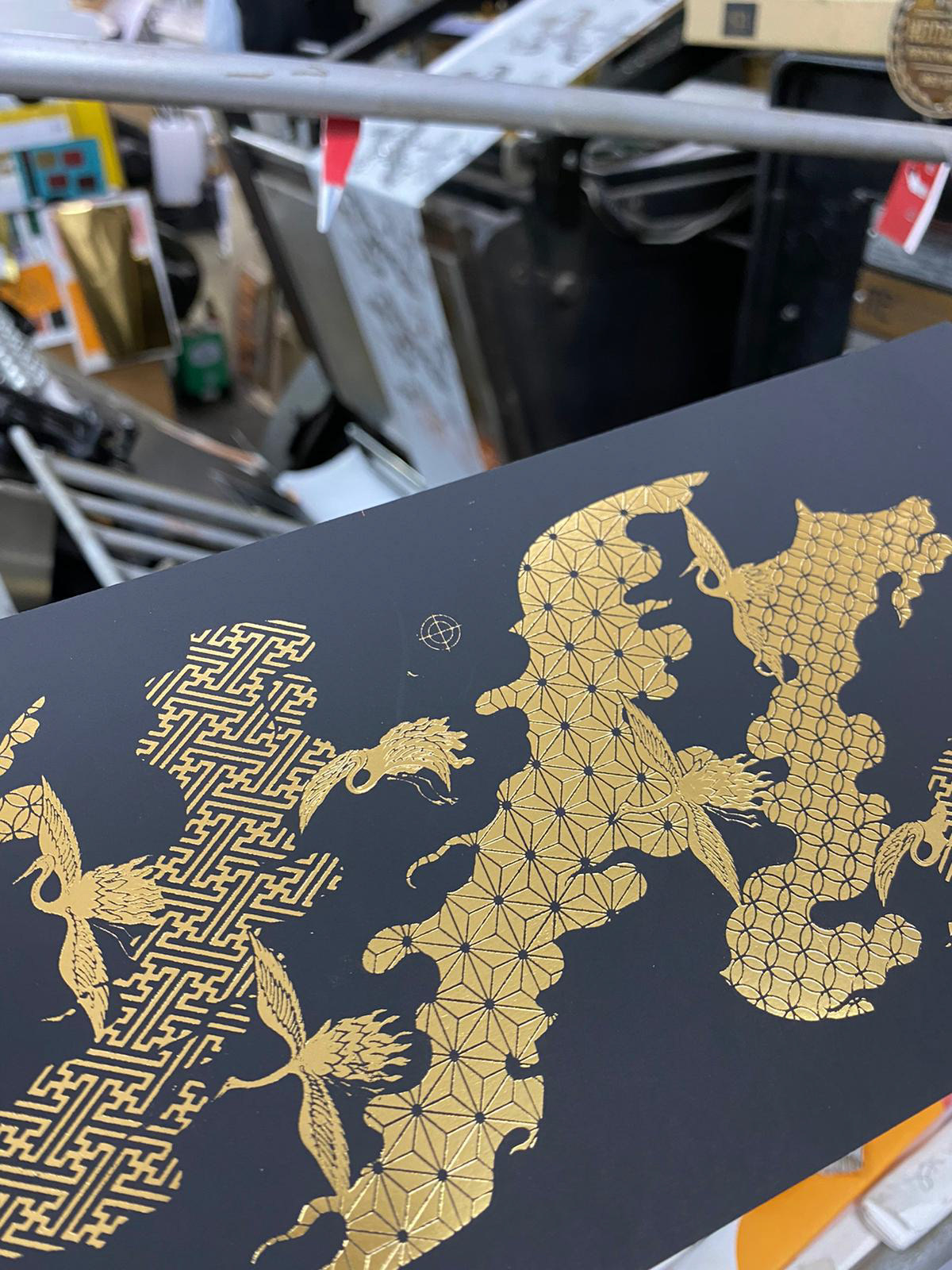
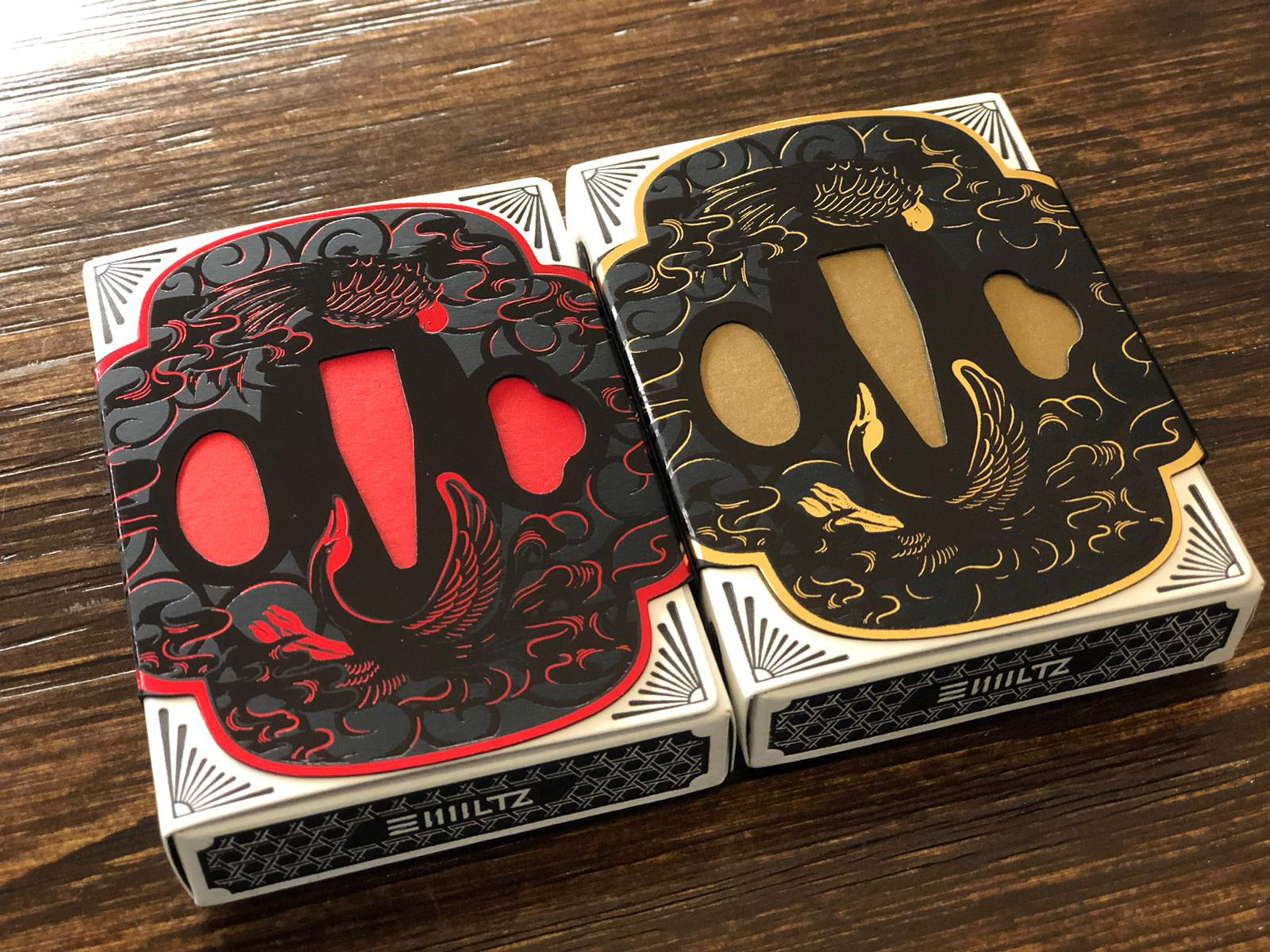
The premium case features lavish letterpress printing and foil stamping throughout. The outer case, modeled after a sword tsuba — the guard that sits between the blade and the handle — is adorned with the crane and tortoise, traditional symbols of longevity, representing the enduring legacy of the Edo period that spanned over two centuries.
プレミアムケースは、活版印刷と箔押しをふんだんに施した贅沢な仕上がりとなっています。刀の鍔を模したアウターケースには、長寿の象徴である鶴と亀が描かれており、200年以上にわたって続いた江戸時代の永続性を表しています。
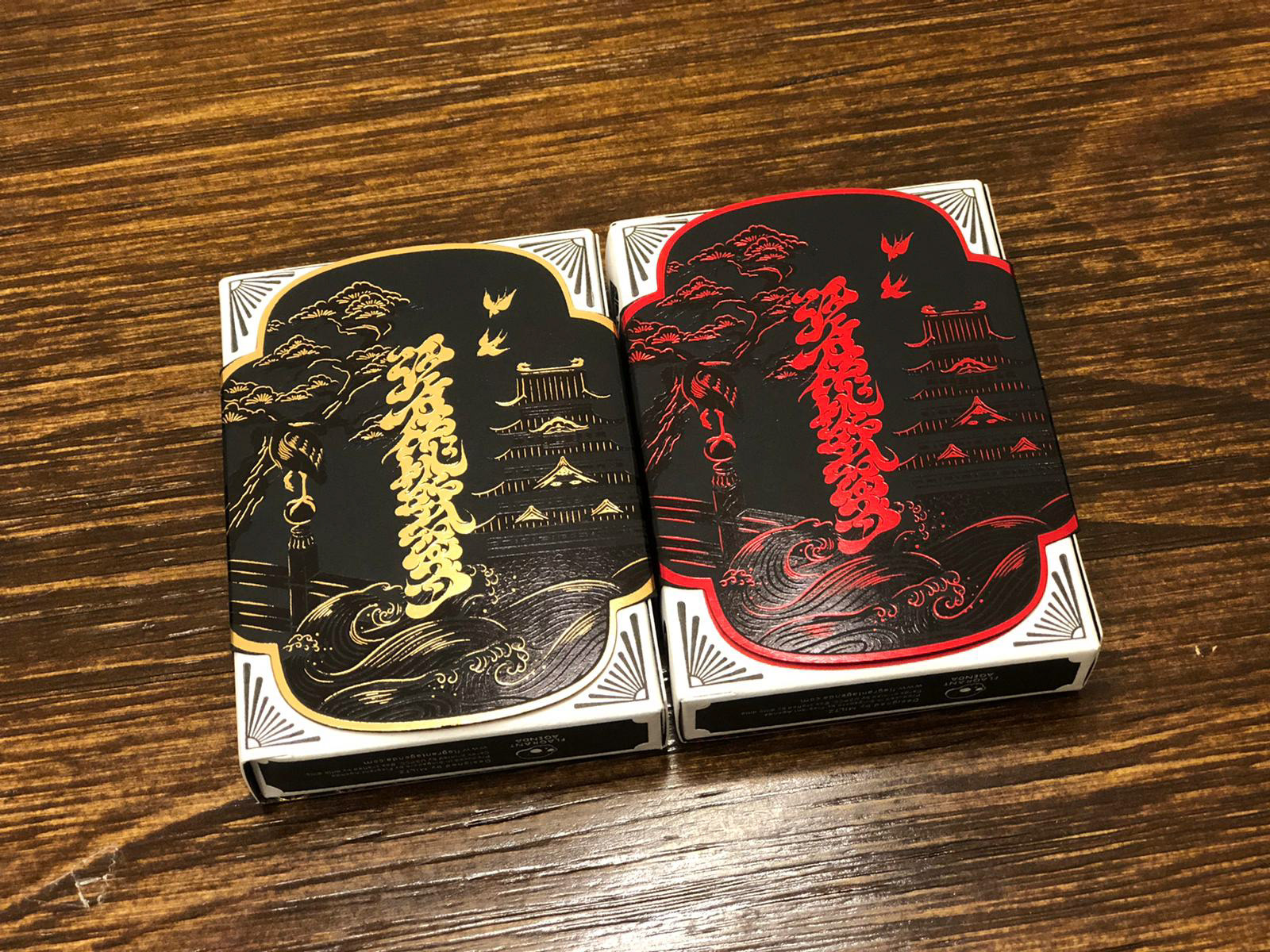
At the center, the characters for "Edo Tokugawa Karuta" are prominently displayed, while Edo Castle, Nihonbashi, and Hokusai's iconic wave emerge through a combination of foil stamping and varnish.
中央には「江戸徳川加留多」の文字が据えられ、箔押しとニスによって江戸城・日本橋・北斎の波が浮かび上がるように描かれています。
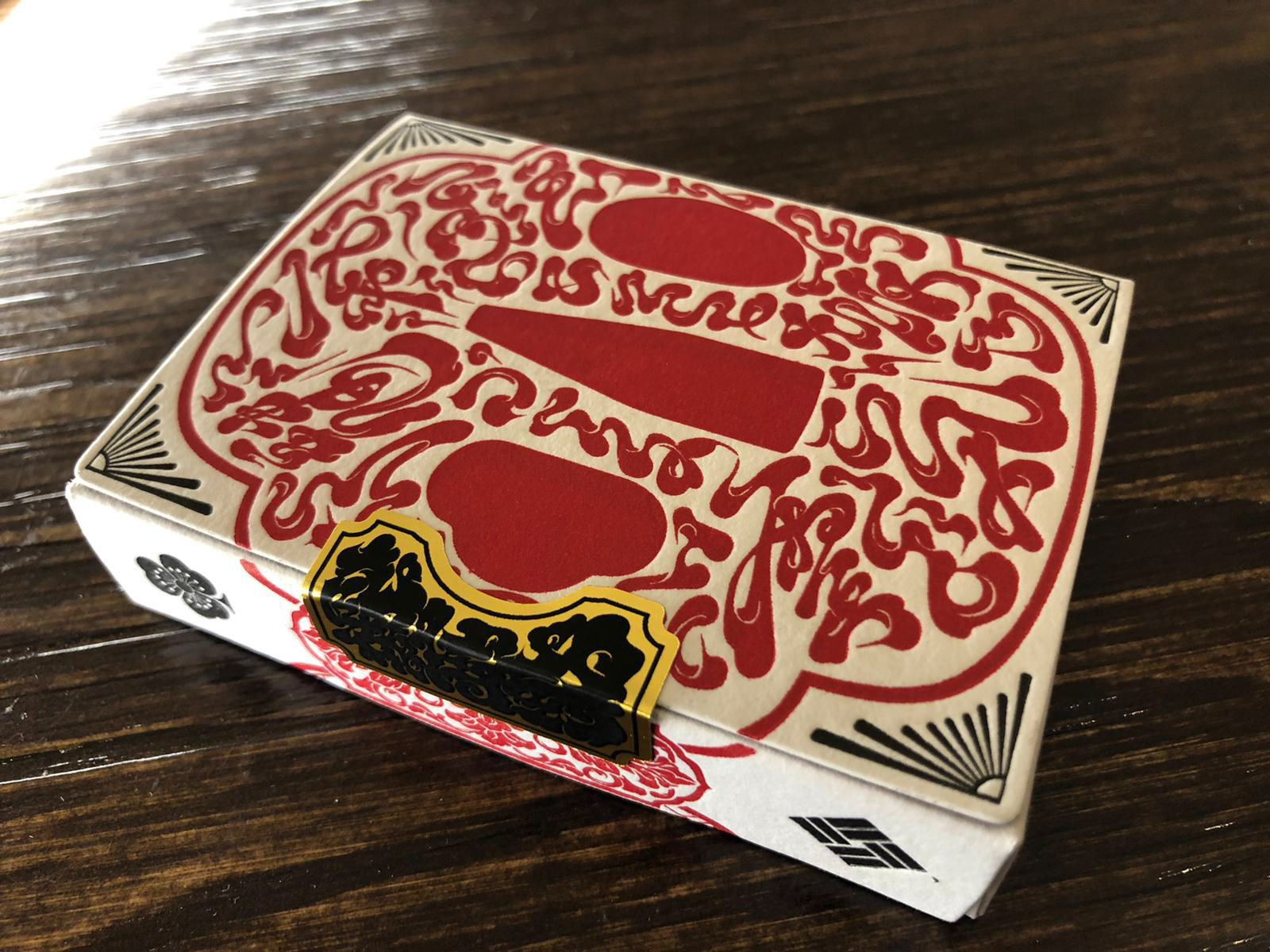
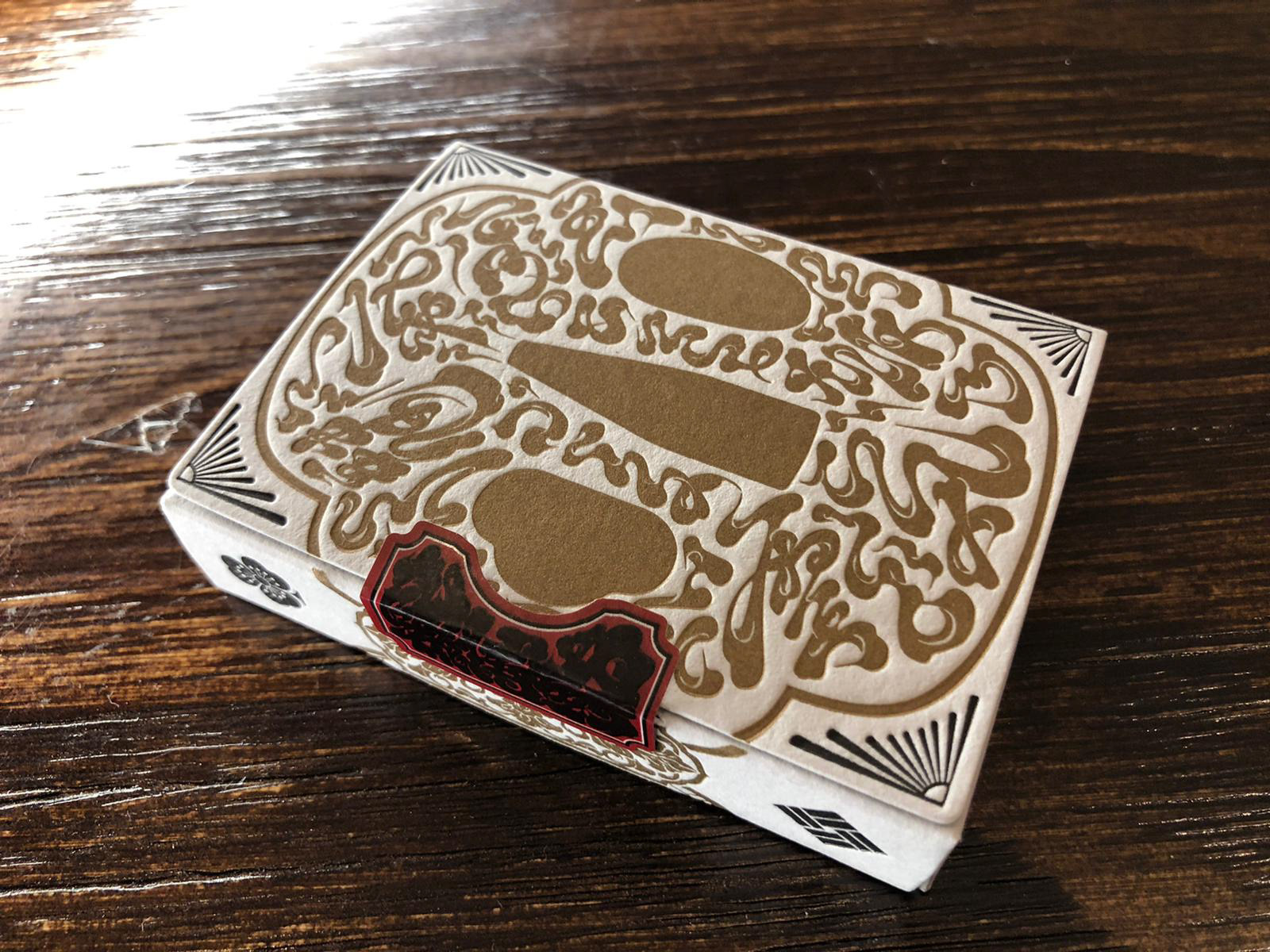
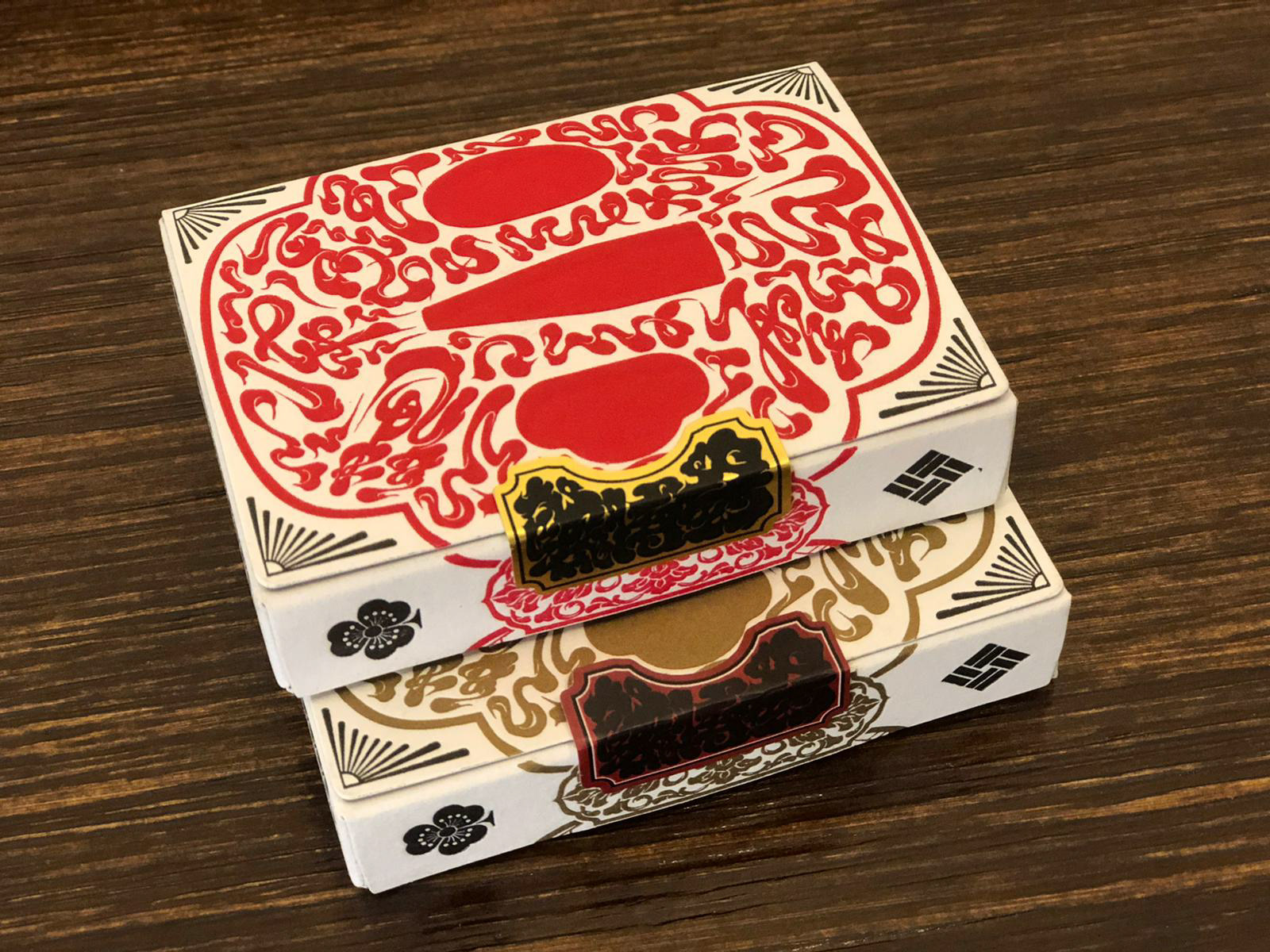
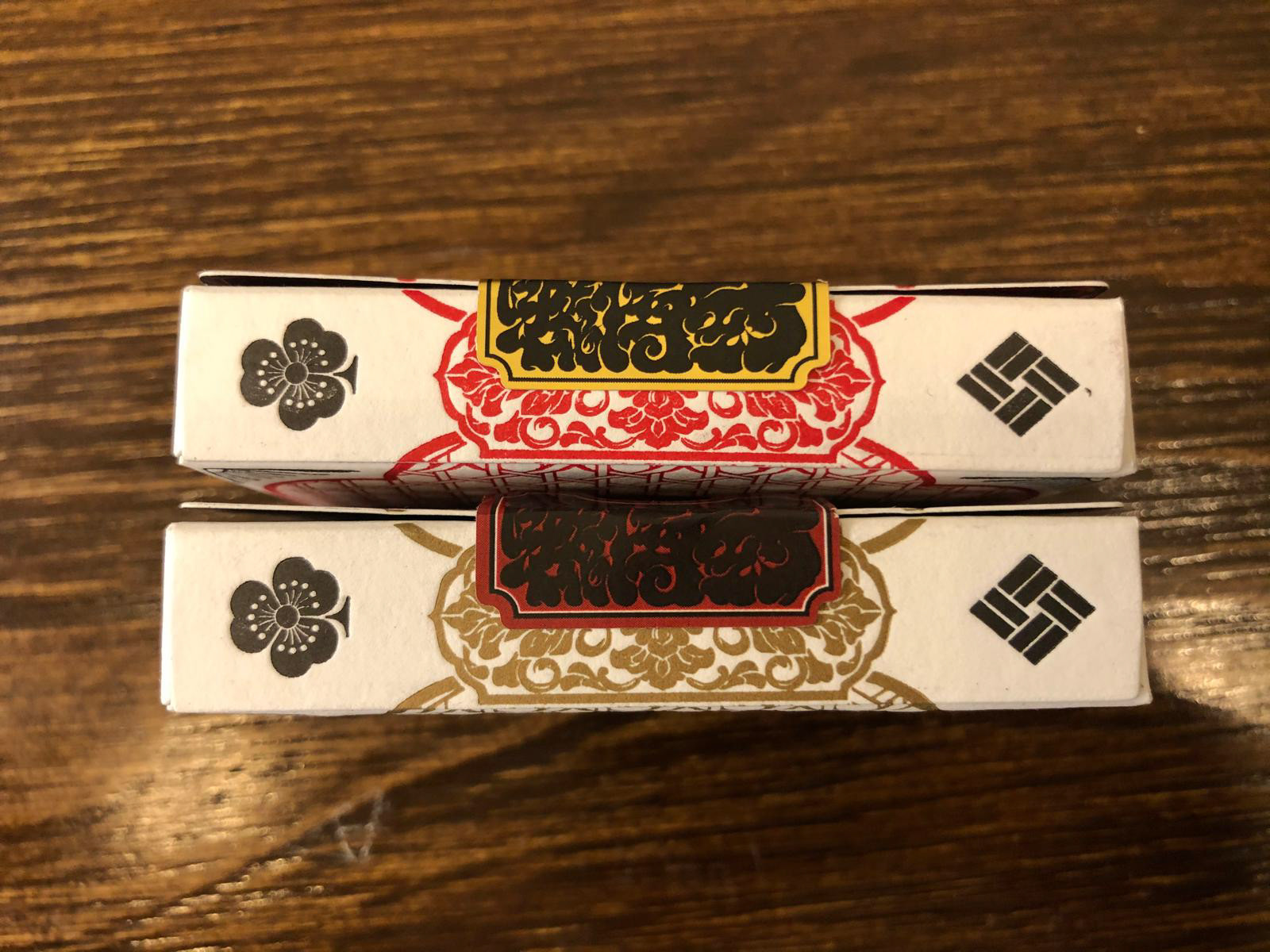
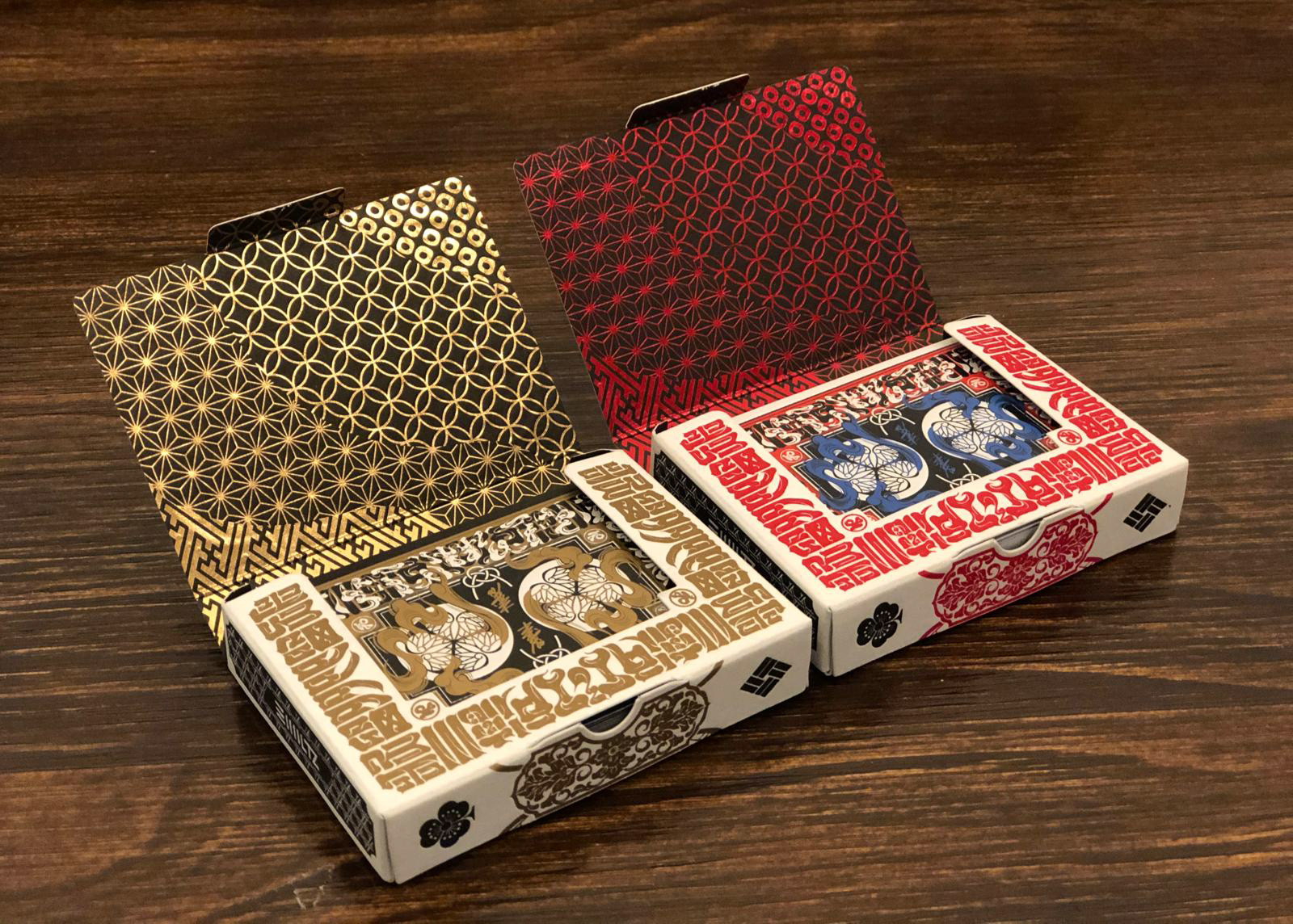
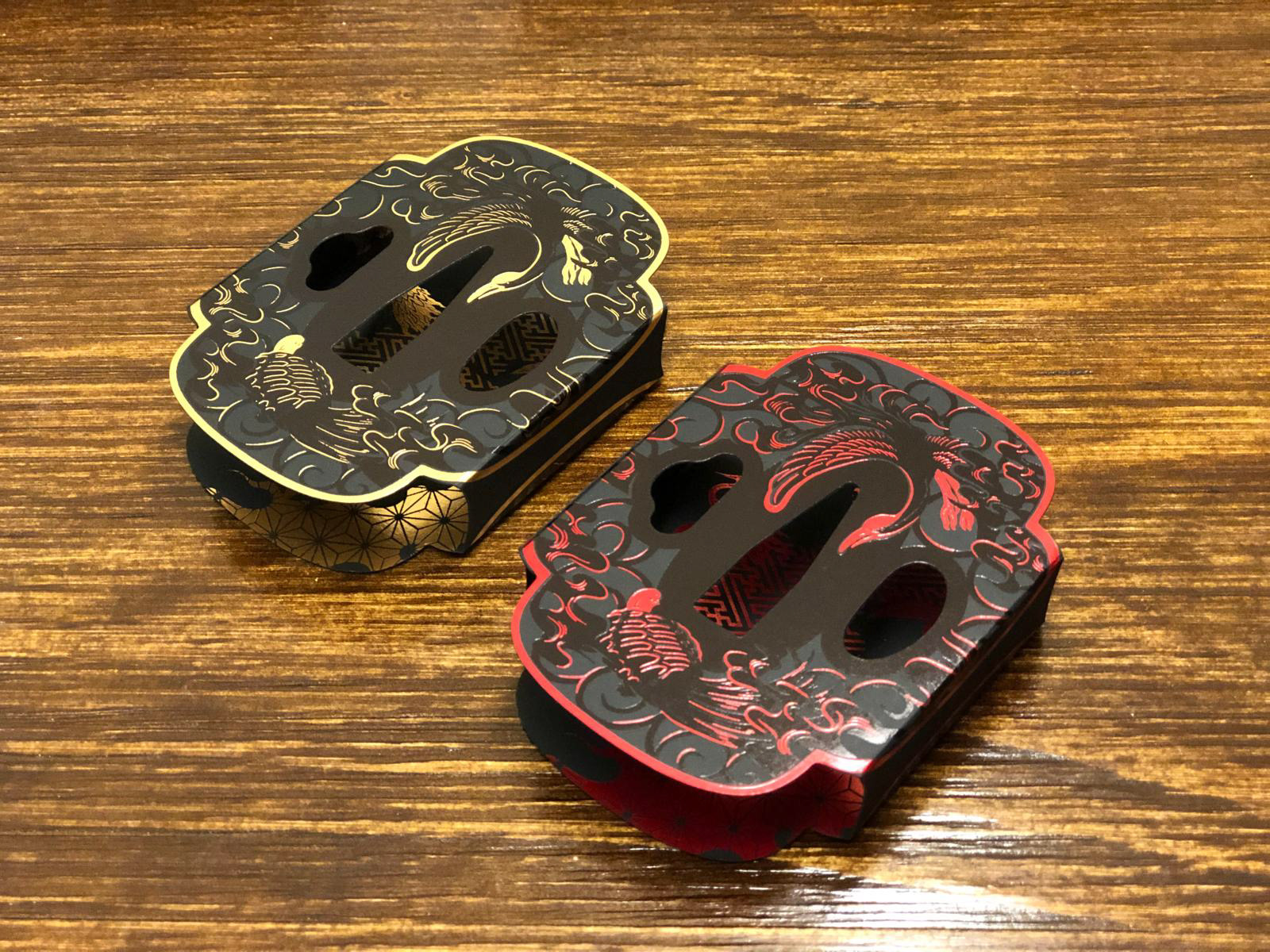
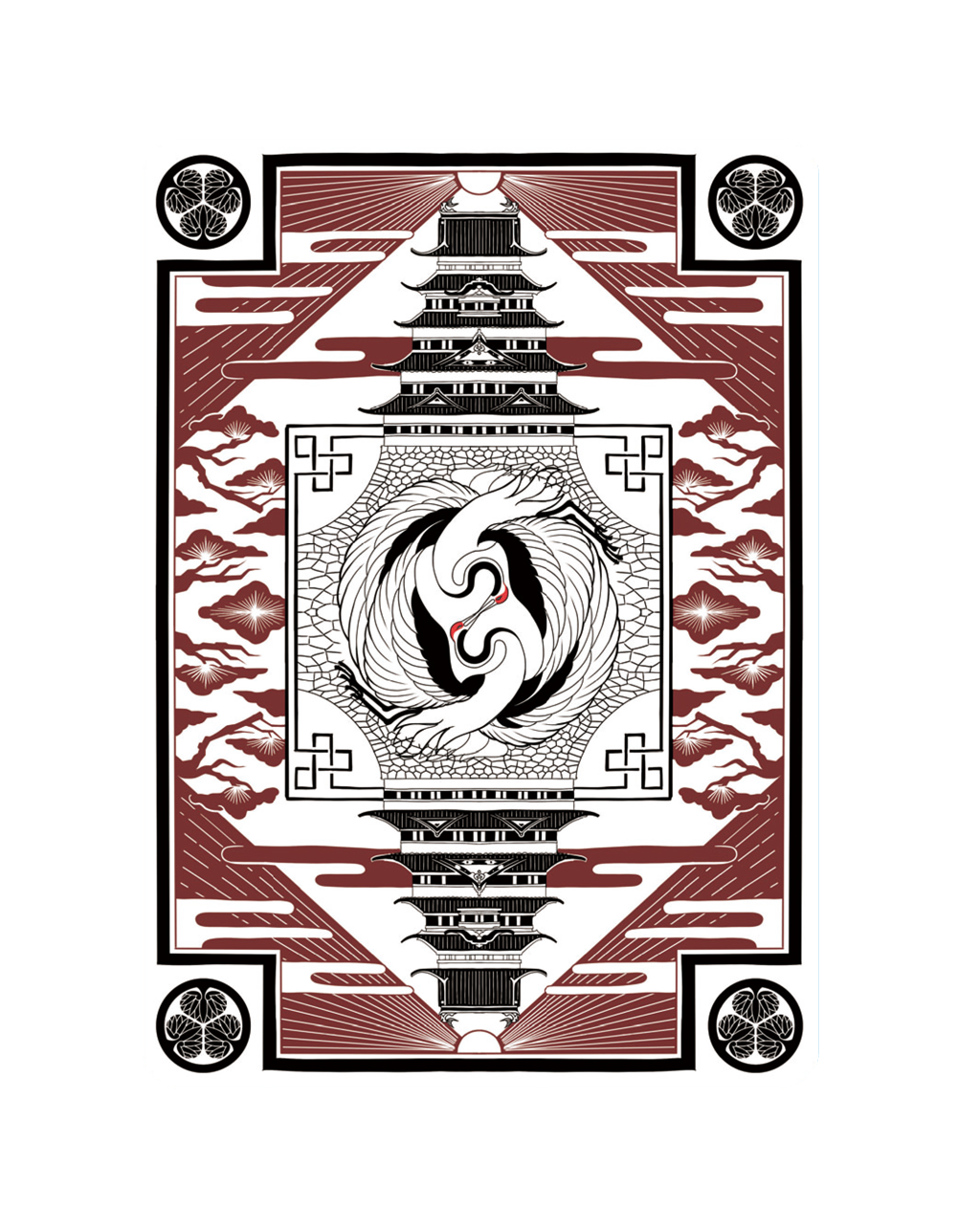
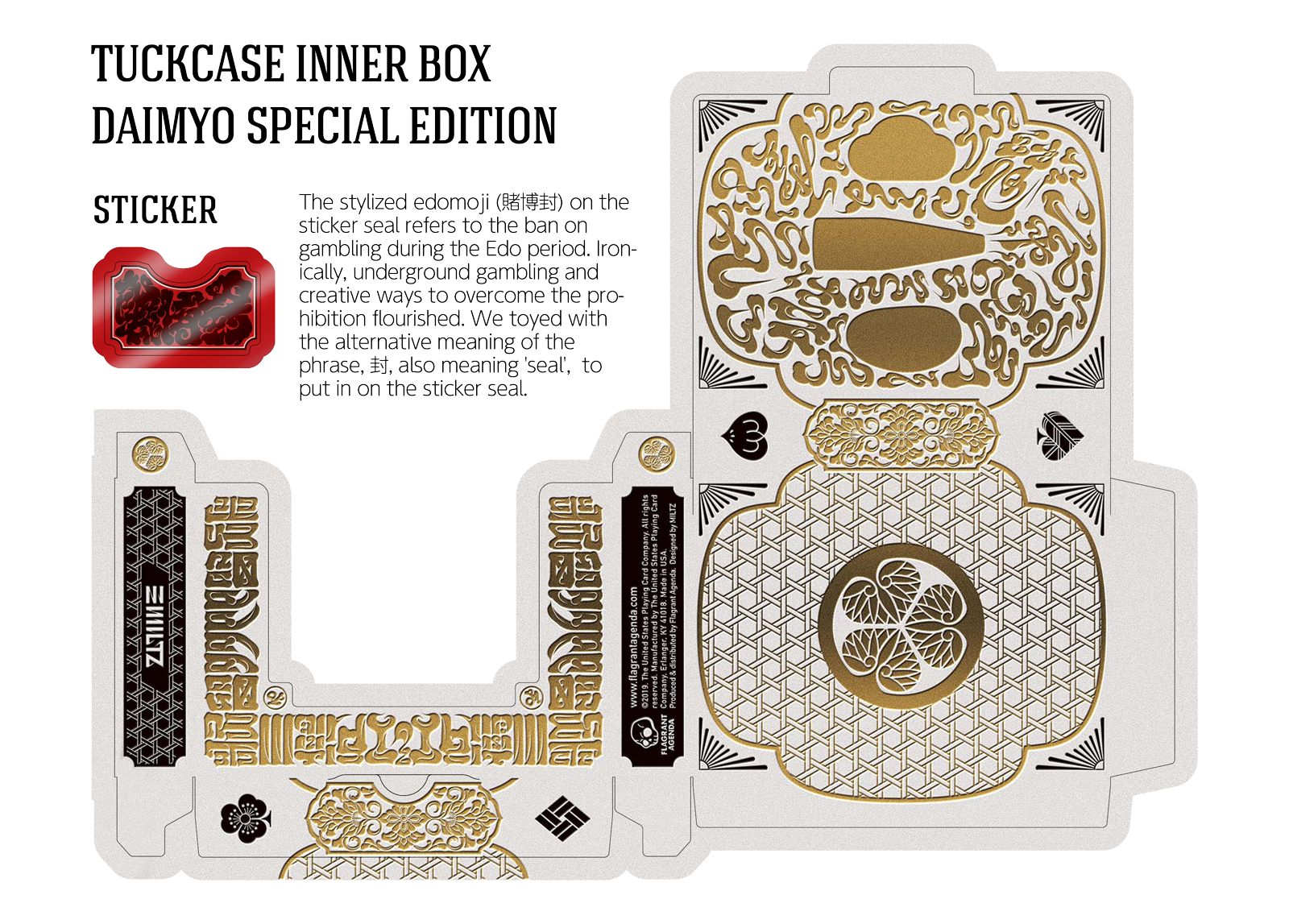
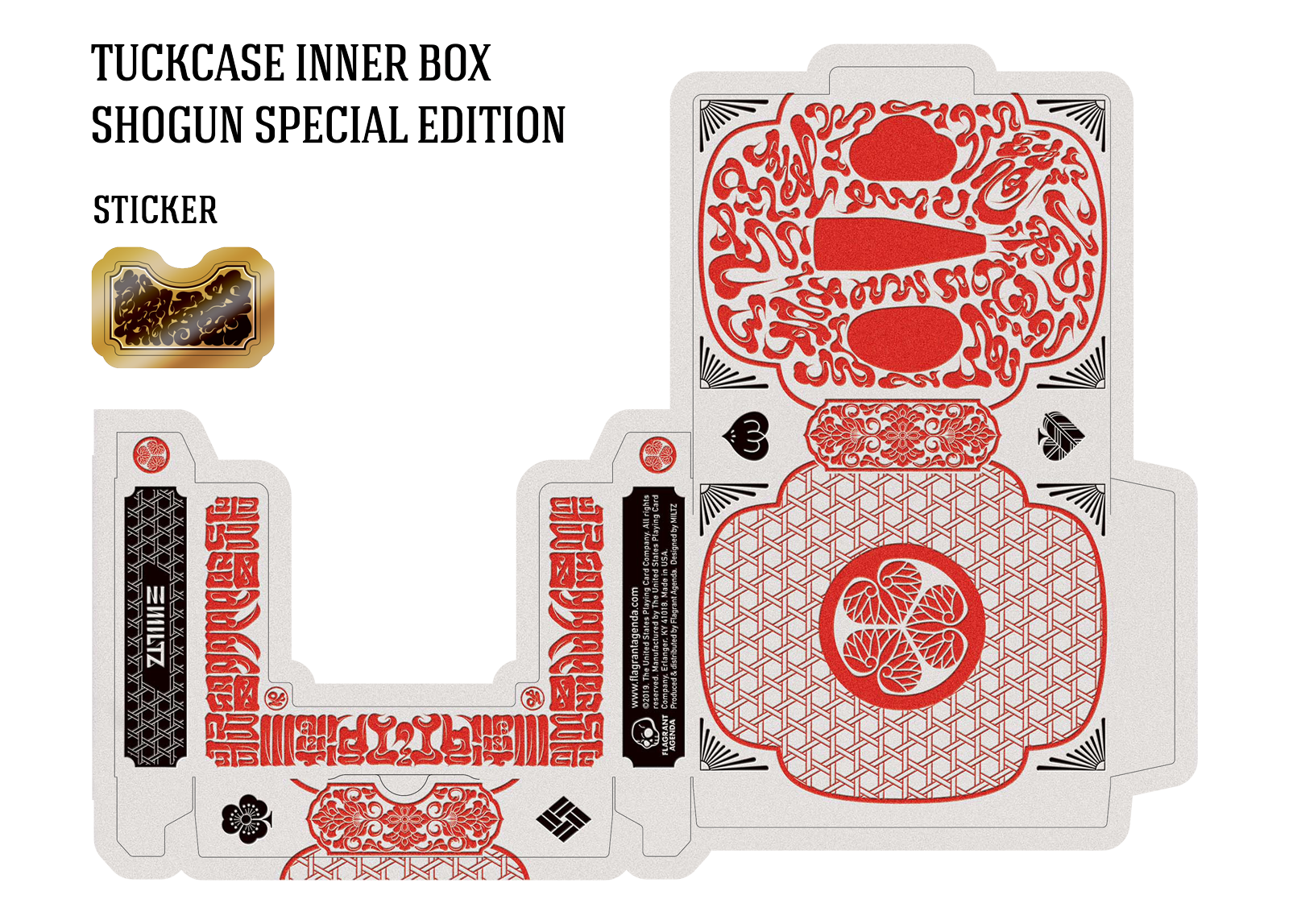
The inner box lid is sealed with a sticker bearing the words "Tobaku-fu" — gambling seal. In the Edo period, gambling was strictly prohibited by the Shogunate, and this seal is a playful nod to that chapter of history, quietly woven into the design. The deck's back graphic is also fitted precisely into the die-cut of the box, sitting flush within the opening.
インナーボックスの蓋は「賭博封」と記されたシールで留められています。江戸時代、賭博は幕府によって厳しく禁じられており、このシールはその時代の空気をデザインに忍ばせた遊び心のある演出です。また、デッキのバックグラフィックが箱の切れ込みにぴったりと収まるよう設計されています。

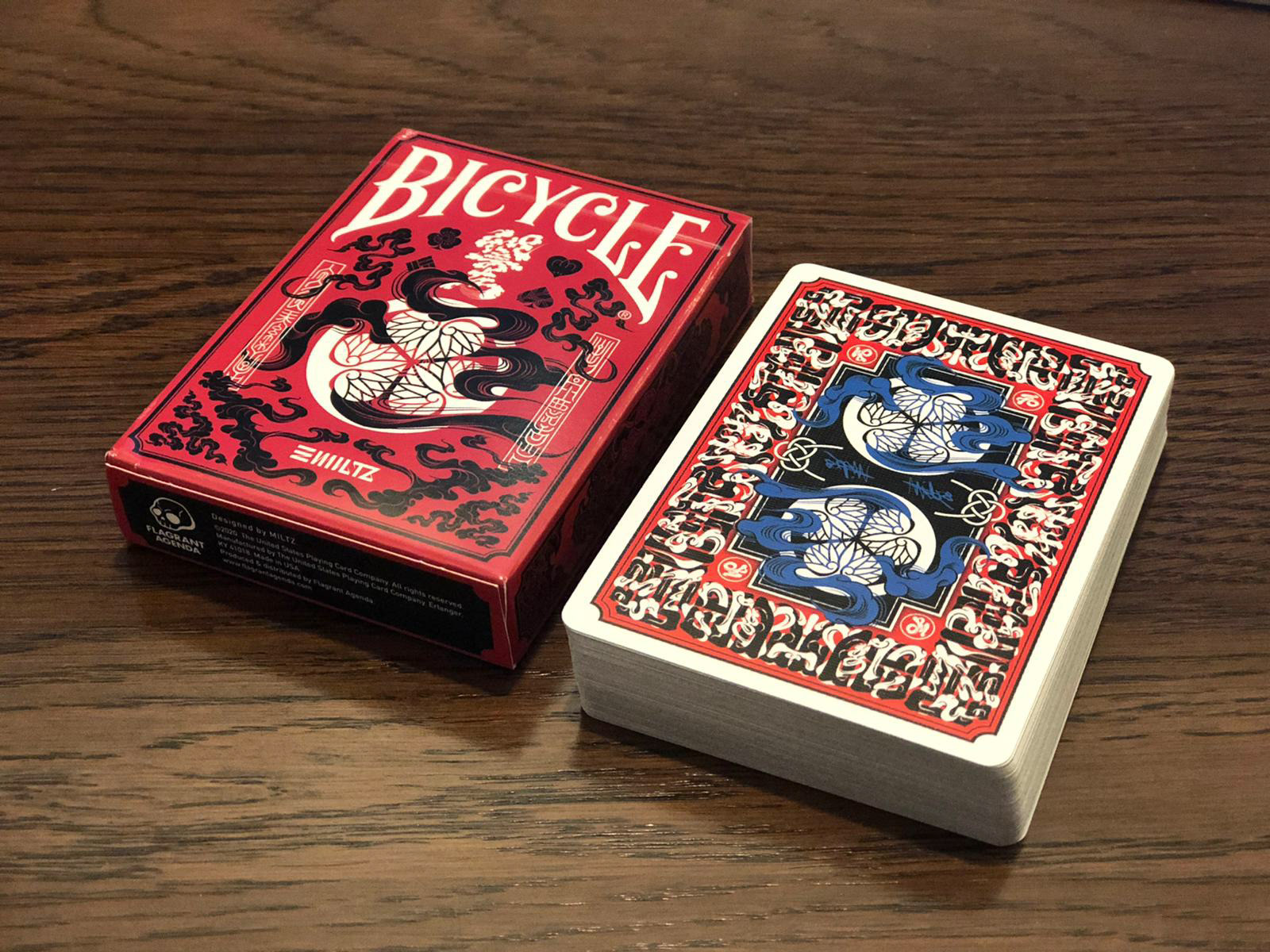
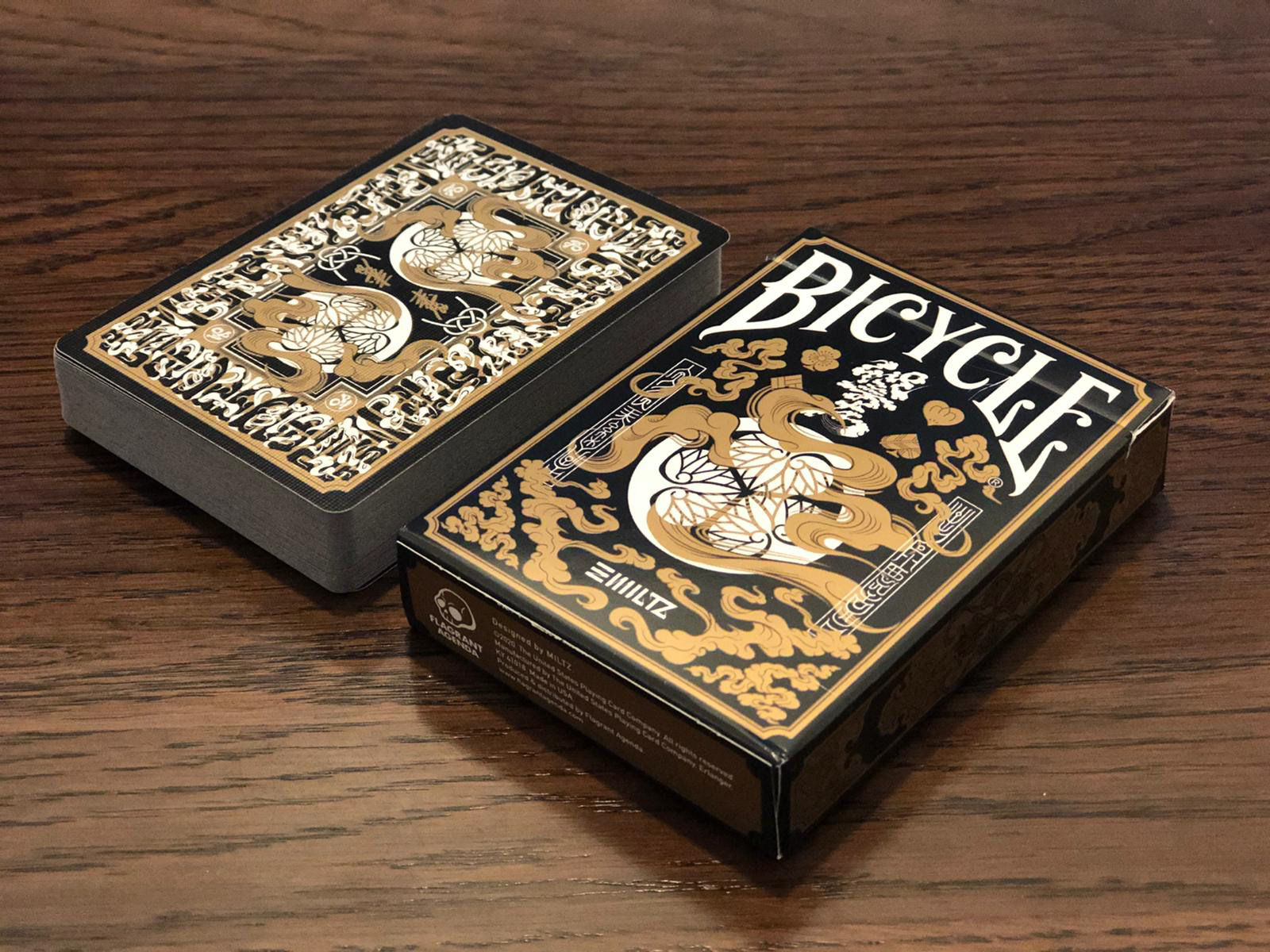
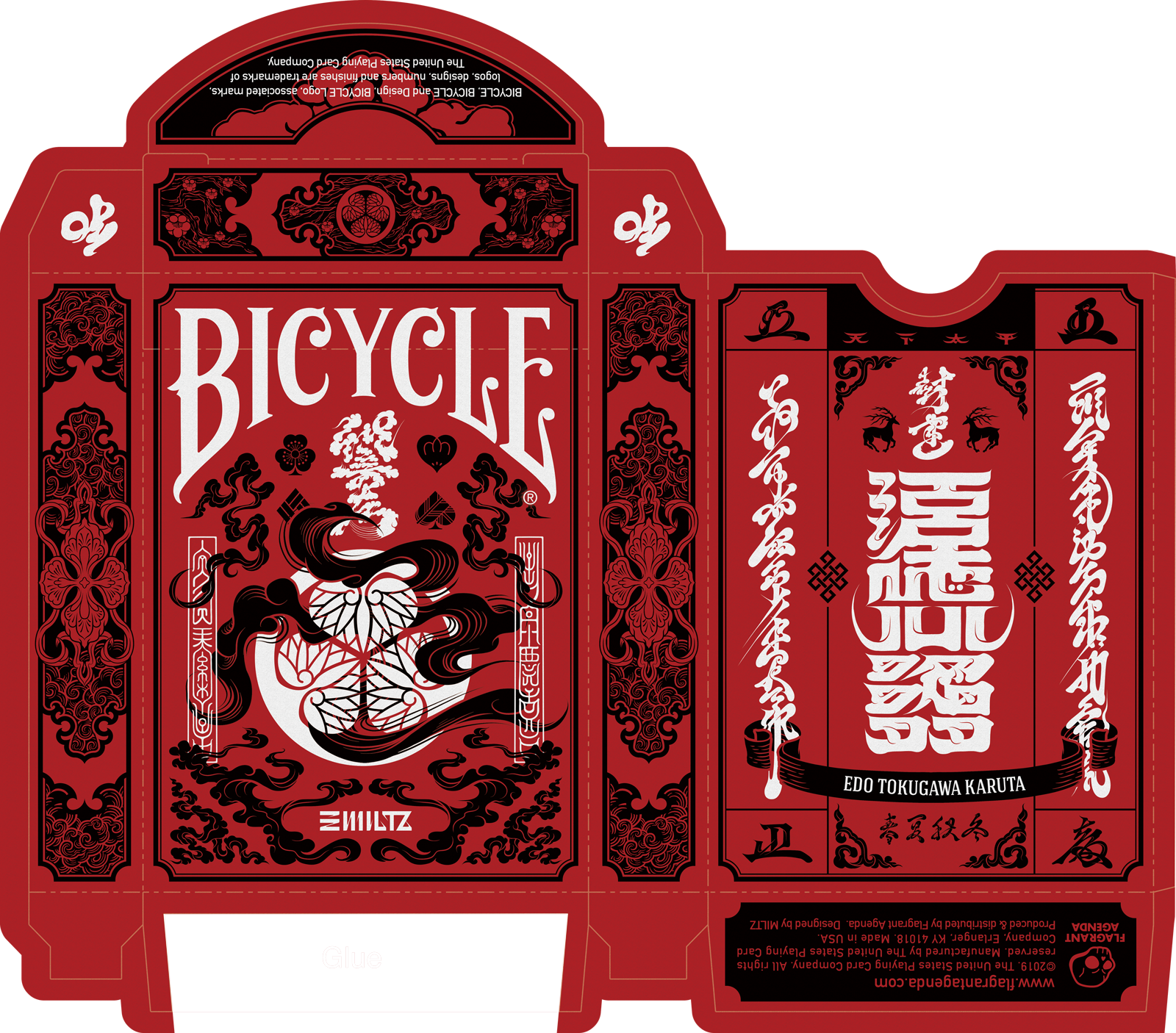
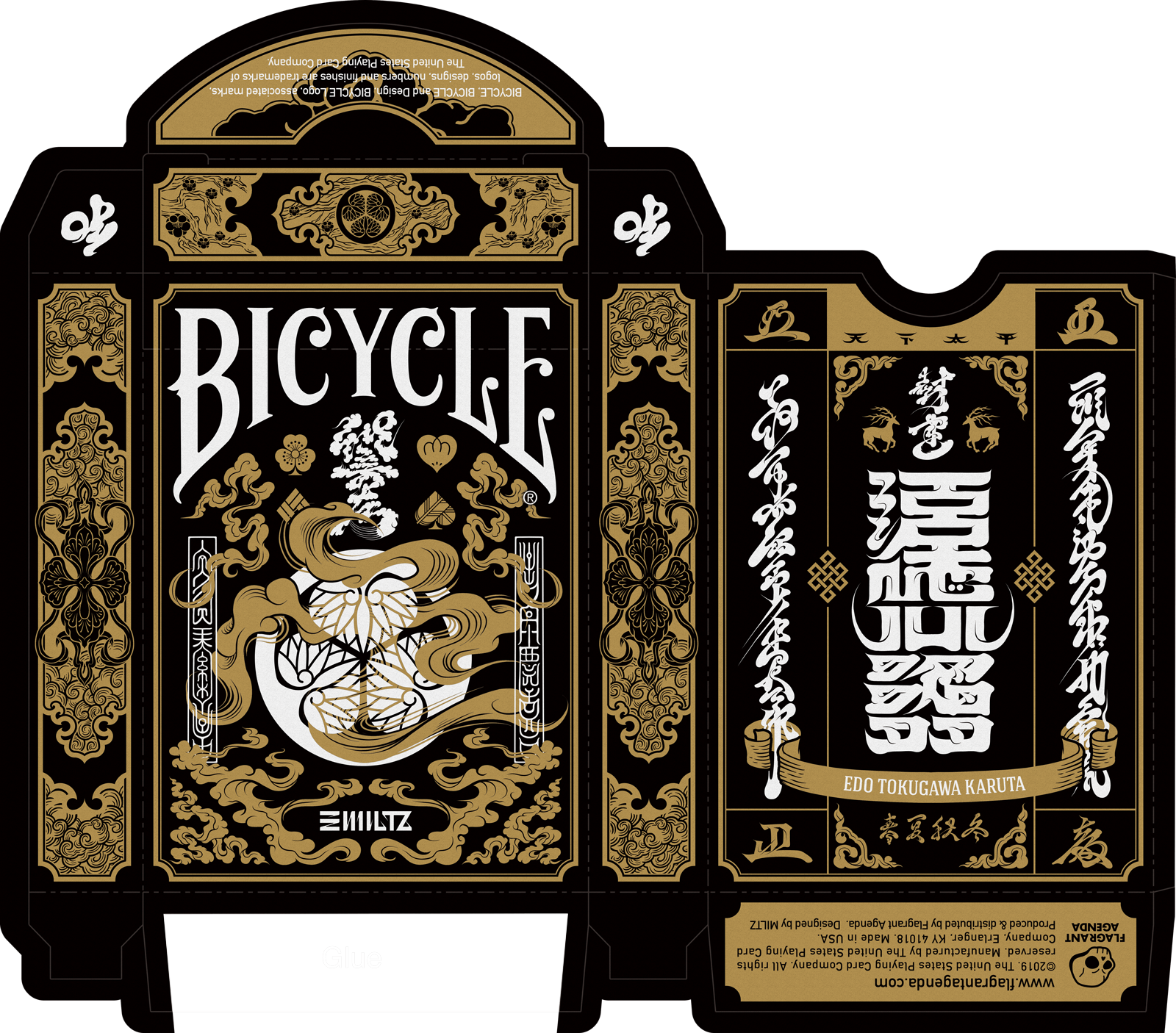
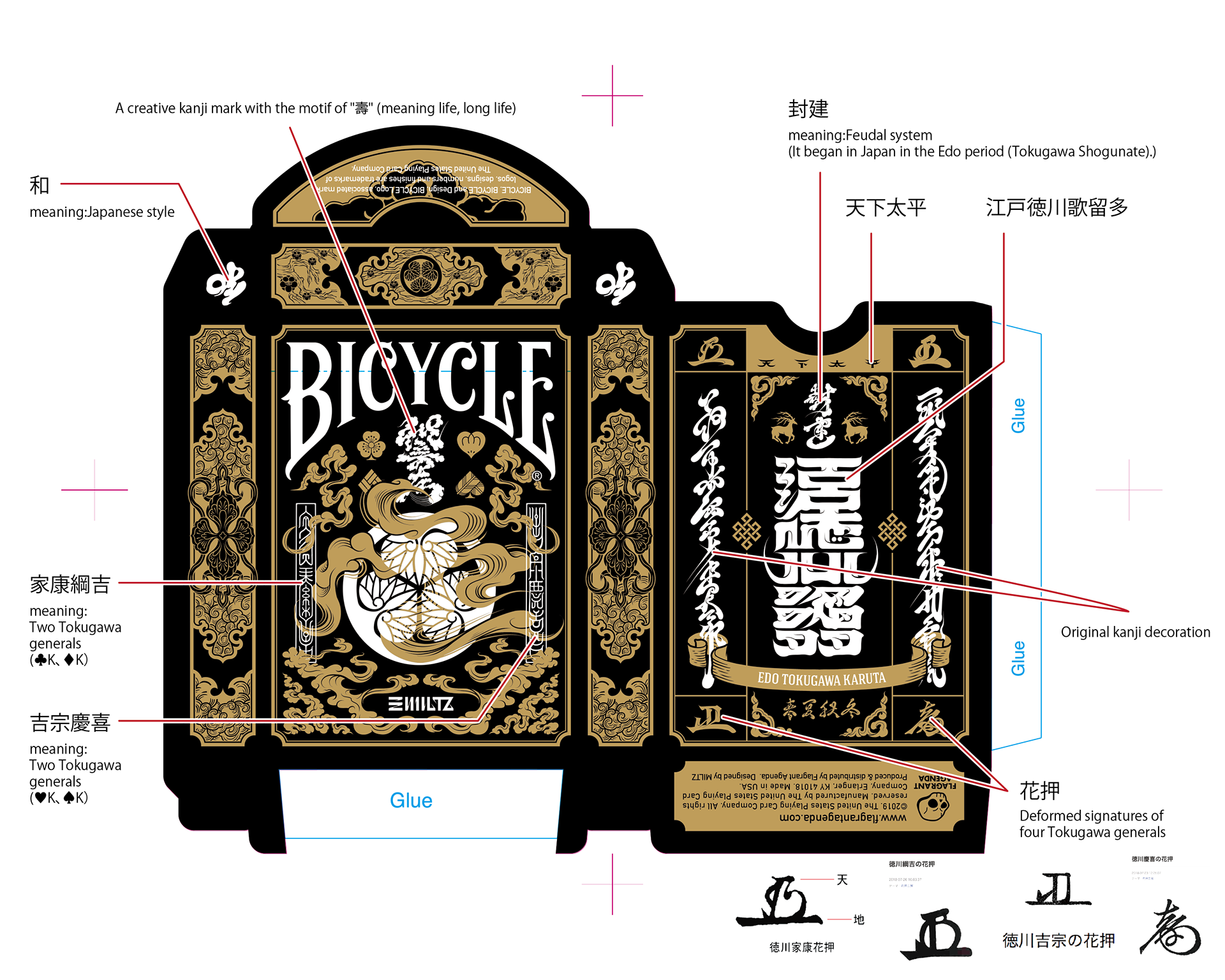
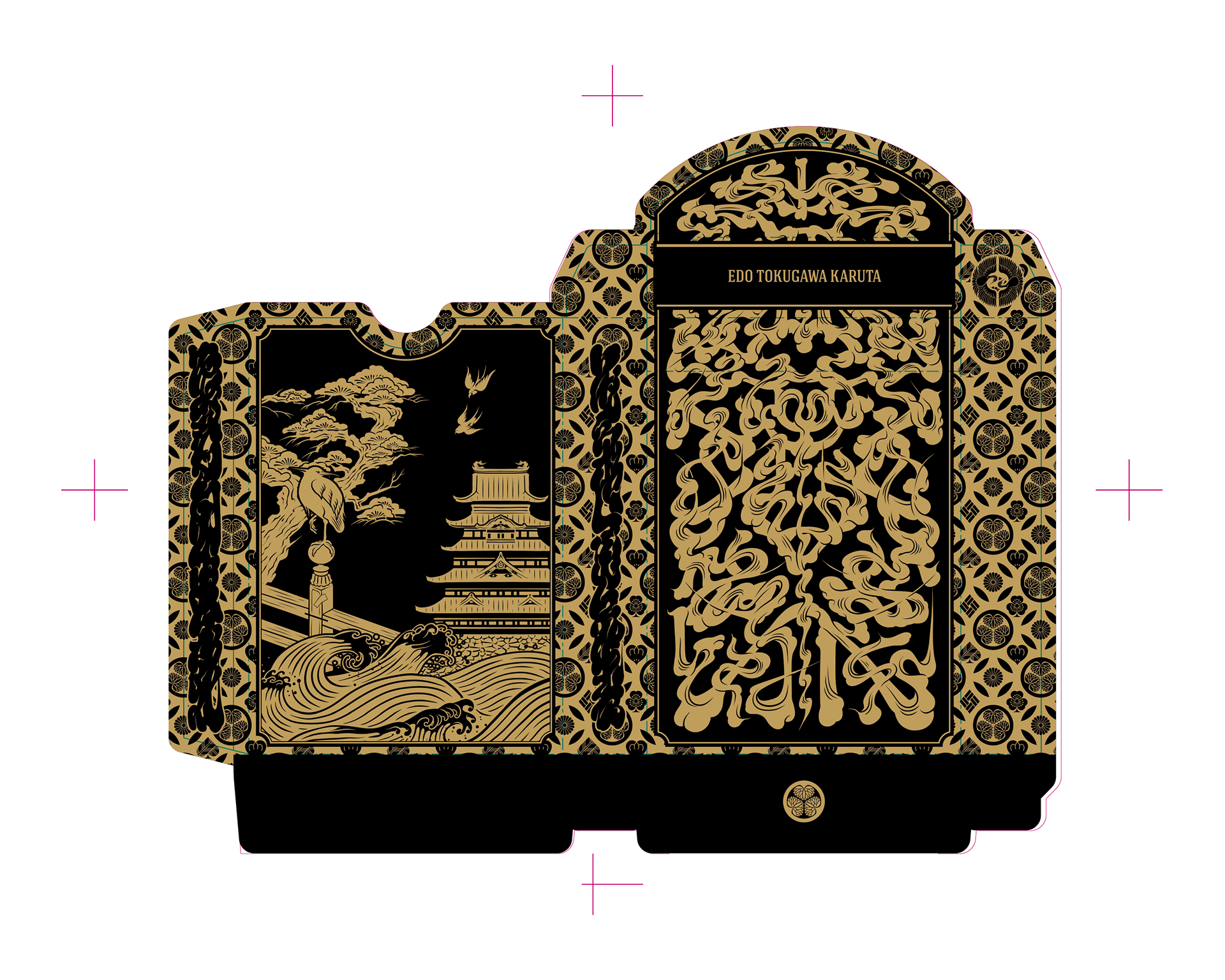
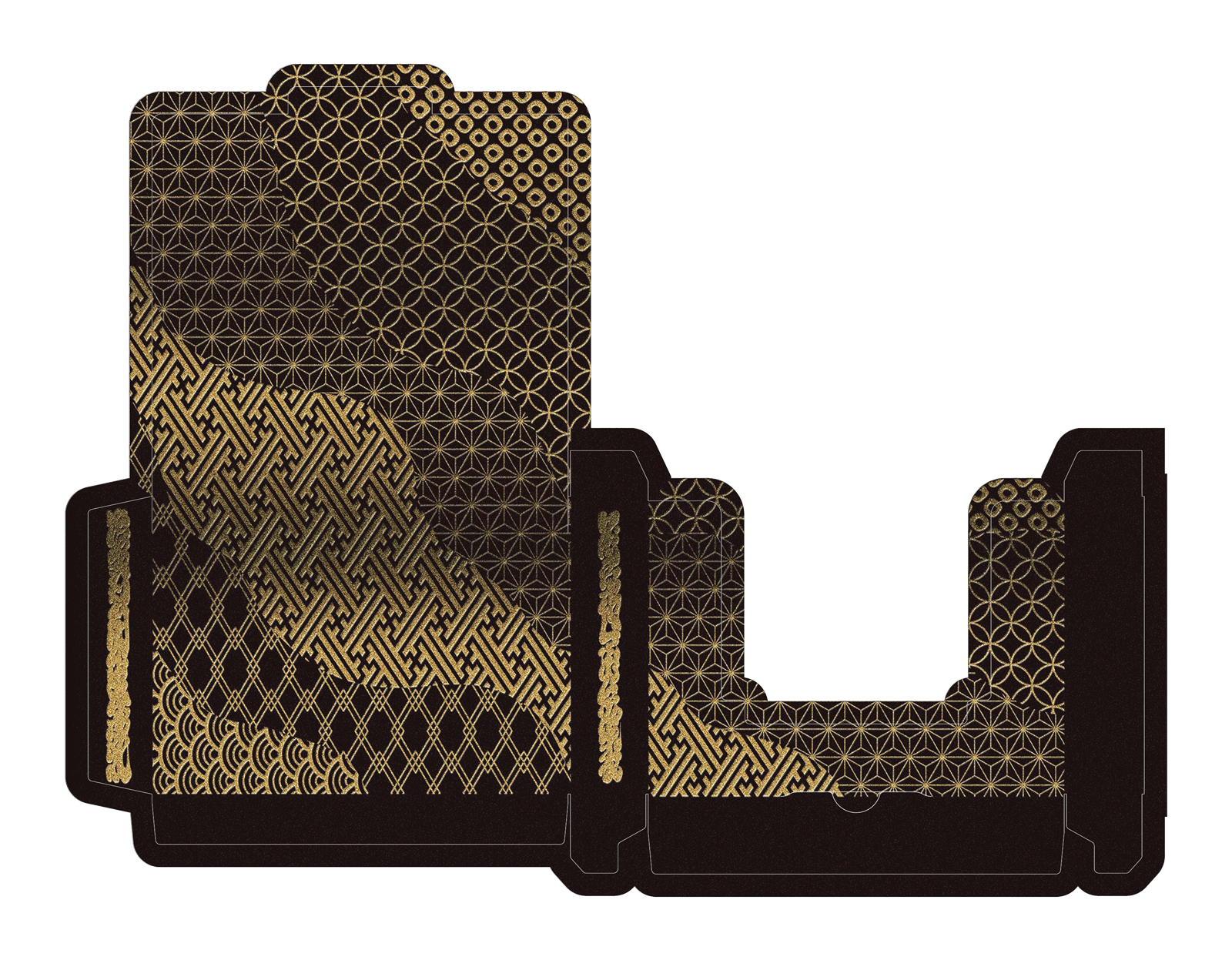
The tuck case is adorned with graphics that carry a range of layered meanings. Unfortunately, the inner tuck case artwork did not make it into the final production version.
タックケースには様々な意味を込めたグラフィックが施されています。内側に描かれたグラフィックは、今回は残念ながら最終仕様には採用されませんでした。

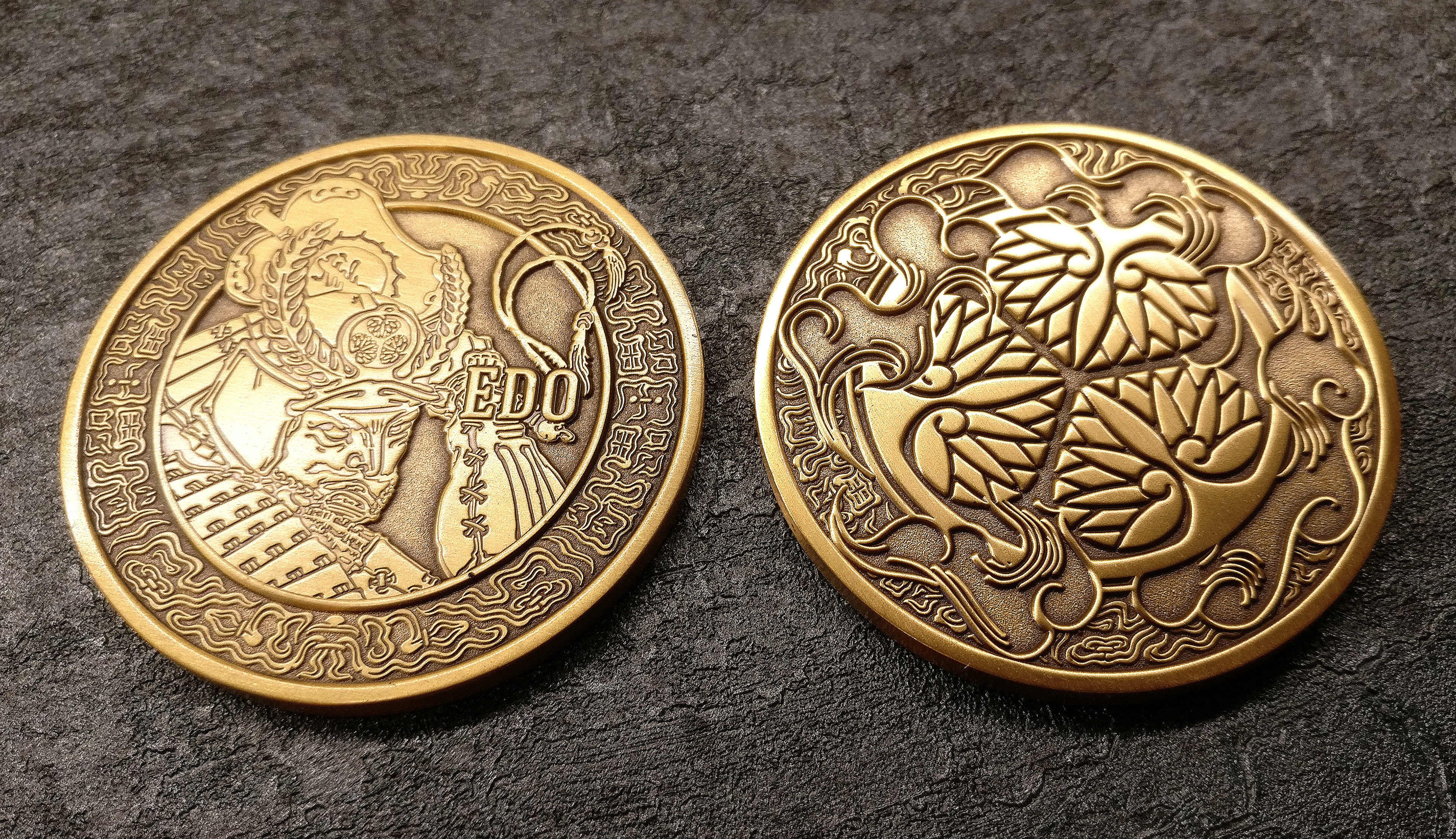
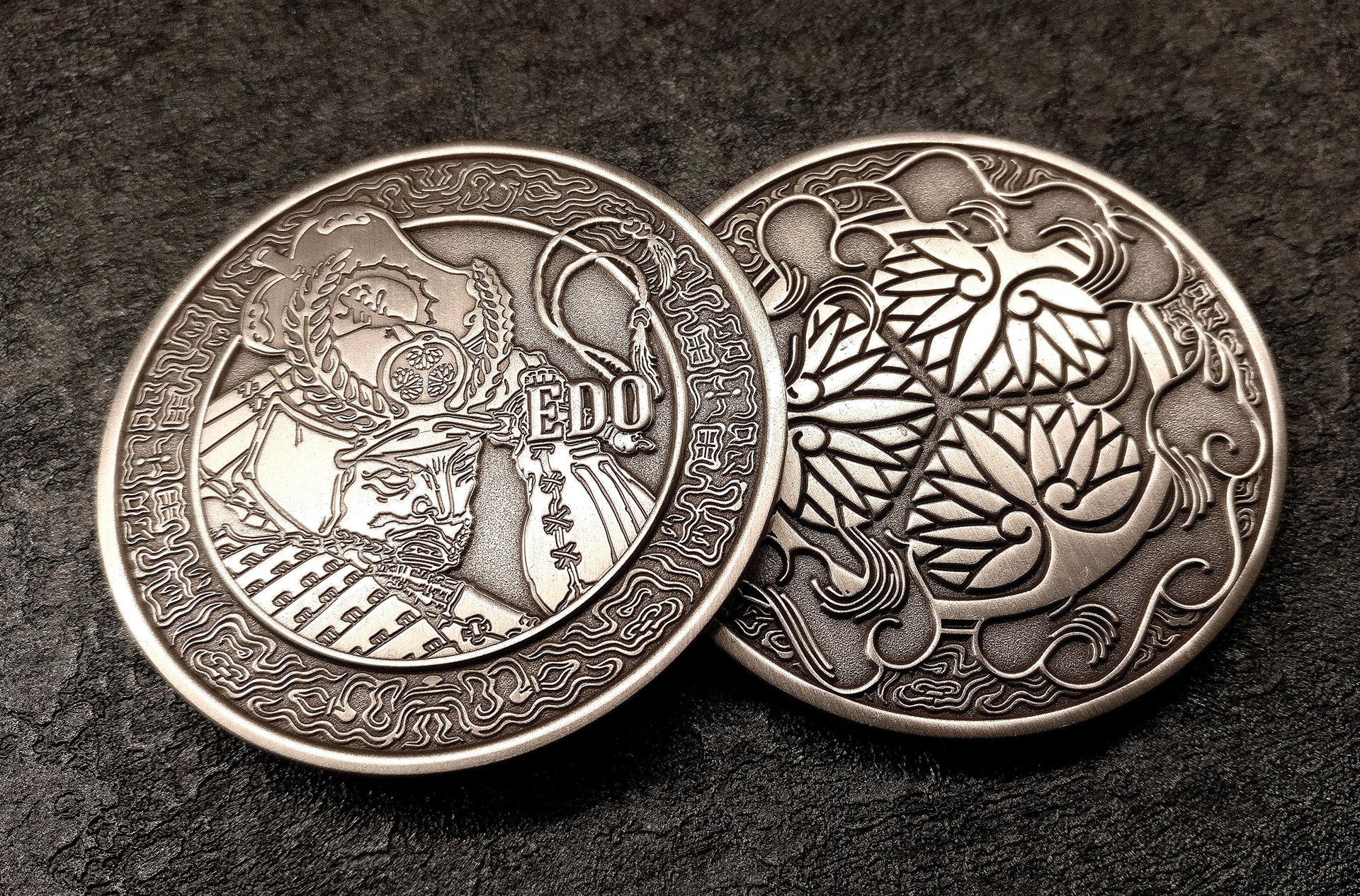
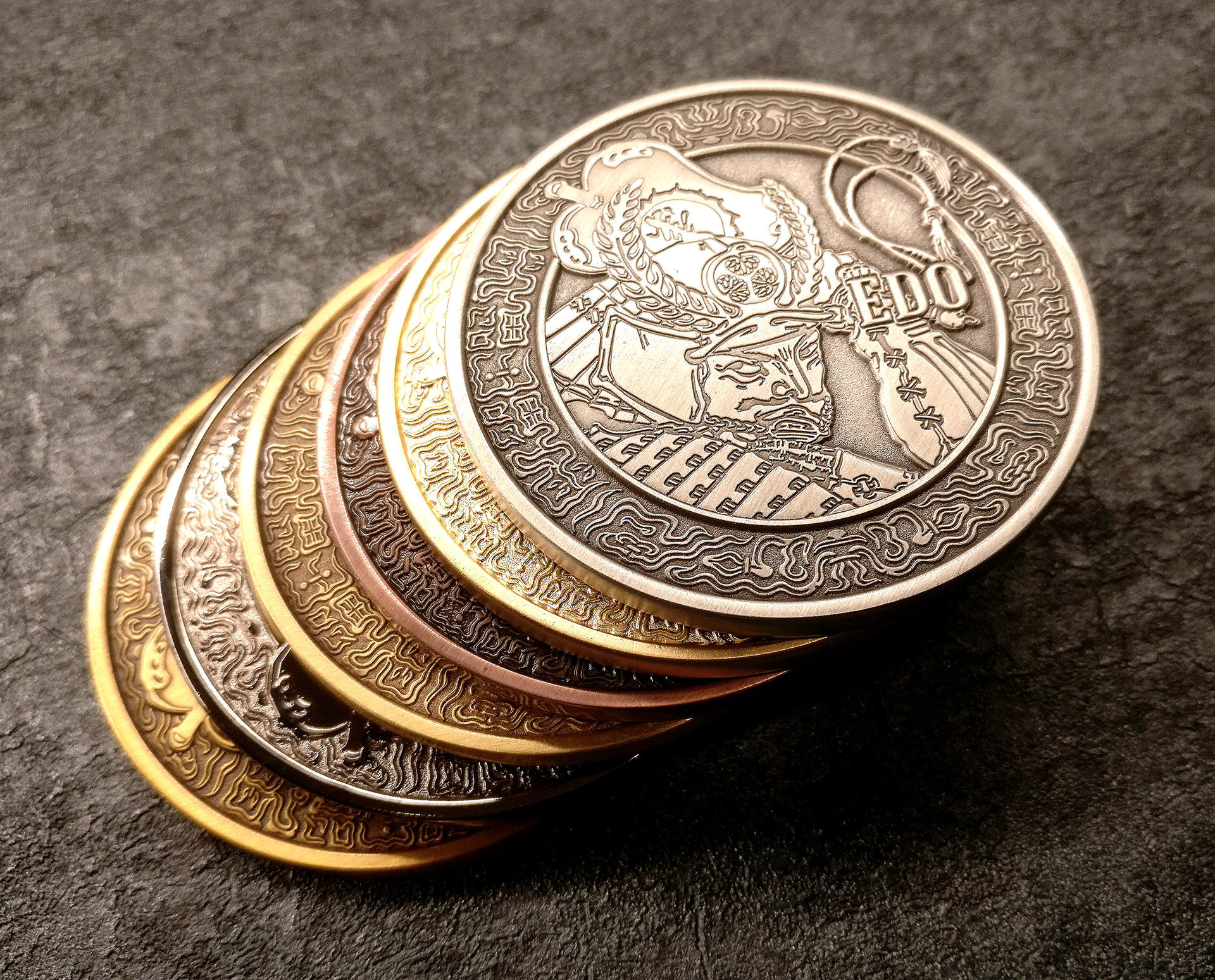
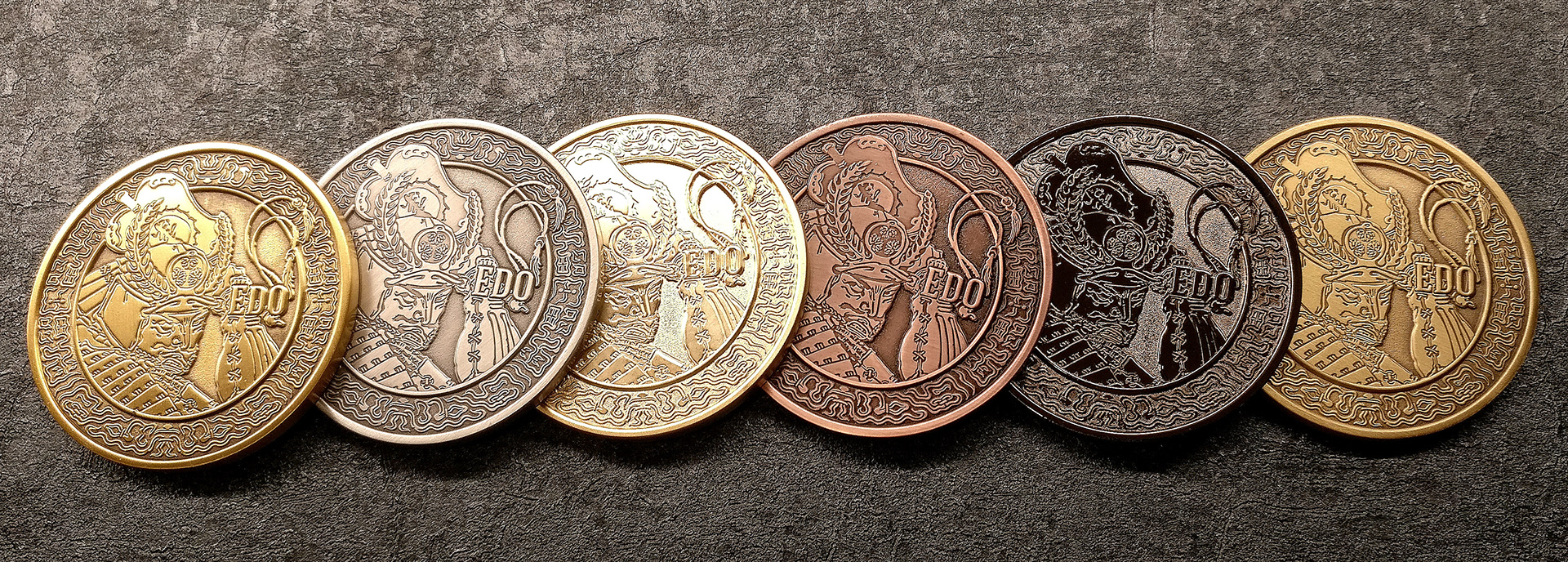
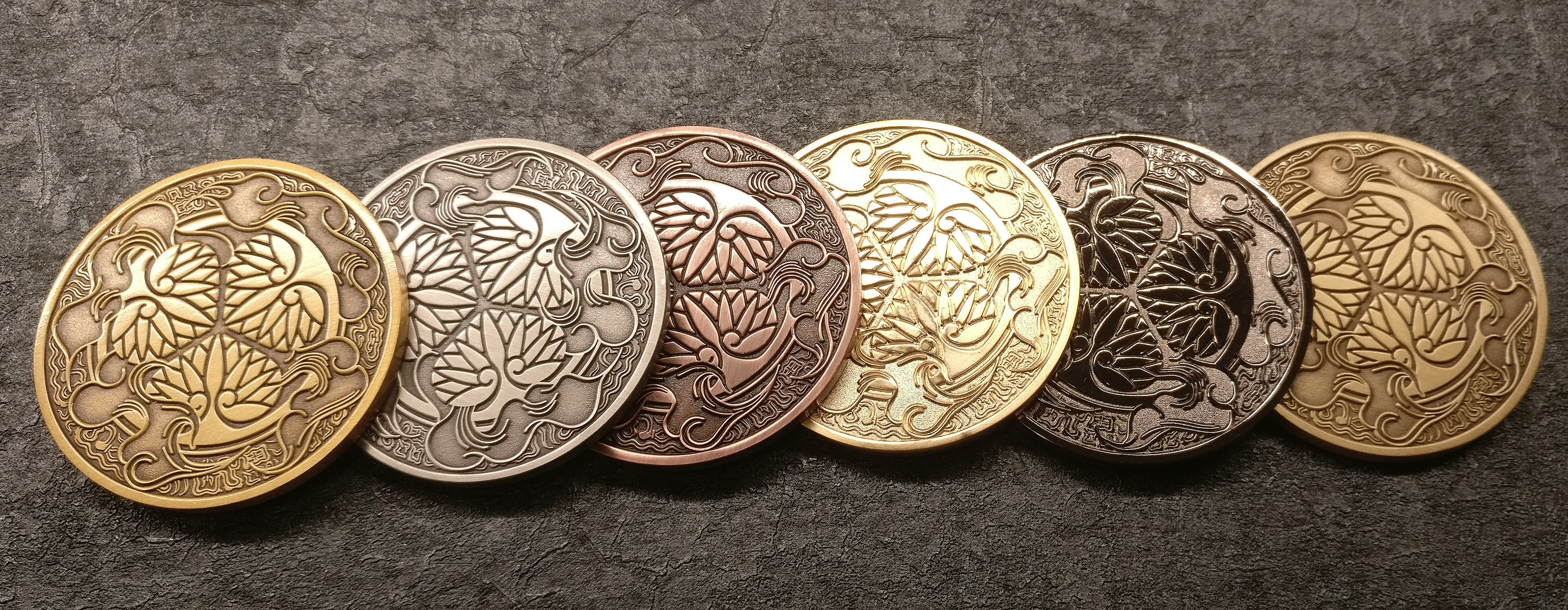
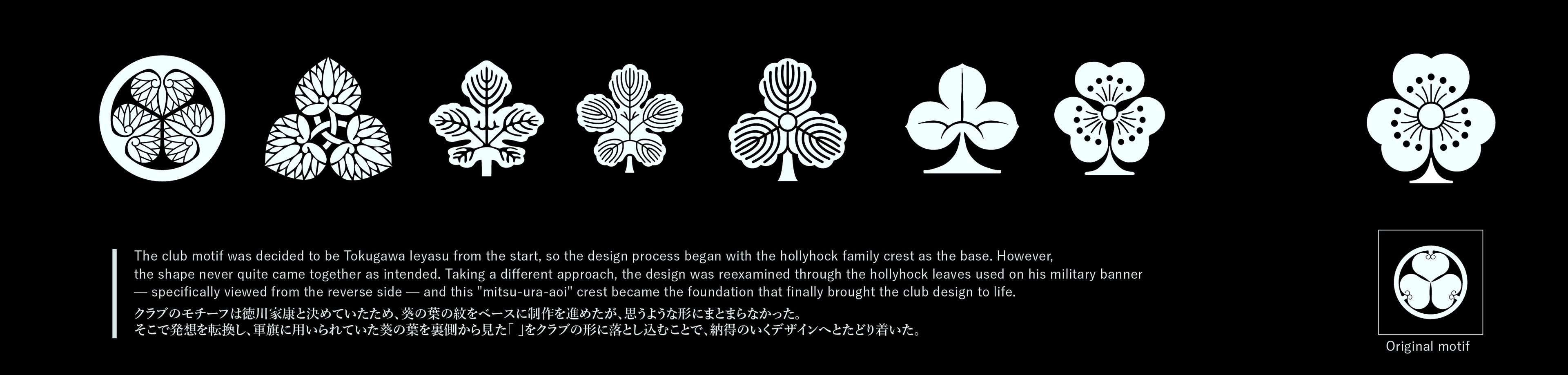
A custom coin was also created to complement the world of Edo Karuta. The obverse features Tokugawa Ieyasu, while the reverse bears the hollyhock crest — the family mon of the Tokugawa clan. A fitting collector's piece to accompany the deck.
「江戸かるた」の世界観に合わせた専用コインも制作しました。表面には徳川家康、裏面にはその家紋である葵紋を配し、デッキの象徴的なコレクターズアイテムとして仕上げています。
.
.
.
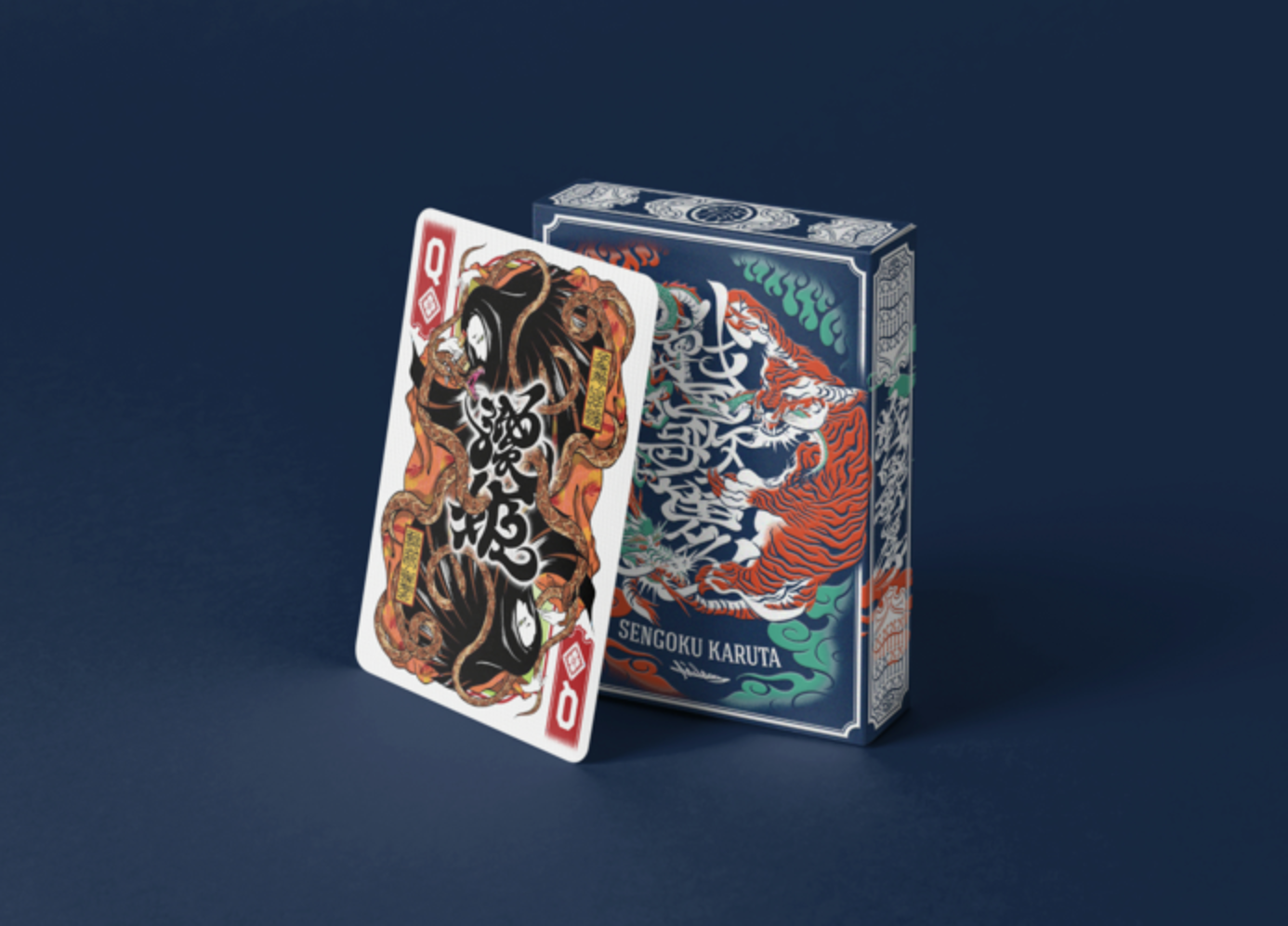
Before the peace of Edo,
there was an age of war.
Now, the blade cuts through history.
江戸の平和の前に、
戦乱の世があった。
刀が、時代を切り開く。
NEXT
SENGOKU KARUTA
COMING SOON
- GET LINK -